Young Defendant Sentenced to 4 Years for 'Caregiver Murder'
Stopped Nutritional Supplements for Immobile Father, Causing Death
Behind Medical Bills and Financial Hardship
"If One Family Member Falls, the Household Collapses" Criticism
Government Has Been Planning Support Measures Since Last Month
Experts Say "Caregiving Is a Responsibility of the State and Society, Not Just the Family"
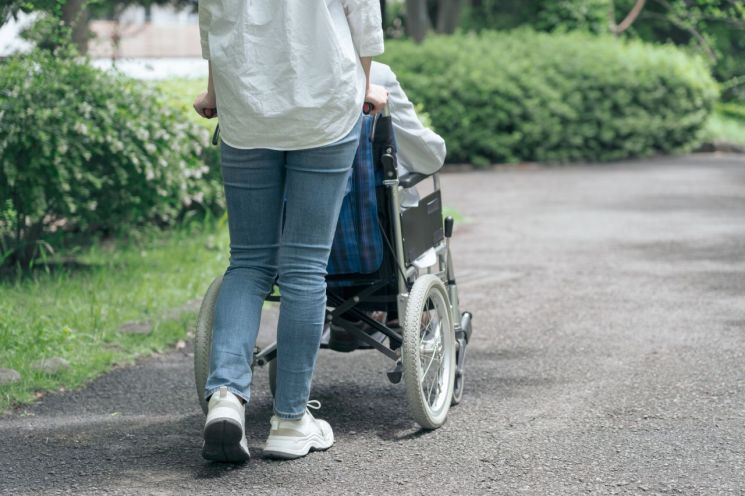 The issue of young adults supporting their families by providing care at an early age is emerging. The photo is unrelated to specific expressions in the article / Photo by Getty Images Bank
[Asia Economy Reporter Lim Juhyung] The prison sentence for suspect A (23), accused of neglecting his immobile biological father leading to his death in the so-called 'caregiver murder' case, has been finalized. Initially, the case was known as a heinous crime where a ruthless son starved his helpless father to death, but it later emerged that A was also suffering from severe financial hardship, causing a significant shock.
After the underlying circumstances of the case were revealed, public opinion called for a reduction in A's sentence. Lee Jae-myung, Senior Advisor of the Democratic Party of Korea, showed political interest by personally sending a letter to A during his presidential candidacy. The caregiver murder case, where a young man was trapped in a 'welfare blind spot' until forced to end his father's life, has been pointed out as a major challenge for Korean society.
◆Son neglects father to death amid severe financial hardship
The Supreme Court's First Division (Presiding Justice Kim Seonsu) upheld the lower court's ruling on the 31st of last month, sentencing A to four years in prison.
According to the court, A had difficulty affording the medical expenses for his father B, in his 50s, who had been hospitalized since around September 2020 for deep cerebral hemorrhage and subarachnoid hemorrhage. In April of last year, A discharged B from the hospital and cared for him alone.
From the day after discharge, A did not administer prescribed medication to B and provided less than the normal amount of therapeutic food. After about a week, he left B unattended, leading to B's death around May of the same year.
Initially, the case was reported as a murder where a cold-hearted son neglected his father to death, but investigative media 'Sherlock' revealed that severe financial hardship was behind the incident.
When B, a factory worker, suddenly fell ill, A, a young man about to begin public service, had to take on the role of head of the household. With the family income cut off, surgery, hospitalization, and nursing care costs exceeded 20 million won, and living expenses and rent were overdue, resulting in gas and internet services being cut off. Eventually, when even rice to eat ran out, A discharged B and left him unattended, causing his death.
The first trial court sentenced A to four years in prison. The appellate court also handed down the same sentence, stating, "A planned the crime when faced with the situation of having to personally care for his father after discharge." The Supreme Court found no legal errors in the lower court's judgment and confirmed the four-year prison sentence.
◆Outpouring of petitions in the 'caregiver murder' tragedy: "A problem our society must solve"
At the end of last year, when the second trial verdict was announced, some citizens submitted petitions asking for leniency for A. Although the intent to murder could not be denied, they argued it was unfair to place full responsibility for the father's death solely on A, who had just reached adulthood.
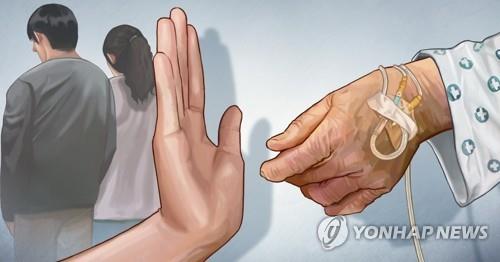 Mr. A was unable to endure extreme financial hardship and neglected his father, resulting in his death. / Photo by Yonhap News
The appellate court also mentioned the psychological burden the defendant likely felt at the time in its ruling. The court explained the sentencing by stating, "Considering that the defendant, at a young age with no economic ability, had to bear the indefinite burden of caring for a father with no chance of recovery, and made an immature decision to commit the crime, we comprehensively took these mitigating circumstances into account."
The political sphere also showed interest in the case. Last November, when Lee was the Democratic Party's presidential candidate, he sent a letter of consolation to A via email. In the letter, he expressed, "(A's story) fully reflects problems our society must solve," lamenting "the inheritance of poverty, the caregiving structure where a family collapses if one member falls ill, and the youth forced to give up dreams and futures because of this."
He emphasized, "We will ensure that patients suffering from illness and families struggling with caregiving receive practical help without any blind spots."
◆Support systems already established in the UK, Japan... Korea takes first steps in supporting caregiving youth
The caregiver murder case has highlighted a significant challenge regarding youth issues in Korea. The problem of young people burdened with family caregiving responsibilities is not new. In the 2019 book 'I Became My Father's Father' by author Jo Gi-hyun, the severe financial hardship of a young man who cared for his father with dementia for about nine years starting at age 20 is vividly recorded.
The increase in caregiving youth is linked to Korea's aging population and low birthrate trends. As the average age of parents giving birth rises, the age of dependent children is actually getting younger. When parents reach middle age and suddenly become ill, young adults just entering university become the heads of their households.
Advanced countries that experienced aging societies earlier have already established welfare systems for caregiving youth. For example, the UK legally defined the term 'young carer'?a young person with caregiving responsibilities?through the Children and Families Act of 2014. Currently, the UK's National Health Service (NHS) and local governments provide direct support to these young carers.
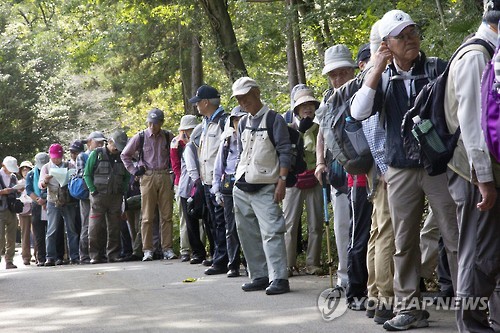 Japan, which entered an aging society early, provides services such as household support, caregiving, and online counseling to young people supporting their families through the government. / Photo by Yonhap News
Japan, which has entered a super-aged society with an average national age exceeding 48, also offers various services such as household labor support, caregiving, and online counseling to young caregivers through government programs.
In contrast, Korea is only now beginning to conduct household surveys on young caregivers. Until now, the number of youths like A trapped in welfare blind spots was unknown.
◆Expert: "Caregiving is a societal, not just a family, responsibility"
On February 14, the Ministry of Health and Welfare announced at the 6th Youth Policy Coordination Committee chaired by Prime Minister Kim Boo-kyum a plan to establish support measures for young family caregivers, aiming to assist youth and adolescents caring for family members.
Young family caregivers refer to youth and adolescents caring for family members with disabilities, mental or physical illnesses, or substance issues. The government plans to conduct a nationwide survey targeting middle and high school students, out-of-school youth, university students, and non-university youth under 34, and will provide immediate support to identified caregivers.
Specific support measures include emergency care, basic livelihood security, livelihood benefits, medical benefits, catastrophic medical expenses, education benefits, university tutoring programs, and support for out-of-school youth such as qualification exams and vocational experience programs, linked to existing welfare projects.
Experts emphasize that the burden of caregiving is not only a family issue but also a national responsibility.
Professor Kim Seong-ho of the Department of Social Welfare at Korea Bible University stated, "No matter how well welfare systems are established, if those in need do not know about or apply for support, the effect is limited. Also, in Korean society, caregiving is often viewed as a family matter, which may cause people to refuse government support or feel guilty."
He added, "In Korea, social structures have changed rapidly, but individual perceptions have not kept pace, leading to reluctance to entrust caregiving to state facilities or nursing homes. However, this perception must change. Society's atmosphere should encourage state caregiving support, and caregiving should be recognized as a responsibility of the nation and society as a whole, not just the family."
© The Asia Business Daily(www.asiae.co.kr). All rights reserved.