Avoiding tests but going to work, breaking self-quarantine and concerns over business
Professor Eom Jung-sik: "Relaxing quarantine doesn't mean you can skip isolation"
"Rare cases of severe aftereffects exist, so quarantine rules must be strictly followed"
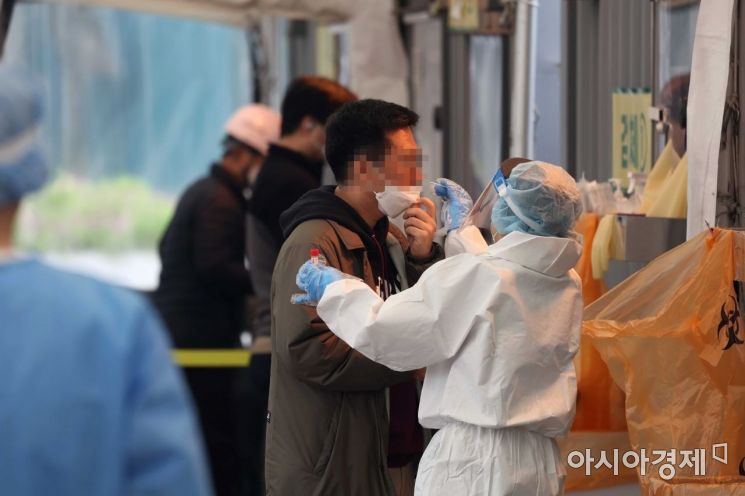 On the 16th, as the spread of COVID-19 continued, citizens were getting tested at the screening clinic in front of Seoul City Hall. Photo by Mun Ho-nam munonam@
[Asia Economy Reporter Kang Juhee] Recently, cases of people suspected of having COVID-19 symptoms going to work or engaging in outside activities without self-isolating have been increasing. As the spread continues with one in five citizens having contracted COVID-19, work absences have occurred, and since confirmed cases are no longer separately managed by health authorities, people do not feel the need to isolate.
Park, a worker in his 30s, expressed frustration about colleagues who go to work despite showing suspected COVID-19 symptoms. Park said, "A colleague had a sore throat and cough for about two days, but said the self-test kit was negative and kept coming to work," adding, "He endured it for two more days, but his condition worsened, so he took a PCR test last week and was confirmed positive."
He said, "Fortunately, I did not eat with him or have close contact, but other colleagues who had lunch with that employee started working from home," and added, "Although the fatality rate has decreased and people recover quickly even if infected, the sense of caution seems to have loosened compared to before."
Recently, a post also appeared on an online community about employees at a company getting infected one after another after avoiding COVID-19 testing. The netizen, who works at a company with about 20 employees, said, "(One employee) started coughing last Monday and was sweating and complaining of a sore throat during work on Thursday. Still, he said it was not COVID-19," adding, "He eventually went to the hospital and tested positive. After that, the rest of the employees were confirmed positive one after another, and I also tested positive and am on the first day of isolation."
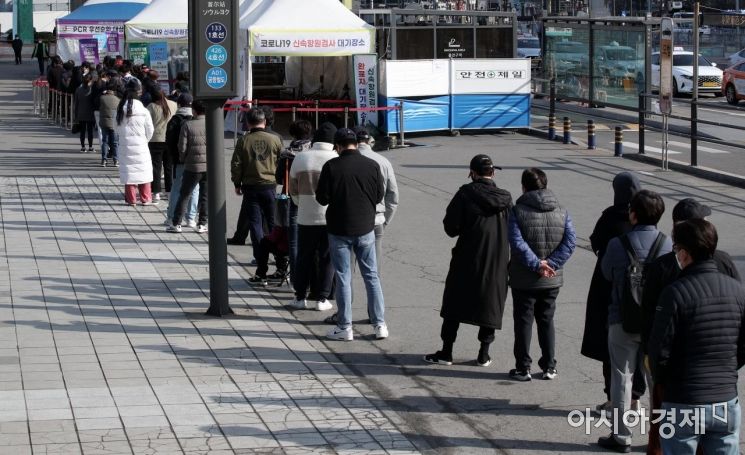 Citizens are waiting for diagnostic tests at the temporary COVID-19 screening site in Seoul Station Plaza. Photo by Hyunmin Kim kimhyun81@
Meanwhile, some workplaces require employees to come to work even before their self-isolation period ends. Kim, a 28-year-old office worker in Incheon, said, "One colleague was confirmed positive but came to work without completing the one-week isolation period," adding, "When I asked, the company hinted that if there are no symptoms, it is okay to come to work, so he had no choice."
Among self-employed people, some continued operating their businesses despite the burden of closing during the self-isolation period. Park, 29, said, "An acquaintance who runs a convenience store continued operating even though they had suspected symptoms and tested positive on a self-test," adding, "There must have been circumstances that made it difficult to leave the place, but it was hard to understand. However, these cases are quite common nowadays."
Although cases of avoiding self-isolation or engaging in outside activities due to workplace absences or livelihood reasons are increasing, there are no effective countermeasures. Currently, health authorities allow general management group patients, excluding high-risk intensive management groups, to receive home treatment without separate monitoring. Therefore, even if confirmed patients leave isolation, sanctions are practically impossible.
Experts emphasized personal prevention, noting that although the fatality rate of COVID-19 has decreased, the risk of aftereffects remains high. Professor Eom Jung-sik, an infectious disease specialist at Gachon University Gil Medical Center, said in a phone interview with Asia Economy, "Recently, there was a case where a patient who did not get tested despite having COVID-19 symptoms was brought to the emergency room. In such cases, hospitalization is difficult. It becomes hard to respond to these unexpected situations," and pointed out, "Even if you are healthy and have no special illnesses, not getting tested when you have suspicious symptoms or leaving isolation causes serious problems."
He continued, "The government is easing quarantine guidelines as part of the process of returning to normal life, but that does not mean you can avoid testing or isolation even if you have suspicious symptoms," adding, "This will not only worsen the infectious disease situation in our country but also risk infecting others and causing harm. You must not avoid testing."
© The Asia Business Daily(www.asiae.co.kr). All rights reserved.


















