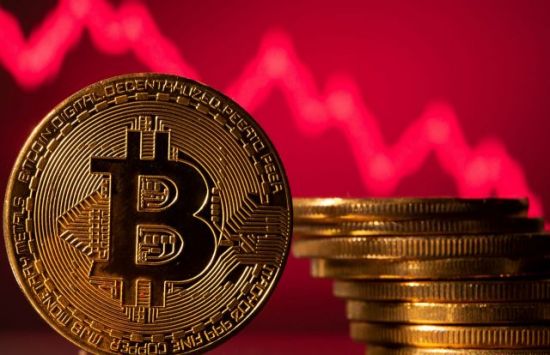
[Asia Economy Reporter Myunghwan Lee] On the 26th, securities analysts suggested that if Russia adopts Bitcoin as a payment method for crude oil and natural gas, virtual asset regulations could intensify, centered around the United States.
According to the US economic media CNBC on the 24th (local time), Pavel Zavalny, chairman of the Russian Energy Commission, stated, "Russia is willing to adopt more flexible payment methods for friendly countries such as China and Turkey," adding, "Bitcoin is also being considered as an alternative alongside the ruble, lira, and yuan for Russia's energy export payments," indicating the possibility of adoption.
Following this news, the price of Bitcoin, the representative cryptocurrency, showed an upward trend. As of 11:12 AM on the 25th, Bitcoin was trading at $44,052 (approximately 53.91 million KRW), up 3.04% from the previous day. The upward trend continued into the next day, with Bitcoin trading at $44,331 (approximately 54.26 million KRW) as of 11:16 AM on the 26th, up 0.9% from the previous day.
In response, securities analysts foresee the possibility of short-term regulatory intensification. Russia is receiving international criticism for its reckless war, and as sanctions are increasing in severity, regulatory movements regarding the source and movement of funds may grow. Daehun Han, a researcher at SK Securities, said, "Currently, cryptocurrency regulations in various countries, including Know Your Customer (KYC) and Anti-Money Laundering (AML), are focused on transparent fund movement and management," adding, "In the short term, regulatory movements on virtual assets including Bitcoin in the US are likely to intensify."
In the mid to long term, he predicted that the US's efforts to expand its influence over Bitcoin will become more visible. When global interest in virtual assets surged in 2017, the US influence within the virtual asset market was minimal, but after integration into the institutional framework, US influence has expanded, the researcher explained. He also noted that China's ban on virtual asset trading was a positive factor from the US perspective. The researcher said, "If Bitcoin's presence as a threat to the dollar becomes more prominent, the US will move faster than now to expand its influence centered on institutional integration."
© The Asia Business Daily(www.asiae.co.kr). All rights reserved.
![Clutching a Stolen Dior Bag, Saying "I Hate Being Poor but Real"... The Grotesque Con of a "Human Knockoff" [Slate]](https://cwcontent.asiae.co.kr/asiaresize/183/2026021902243444107_1771435474.jpg)















