EU Builds Major Shield to Curb Big Tech Abuses... Platform Companies 'Under Fire'
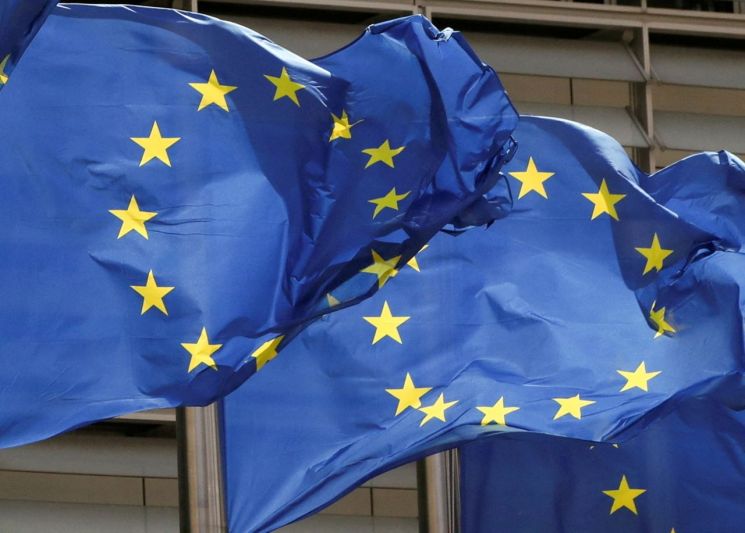
[Asia Economy Reporter Jeong Hyunjin] Starting as early as the beginning of next year, Apple is expected to be required to allow app markets other than its own App Store on the iPhone. Google will face restrictions on targeted advertising using collected personal data. Users of major messengers like WhatsApp may be able to exchange messages with users of other messengers such as Telegram.
On the 24th (local time), the European Union (EU) Executive Commission reached a provisional agreement to introduce the Digital Markets Act, a new EU regulation aimed at limiting the market power of large online platforms. This is a measure to restrict the market power of so-called big tech companies?large online platforms such as Google, Amazon, and Apple. Once this law is enforced, it is expected to bring about significant changes not only to the IT ecosystem and business models in Europe but worldwide. Strong opposition from the affected companies is anticipated, and it is also expected to influence regulations on large domestic online platforms.
Direct Blow to Business Models of Google, Apple, and Facebook
This agreement came after 16 months of discussions among the European Parliament, the EU Executive Commission, and the European Council, and is expected to be enacted within the year after final approval procedures, with application starting early next year. The targeted companies are defined as large platforms with a market capitalization of 75 billion euros (approximately 100.9 trillion KRW) or annual revenue of 7.5 billion euros or more within Europe. Accordingly, companies such as Google, Alphabet, Amazon, Apple, Microsoft, Meta, and Alibaba are expected to be included.
The Digital Markets Act is regarded as the most comprehensive legislation regulating technology companies since the European General Data Protection Regulation (GDPR) passed in 2018. According to Politico and The New York Times (NYT), this law limits the combination of personal data by IT companies, making targeted advertising more difficult. Advertising business models of companies like Google and Facebook are expected to be directly affected.
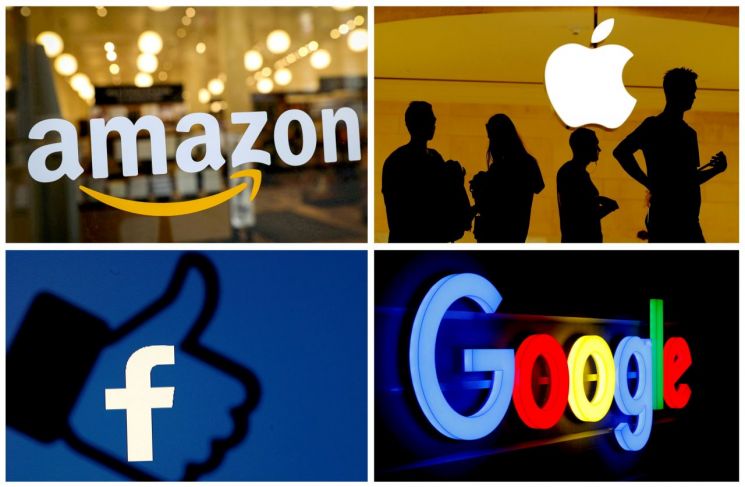
It also includes a ban on forced in-app payments (a payment method where payments are made through an internally developed payment system within the app), which Korea was the first in the world to introduce, requiring services to be linked and used together. The NYT reported that Apple and Google will have to allow alternatives to their own app stores where apps can be downloaded, and Amazon will no longer be able to use information collected from external sellers. In the case of Amazon and Google, measures that place their own products higher than smaller competitors in search results may be restricted.
Additionally, regulations related to messengers are included. Users of major messengers like WhatsApp must be allowed to exchange messages with users of competing services such as Signal and Telegram. This is a measure to prevent large messenger companies from monopolizing users by allowing messaging only among WhatsApp users.
If these regulations are violated, the EU Commission can impose fines of up to 10% of the total global revenue based on the previous fiscal year, and up to 20% for repeated violations. In cases of organized violations, the EU stated that corporate acquisitions may be restricted.
"The End of Big Tech Dominance"
Andreas Schwab, a member of the European Parliament who led the enactment of the Digital Markets Act, said, "This law will mark the end of the expanding dominance of big tech companies. From now on, these companies must demonstrate that fair competition is possible on the internet," adding, "Europe will be able to guarantee more competition, innovation, and user choice."
Europe has maintained pressure on IT companies for years, including the 2018 GDPR, solidifying its leadership as a regulatory authority. As such, there is a high possibility that these European rules will be adopted as global standards, leading to expanded regulations worldwide. Anu Bradford, a law professor at Columbia University, said, "When EU regulators regulate US tech companies, the US Congress, which had been lagging behind, will stop merely observing and begin discussions for legislation."
Global IT companies are now under urgent pressure. Sundar Pichai, CEO of Alphabet, Google's parent company, is scheduled to visit Europe on the 30th to meet with Margrethe Vestager, Vice President of the EU Executive Commission and Commissioner for Competition, to discuss competition and digital issues.
© The Asia Business Daily(www.asiae.co.kr). All rights reserved.
![Clutching a Stolen Dior Bag, Saying "I Hate Being Poor but Real"... The Grotesque Con of a "Human Knockoff" [Slate]](https://cwcontent.asiae.co.kr/asiaresize/183/2026021902243444107_1771435474.jpg)

















