The Bank of Korea's 'March Financial Stability Report'
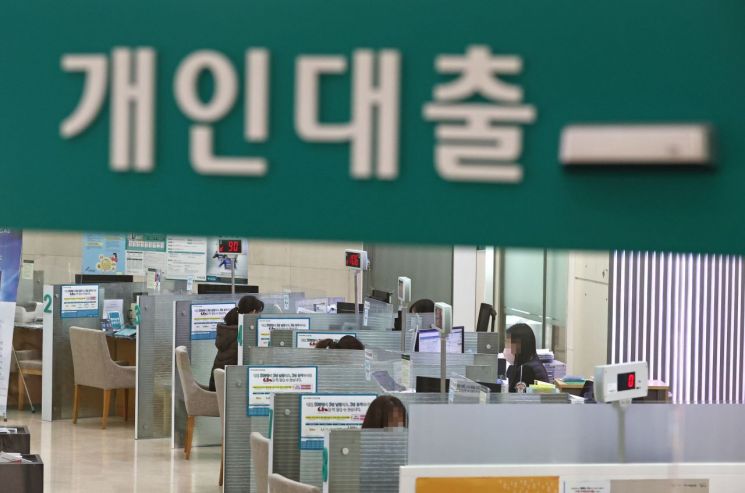
[Asia Economy Reporter Seo So-jeong] Due to the impact of COVID-19 and other factors, the scale of private sector debt has reached 2.2 times the Gross Domestic Product (GDP), causing ongoing financial imbalance issues. The 'Financial Stress Index (FSI),' an indicator reflecting the short-term condition of the financial system, has also approached the cautionary threshold, and the 'Financial Vulnerability Index (FVI)' remains at a high level.
According to the 'Financial Stability Report' released by the Bank of Korea on the 24th, the ratio of private credit (combined household and corporate debt) to nominal GDP at the end of last year was 220.8%, an increase of 7.1 percentage points compared to the end of the previous year. This is the highest level since statistics began in 1975.
The Bank of Korea explained, "As of the end of last year, the gap between the household credit and corporate credit ratios relative to GDP (compared to the long-term trend) was 3.2 percentage points and 7.5 percentage points, respectively, which is 2.6 percentage points and 0.6 percentage points lower than the end of the previous year, but still at a high level."
Household debt stood at 1,862.1 trillion won at the end of last year, increasing by 7.8% year-on-year, showing a slowdown in the growth rate. Due to strengthened management of household debt such as credit loans and rising loan interest rates, the growth rates of both bank (7.1%) and non-bank (8.3%) household loans declined.
The ratio of household debt to disposable income rose to 173.4% at the end of last year, up 4.3 percentage points from the same period the previous year, indicating a continuous increase in the household debt repayment burden.
The FSI, calculated based on real and financial indicators affecting financial stability, was 7.4 as of February, approaching the cautionary stage (between 8 and 22). The Bank of Korea stated, "After reversing to an upward trend in the second half of last year, the FSI has continued to rise since February this year due to increased geopolitical risks and normalization of major countries' monetary policies, which have expanded financial market volatility."
Regarding the FVI, which comprehensively reflects financial imbalance and the resilience of financial institutions, it slightly decreased to 54.2 at the end of the fourth quarter last year from 58.4 at the end of the third quarter due to strengthened loan regulations and interest rate hikes, but it still remains at a high level due to the accumulation of private debt.
The Bank of Korea proposed interest rate hikes as a measure to alleviate household debt and financial imbalance. The report analyzed, "The effect of slowing household loans due to rising interest rates becomes more pronounced as the interest rate level increases and financial imbalance worsens, and the effect of interest rate hikes after COVID-19 is even clearer."
According to the Bank of Korea, if the average loan interest rate was 3% per annum from the first quarter of 2012 to the third quarter of 2021, the average increase in household loans per borrower during one quarter was 2.94 million won. When the interest rate rose to 3.5% and 4% per annum, the increase in loans slowed significantly to 2.27 million won and 1.38 million won, respectively. Converted to total household loans, the quarterly increase in household loans decreased from about 34.1 trillion won (at 3% interest) to 26.3 trillion won (at 3.5%) and 16 trillion won (at 4%).
However, although the proportion is small within total household debt, for vulnerable groups with many livelihood loans, the effect of suppressing loan growth is considered limited even if interest rates rise. The Bank of Korea added, "For vulnerable groups, the proportion of debt repayment may increase relatively more due to rising interest rates," and emphasized, "While continuing policy efforts to reduce the accumulation of household debt, it is necessary to prepare for the possibility of increased credit risk in vulnerable sectors."
© The Asia Business Daily(www.asiae.co.kr). All rights reserved.
![Clutching a Stolen Dior Bag, Saying "I Hate Being Poor but Real"... The Grotesque Con of a "Human Knockoff" [Slate]](https://cwcontent.asiae.co.kr/asiaresize/183/2026021902243444107_1771435474.jpg)















