Conflict Surrounding Presidential Office Relocation
Tied to Opposition-Controlled National Assembly and Local Election Results
Potential Clashes Over Government Organization Act and Prime Minister Approval
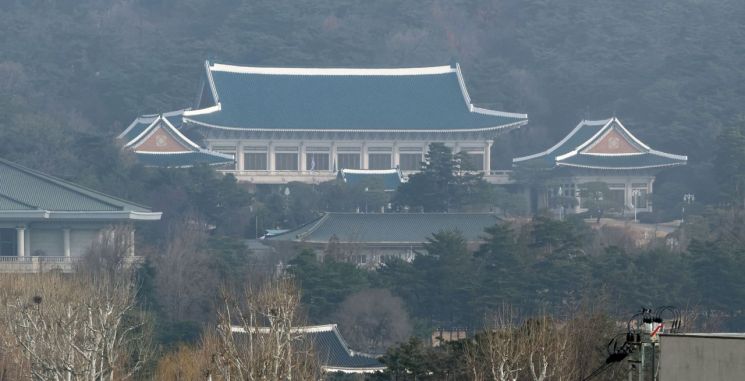
[Asia Economy reporters Lee Ji-eun and Na Joo-seok] The current and future powers have come into direct conflict over the issue of relocating the presidential office. The discord arising during the power transition is expected to leave significant aftereffects beyond a simple conflict. On the surface, the conflict revolves around the relocation of the presidential office, but fundamentally, it reflects the ongoing confrontation between political camps even after the regime change. This situation is likely to be mirrored in the handling of the Government Organization Act, the confirmation of the Prime Minister, and other matters, linked to the opposition-majority National Assembly and the results of local elections.
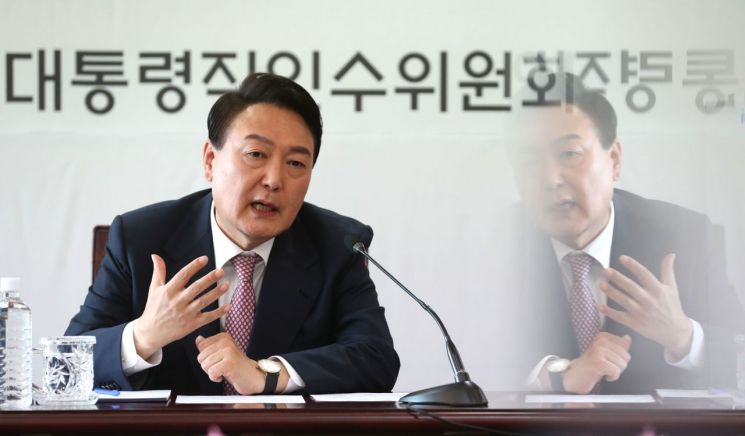
In political circles, various reactions have emerged regarding the clash between the old and new political powers over President-elect Yoon Seok-yeol’s plan to relocate the Blue House office.
First, there are criticisms that President-elect Yoon’s plan to relocate the office was too hasty. A senior member of the People Power Party, who requested anonymity, said, "Even if President-elect Yoon’s move is justified and driven by conviction, it must be done through communication and proper procedures," adding, "No matter how strong the conviction and certainty, ignoring communication and procedures and just pushing it through is a remnant of an imperial presidency." He continued, "The concern is that if any problems arise from rushing this, President-elect Yoon will bear all responsibility," and questioned, "Why rush when a professional task force could be formed to discuss thoroughly and gather public opinion, and the move could be made about half a year after inauguration?" The senior lawmaker added, "Seeing President-elect Yoon introduce the relocation plan directly to the public, I thought there had been prior coordination with the current government."
Woo Sang-ho, a member of the Democratic Party of Korea, said, "Moving even one ministry takes one to two years, and here we are talking about moving ministries in succession. Planning to do this within two months was an unrealistic idea," adding, "If joint U.S.-South Korea military exercises take place, North Korea might launch missiles, and the person responsible for security as commander-in-chief is President Moon Jae-in." He said, "There is no solution to this issue, and President-elect Yoon should enter the Blue House after President Moon’s term ends to calmly prepare and promote the relocation." He criticized, "Spending hundreds of billions of won on relocating the office during the difficult times of COVID-19 is incomprehensible."
There was also criticism of the Blue House’s response. Choi Hyung-doo, a People Power Party lawmaker, said, "If the Blue House had raised concerns that the Ministry of National Defense’s relocation was too rushed and suggested adjusting the timetable, some dialogue might have been possible," but criticized, "The way the Blue House is raising the issue now is like challenging for a fight." This points to problems in how the Blue House is delivering its messages.
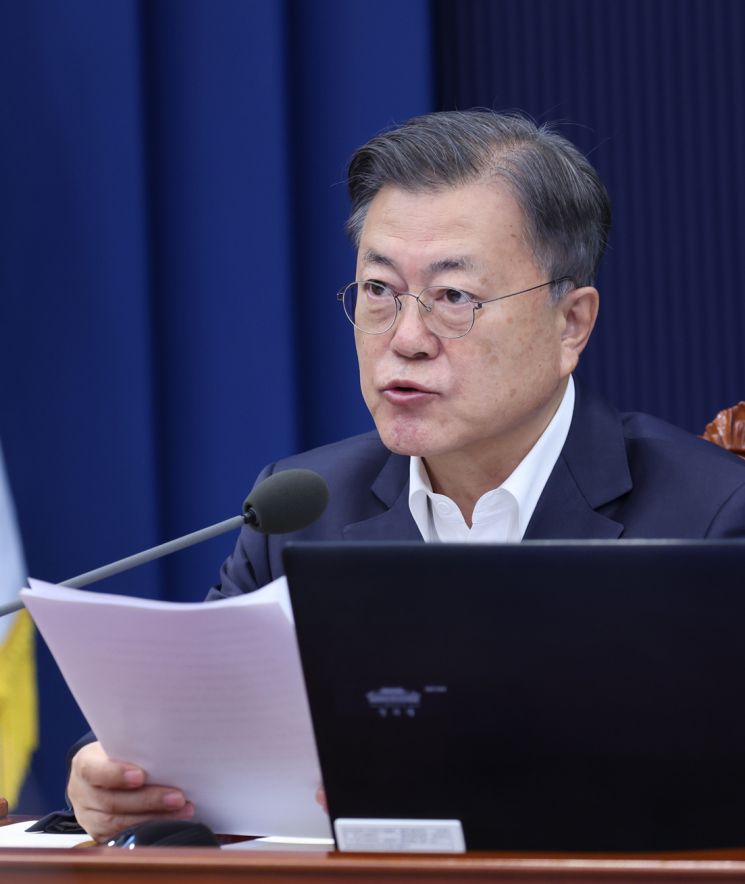
The Blue House, while wary of the current situation being seen as a ‘conflict between old and new powers,’ pointed out the issue of ‘security gaps,’ saying, "The Blue House Crisis Management Center must be maintained until midnight on May 9, but how can the move be made immediately after the Blue House is opened?"
The confrontation between the president and the president-elect has already shown warning signs in various places, such as ongoing negotiations without a meeting being arranged after the election. Previously, a luncheon meeting scheduled for the 16th was canceled just four hours before it was to take place.
Fundamentally, the political circles see some degree of conflict between the current and next administrations as inevitable. Since the incumbent president is responsible for governing until the end of the term and the president-elect is preparing the next government, their directions regarding personnel and governance preparations cannot be exactly the same. Moreover, when a regime change occurs as in this case, the philosophy and policy direction of governance can be overturned, increasing the likelihood of conflict.
Furthermore, the next government faces adverse conditions such as an opposition-majority National Assembly, the presidential election result being decided by a mere 0.73 percentage points, and the imminent local elections. Given that both ruling and opposition parties have garnered nearly half of the public’s support in the election results, the situation is more likely to escalate into confrontation rather than integration. Especially since the outcome of the June local elections will determine the leadership of future political operations, it is expected that both parties will resort to power politics rather than cooperation. The People Power Party is focusing all efforts on winning the local elections following the presidential election victory to gain momentum for governance. The Democratic Party is also busy seeking momentum to reverse the mood of defeat in the local elections.
However, there are also concerns that clashes between the ruling and opposition parties could be detrimental to the Democratic Party. A People Power Party lawmaker said, "During former President Kim Dae-jung’s era, did the delay in confirming former Prime Minister Kim Jong-pil benefit the Grand National Party? We carry the memory of that defeat. The Democratic Party should also reflect on itself." Political commentator Yoo Chang-sun advised, "It is necessary to negotiate and coordinate amicably for the people’s sake."
© The Asia Business Daily(www.asiae.co.kr). All rights reserved.



















