[Seoul District News] Seongdong-gu to Provide Up to 1 Million KRW Additional Support Beyond National and City Subsidies for Eco-Friendly Vehicle Purchases from the 21st, Electric Vehicle Purchases Increased 2.54 Times Compared to 2019, Expecting Activation of Eco-Friendly Vehicle Use with Established Infrastructure and Purchase Subsidies... Dongjak-gu to Support 1.6 Million KRW for Eco-Friendly Hydrogen and Electric Vehicle Purchases... Mapo-gu to Combine Guidance and Enforcement on Single-Use Item Ban in Cafes from April 1... Dobong-gu Selected as Top District (1st Place) in Seoul's '2021 Carbon Neutral Lifestyle Campaign' Evaluation... Guro-gu Welfare News
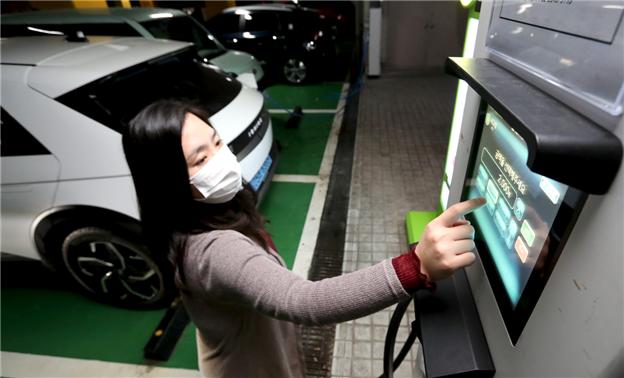
[Asia Economy Reporter Park Jong-il] Seongdong-gu (Mayor Jung Won-oh) will provide eco-friendly vehicle purchase subsidies of up to 1 million KRW starting from the 21st.
Residents aged 18 or older with an address in Seongdong-gu from 30 days before the application date to the application date can receive subsidies on a first-come, first-served basis within the budget range: up to 1 million KRW for electric vehicles and a flat 1 million KRW for hydrogen electric vehicles when purchasing a vehicle.
Last year, the district enacted and promulgated the Seoul Metropolitan City Seongdong-gu Ordinance on the Promotion of Environmentally Friendly Vehicle Use ('21.11.), actively laying the foundation for improving air quality and living environment. The ordinance mandates that public institutions purchase or lease eco-friendly vehicles for shared or work vehicles and allows for fee reductions at public and affiliated parking lots and parking lots operated by institutions funded or supported by the district.
Additionally, the district established the legal basis to provide subsidies to Seongdong-gu residents when purchasing electric and hydrogen electric vehicles. Beyond national and city subsidies, the district plans to take the lead in promoting the use of eco-friendly vehicles through this purchase subsidy, which is the largest support scale among Seoul's autonomous districts using its own budget.
Since 2020, Seongdong-gu has steadily built eco-friendly vehicle infrastructure by installing a total of 139 outlet-type electric vehicle chargers in all public (indoor) parking lots until October last year, the first in Seoul.
Moreover, by actively encouraging private participation, the number of electric vehicles increased 2.54 times from 586 in 2019 to 1,494 as of the end of December 2021. There are 1,449 chargers installed in the area, widely distributed, and the district plans to actively promote the expansion of eco-friendly vehicle distribution through this purchase subsidy support.
Jung Won-oh, Mayor of Seongdong-gu, said, "Along with building eco-friendly vehicle infrastructure, we have accelerated the path to a carbon-neutral city through purchase subsidy support. We will strive to make it more convenient for residents to use eco-friendly vehicles."
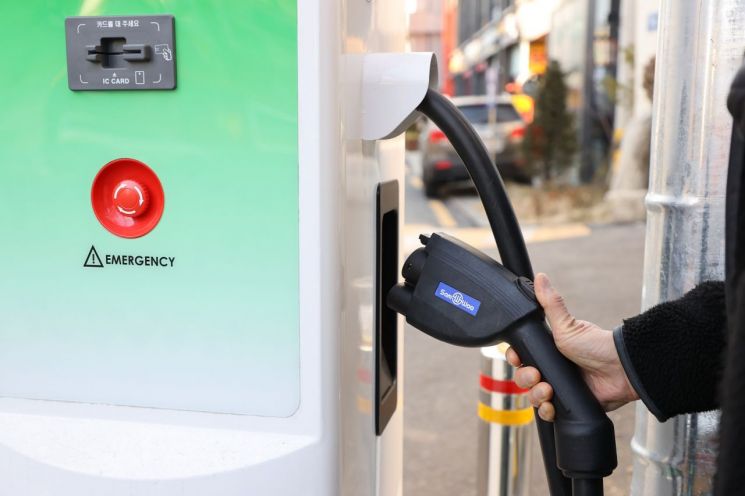
Dongjak-gu (Mayor Lee Chang-woo) announced that it will provide eco-friendly hydrogen and electric vehicle purchase subsidies until December to create a clear urban environment free of exhaust emissions.
Starting in 2020 as the first autonomous district in Seoul to invest 80 million KRW of its own budget, the support project has been providing subsidies for 50 vehicles annually. The district received great responses from residents through purchase subsidies separate from national and city subsidies and established a foundation for the commercialization of eco-friendly vehicles.
The support targets residents, corporations, and businesses aged 18 or older with an address in Dongjak-gu, who can receive 1.6 million KRW per eco-friendly vehicle. However, if supported, vehicle ownership transfer is restricted for two years.
The eligible vehicle models include 53 types of electric passenger cars, 27 types of electric cargo vehicles, and 1 type of hydrogen electric passenger car, totaling 81 types. Eligible models can be checked on the Ministry of Environment's Low Emission Vehicle Integrated Website.
The application period for purchase subsidies is from March 21 to December 16, and applications close when the budget is exhausted.
Residents wishing to apply can visit or mail the eco-friendly vehicle purchase support application form, vehicle registration certificate, and other documents to the Clean Environment Division at the district office (74 Noryangjin-ro, 3rd floor of Yuhan Yanghaeng).
For more details, contact the Clean Environment Division of Dongjak-gu. The district also plans to expand public rapid chargers to 27 units by 2025, aiming to distribute 10,000 eco-friendly vehicles and contribute to popularization.
Park Yeon-su, head of the Clean Environment Division, said, "Through this eco-friendly electric vehicle purchase support, we will reduce vehicle exhaust and create a clean urban environment free of fine dust. We hope many interested residents will participate."
Meanwhile, according to the revised 'Act on the Development and Promotion of Environmentally Friendly Vehicles' fully enforced since January 28, the district will actively crack down on charging obstruction acts in all electric vehicle charging zones. A guidance period will be operated until July 31, with continuous on-site inspections and fines ranging from 100,000 KRW to a maximum of 200,000 KRW.
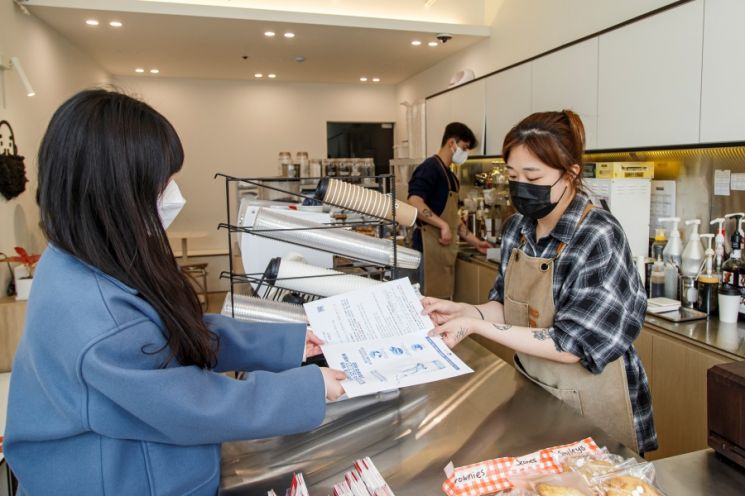
Use of disposable products in food service establishments such as cafes, temporarily allowed to prevent the spread of COVID-19, will be banned again starting April 1.
Previously, under the 'Notification of Exemptions from Disposable Product Use Regulations,' local governments could temporarily allow the use of disposable products in food service establishments during infectious disease outbreaks.
However, due to the rapid increase in disposable product use influenced by COVID-19 and convenience, the Ministry of Environment amended the related notification in January, banning the use of disposable products inside stores starting from the 1st.
Accordingly, Mapo-gu (Mayor Yoo Dong-gyun) will conduct guidance and inspections on disposable product use regulations. From the 23rd to the 31st, guidance will focus on cafes, bakeries, and franchises with high disposable cup usage concerns, followed by intensive inspections from April 1 to 29.
Disposable products banned for in-store use include ▲disposable cups (made of synthetic resin and metal foil) ▲disposable plates and containers (paper, synthetic resin, metal foil) ▲disposable spoons ▲disposable forks ▲disposable knives ▲disposable wooden chopsticks ▲disposable toothpicks ▲disposable vinyl tablecloths.
The district will organize two inspection teams to focus publicity on coffee shops in Sangam-dong, where broadcasting stations and IT companies are concentrated, during the guidance period. For stores outside the inspection area, notification letters and promotional materials will be sent by mail.
In April, when full inspections begin, the district plans to operate two inspection teams and conduct 'Mapo-gu-Seoul City Joint Special Inspections' and 'Mapo-gu-Environmental Group Public-Private Joint Inspections.'
Fines for violations range from 50,000 KRW to 500,000 KRW depending on area, with up to 2 million KRW for a third violation.
From November 24 this year, under the revised 'Enforcement Rules of the Act on the Promotion of Saving and Recycling Resources,' the use of paper cups, plastic straws, and stirring sticks will be banned inside stores. Use of plastic bags will be completely banned in convenience stores and bakeries, and they cannot be purchased even for a fee.
Alongside this, the district is leading efforts to reduce disposable product use. A 'Transparent PET Bottle Separate Collection Box' that accumulates points when inserting transparent PET bottles is installed and operated in the Mapo-gu office lobby. Reusable cups and tumblers made from recycled transparent PET bottles are distributed to all employees to encourage the use of reusable products.
Yoo Dong-gyun, Mayor of Mapo-gu, said, "Disposable product use was temporarily allowed to prevent COVID-19 spread, but the rapidly increasing waste has raised environmental pollution concerns. Although the renewed regulation may cause some inconvenience, we ask for active cooperation from stores and residents to reduce disposable product use for sustainable environmental creation."
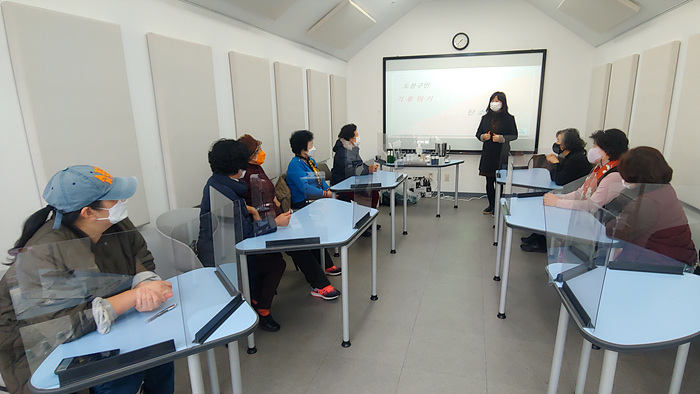
Dobong-gu (Mayor Lee Dong-jin) announced that it received the highest evaluation as the top-rated district among 25 autonomous districts in the 2021 Seoul City Autonomous District Carbon Neutral Lifestyle Practice Movement Evaluation in March 2022.
Seoul City conducted a first self-assessment based on data submitted by 25 autonomous districts from January to February, selecting the top 10 districts. In the second evaluation by an expert committee composed of private specialists, Dobong-gu was selected as the only top-rated district, along with five districts rated as excellent.
Dobong-gu received the highest evaluation in all three evaluation categories: ▲Operation of the 2050 Carbon Neutral Practice Team ▲Greenhouse Gas Diagnosis and Consulting for Households ▲Operation of Climate Change Education Programs.
Specific carbon-neutral lifestyle practice activities include the enactment of the 'Dobong-gu Citizen Carbon Neutral Practice Charter' and the '2050 Carbon Neutral Practice District-wide Resolution Rally' (April 22, 2021), publication and distribution of 'Dobong-gu Citizen Carbon Neutral Practice Guidelines' (4,700 copies), launch and spread of the 'Dobong-gu Citizen Greenhouse Gas 4 Tons Reduction Commitment Campaign' (162 practice team activities with 782 members, 13,400 residents participating, promising to reduce 11,799 tons of greenhouse gases), selection of 117 'Our Village Carbon Neutral Practice Stores,' Green New Deal environmental education for practice team members, expansion of energy diagnosis and consulting for general households (from 200 to 238 households), training of 118 new greenhouse gas reduction promoters, operation of 50 online and offline climate environment education programs in six categories, and acquisition of three new certifications for excellent environmental education programs from the Ministry of Environment.
Lee Dong-jin, Mayor of Dobong-gu, said, "Despite the difficult situation due to COVID-19 last year, we received good evaluations from many institutions thanks to the active participation of many residents. This year, we ask for residents' interest and active participation to realize carbon neutrality as soon as possible."
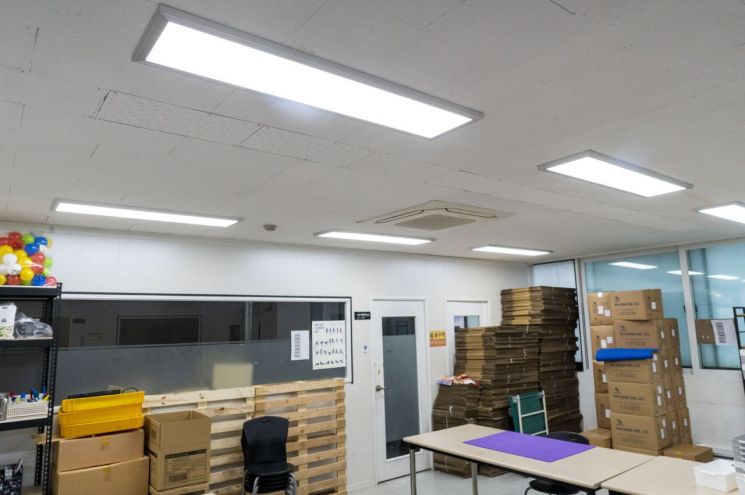
Guro-gu (Mayor Lee Sung) replaced 181 old lighting fixtures with LED lights in welfare facilities within the district.
The district announced on the 22nd that it recently completed a project to replace incandescent and fluorescent lights with LED lighting in six welfare facilities to reduce electricity consumption and improve energy efficiency.
With a budget of 30 million KRW, the project was conducted from last month to early this month at six welfare facilities: Guro-gu Public Regional Children's Center, Guro Comprehensive Social Welfare Center, Dreaming Snail, Nosthos House, Changsin Orphanage, and e-Good Meeting.
The newly replaced LED lights range from 15 to 50 watts, offering longer lifespan and brighter illumination compared to incandescent and fluorescent lights. Their high energy efficiency reduces power consumption by about half, saving electricity bills.
Additionally, the district is conducting an LED lighting replacement project targeting vulnerable groups. The replacement targets old fluorescent and incandescent lights installed in rooms, kitchens, and bathrooms of households of basic livelihood security recipients and low-income groups. The district plans to replace up to four lights per household for 300 selected households by the end of the year.
A Guro-gu official said, "We expect the LED lighting replacement project to reduce electricity bills and improve residential environments. We will continue to promote projects so that more residents can benefit from energy projects."
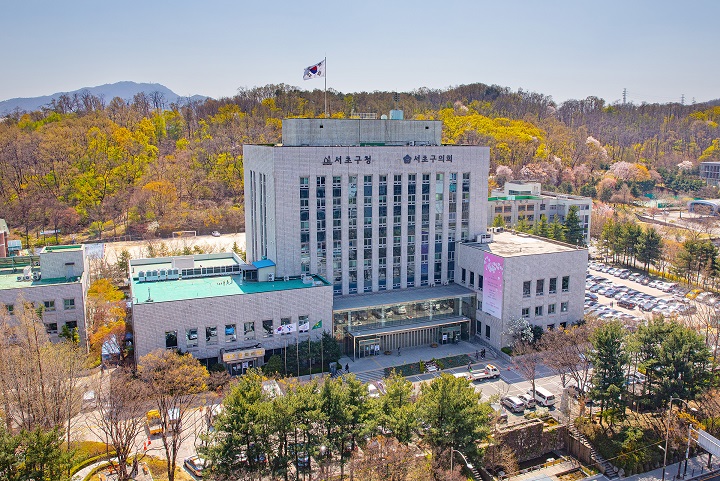
Seocho-gu announced that it will support environmental improvement costs for small-scale restaurant kitchens in the district. The support amount is 50% of the kitchen facility repair cost per restaurant, up to 500,000 KRW.
This project, part of the 'Seocho-gu Hygiene Business Environmental Improvement Support Project,' was initiated to provide practical environmental improvement costs to small-scale restaurants striving for a clean kitchen hygiene environment despite prolonged COVID-19-related business difficulties.
Eligible applicants are small-scale restaurants with business registration in Seocho-gu operating for more than six months and with an area of 100㎡ or less. Applications are accepted on a first-come, first-served basis until the 31st.
Afterward, the district will select supported businesses through the 'Hygiene Business Support Review Committee' around April. Selected restaurants can receive support after completing floor tile and wall painting repairs through a construction company within one month and submitting proof documents.
Details are available on the Seocho-gu website. Inquiries can be made to the Hygiene Division of Seocho-gu Health Center.
The district has made many efforts to ensure residents can visit hygiene businesses with confidence, including supporting 231 businesses with 30 million KRW in 2019 for facility improvements and laundry price tag posting, 74 businesses with 21.64 million KRW in 2020 for ventilation fan and duct cleaning and replacement, and 124 businesses with 49.79 million KRW in 2021 for installing table partitions, receiving great responses from business owners.
Park Jong-deok, head of the Hygiene Division, said, "We hope this project will help small-scale restaurants striving for a clean hygiene environment despite prolonged COVID-19 business difficulties."

Jung-gu (Mayor Seo Yang-ho) will hold a flea market called 'Hongdangmu Market' for single-person households on the 27th.
Inspired by the secondhand trading app 'Danggeun Market,' 'Hongdangmu Market' is a flea market where single-person households act as both sellers and buyers to trade unused items, providing a space for exchange and sharing for single-person households in the area.
'Hongdangmu Market' will be held in Hwanghak-dong (20-7 Nangye-ro 17-gil), where the largest number of single-person households reside in Jung-gu, from 12 PM to 3 PM on the 27th.
In addition to secondhand goods, handmade accessories can also be sold.
The district recently announced plans to minimize unnecessary decorations and waste output at the event, reflecting the eco-friendly trend among young single-person households. An eco-friendly sock yarn coaster-making experience program is also prepared.
Residents wishing to participate can apply by the 23rd through the Jung-gu Single-Person Household KakaoTalk channel 'Jung-gu Single-Person Household Toktok.' Anyone residing in Jung-gu can participate, even if not a single-person household.
A quiz event for visitors guessing words related to Jung-gu's single-person household policies will also be held. Visitors who find the Hongdangmu pictures posted around the venue and answer the quiz correctly will receive generous prizes such as eco-friendly salad seed kits, eco-friendly kitchenware kits, and free coffee coupons.
The number of single-person households in Jung-gu is 22,818 households (as of 2020), accounting for 41.4% of all households, higher than the Seoul average of 33.4%. To actively respond to the increasing welfare needs of single-person households, the district established the first 'Single-Person Household Support Team' in Seoul last September and has been conducting various support projects linked with the local community.
At the end of last year, the district established exclusive online platforms for single-person households, including 'Jung-gu Single-Person Household Toktok' (KakaoTalk channel), Naver Cafe 'THE Singles,' and 'Singles Membership,' serving as spaces for tailored information sharing and communication. The district also operates an 'Online Mental Counseling Service for Single-Person Households' in cooperation with the Jung-gu Mental Health Welfare Center.
Particularly, the district continuously monitors and identifies middle-aged and older single-person households at risk of solitary death in vulnerable residential areas, linking them to customized welfare services such as public benefits and care services.
Additionally, in mid-this month, three projects?'Single-Person Household Communication Space "Single Bungle Seoul Sarangbang",' 'Middle-aged Single-Person Household Social Dining "Happy Table",' and 'Jeonse and Monthly Rent Safe Contract Assistance Service'?were selected in the Seoul City single-person household support project contest, receiving a total of 46.4 million KRW in support.
Seo Yang-ho, Mayor of Jung-gu, said, "I hope this event will be a small opportunity to help single-person households live healthy independent lives and form social networks. We will continue to provide various opportunities for single-person households to participate as respectable members of the community."
© The Asia Business Daily(www.asiae.co.kr). All rights reserved.
![Clutching a Stolen Dior Bag, Saying "I Hate Being Poor but Real"... The Grotesque Con of a "Human Knockoff" [Slate]](https://cwcontent.asiae.co.kr/asiaresize/183/2026021902243444107_1771435474.jpg)

















