Seoul City Addresses Land Shortage... Private Sector Utilizes Underused Sites Through Deregulation
Sites Over 3,000㎡ or 100 Households
Applications Accepted in Natural Green Zones Too
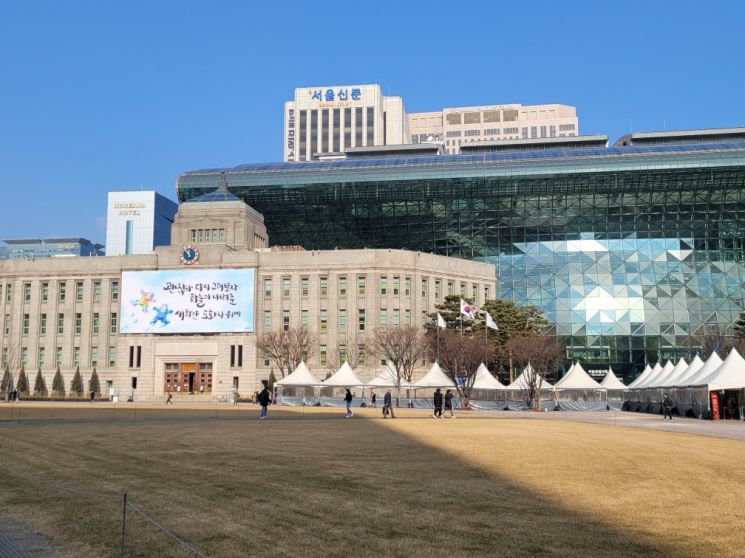
[Asia Economy Reporter Kim Hyemin] The Seoul Metropolitan Government is launching the first public contest for a new type of public housing that combines private land and public resources, called 'Sangsaeng Housing (Long-term Jeonse Housing Utilizing Private Land)'.
On the 13th, Seoul announced that it will hold the first site contest for 'Sangsaeng Housing' from the 14th of this month until July 12. As a pilot project for long-term Jeonse housing, after receiving applications, the private sector and Seoul will negotiate as parties to promote the project.
Long-term Jeonse housing is a type of public housing introduced by Seoul Mayor Oh Se-hoon in 2007 under the name 'Shift.' It was introduced to stabilize housing prices by enabling middle-class real demanders to live stably through long-term Jeonse. Sangsaeng Housing is referred to as the 'second phase of long-term Jeonse housing.' While existing long-term Jeonse housing is supplied by the public sector either by directly building on public land development sites or by purchasing parts of private reconstruction or redevelopment complexes, Sangsaeng Housing utilizes underutilized or neglected private land to build public housing and supply it as long-term Jeonse housing.
The city aims to resolve difficulties in supplying long-term Jeonse housing due to the depletion of large-scale public land and enable the private sector to rationally develop land that is difficult to develop or has reduced utility by receiving regulatory relaxations such as zoning upgrades and urban planning facility cancellations. A Seoul city official explained, "It is a new type where the public and private sectors cooperate for mutual win-win." The city has announced plans to supply a total of 70,000 households over five years until 2026 through both the existing long-term Jeonse housing method and Sangsaeng Housing.
Landowners wishing to participate in the project or those authorized by landowners can apply to Seoul. Subsequently, the public sector and private parties will negotiate major aspects of the project, including urban management plans and land use agreements. Once negotiations are complete, if the public sector implements the project, it will undergo review and approval under the 'Special Act on Public Housing,' and if the private sector implements it, under the 'Housing Act' and other relevant laws. Eligible sites for application are lands within Seoul with an area of 3,000㎡ or more or land capable of planning 100 or more apartment units.
The pilot project contest sites include 'Natural Green Areas.' Considering consistency with higher-level plans and individual site conditions, zoning can be changed to up to quasi-residential or general commercial areas to enable public housing construction. The city plans to set basic directions for the project plan to ensure minimal environmental damage and urban sustainability when changing zoning.
The project methods are broadly three types: ▲'Private Land Usage Type,' where the public sector pays land usage fees and leases private land to build and operate public housing; ▲'Joint Investment Type,' where a corporation established by joint investment from public and private sectors builds and operates public housing; ▲'Private-Public Cooperation Type,' where the public and private sectors negotiate to implement projects based on private proposals such as land development.
Land usage fees, usage periods, project termination, and liquidation methods are determined through negotiations between private and public sectors. Land usage fees will be objectively calculated through appraisals considering economic value such as regional environment and will be updated reflecting land price fluctuations. The fees will be appraised considering expected returns and guaranteed to be at least equal to the 20-year government bond yield. Upon termination of land usage, assets will be liquidated based on the appraised value of assets at the termination time, including land and buildings owned by private and public parties.
Kim Seongbo, Director of Housing Policy at Seoul City, said, "Through Sangsaeng Housing, the private sector can rationally utilize underused idle land, and the public sector can diversify methods of securing land for long-term Jeonse housing construction. We will do our best to activate the supply of quality long-term Jeonse housing starting with the Sangsaeng Housing pilot project."
© The Asia Business Daily(www.asiae.co.kr). All rights reserved.
![Clutching a Stolen Dior Bag, Saying "I Hate Being Poor but Real"... The Grotesque Con of a "Human Knockoff" [Slate]](https://cwcontent.asiae.co.kr/asiaresize/183/2026021902243444107_1771435474.jpg)











