[Seoul District News] Gwanak-gu invests 3.75 billion KRW to create community cultural spaces including a performance hall, (tentative name) Children’s Lounge, exhibition room, and restaurant... Gwangjin Innovation Education Village School calls for project participants... Jongno-gu promotes eco-friendly green parking lot project... Gangbuk-gu intensively manages high-risk COVID-19 home treatment patients... Yeongdeungpo-gu recruits tile technician trainees to nurture young architects
[Asia Economy Reporter Jong-il Park] The remodeling project of Gwanak Art Hall (35, Sillim-ro 3-gil, Gwanak-gu) is gaining momentum.
As the only public performance venue in the area, Gwanak Art Hall has been a beloved space for local residents, hosting various events and performances in Gwanak-gu for 20 years since its opening in 2002.
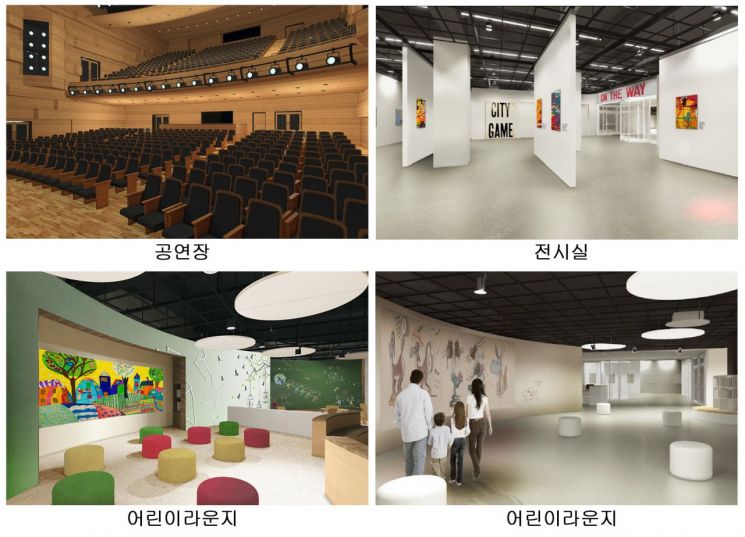
The remodeling project, with a total budget of 3.75 billion KRW, began detailed design in September last year and started construction in February this year. Starting with the performance hall, the art hall’s auxiliary facilities such as the (tentatively named) Children's Lounge, exhibition hall, and restaurant will be transformed into new spaces.
Before the remodeling, the district conducted a survey targeting residents to create a 'culture space where residents are the main characters,' and actively reflected residents' opinions through three resident briefings and workshops titled 'Dreaming, Gwanak Art Hall.'
The newly reborn Gwanak Art Hall aims to be a multi-purpose professional performance hall focused on family plays. The seating will be rearranged to 700 seats with wider and more comfortable chairs than before, ensuring optimal sightlines. In particular, a wall structure with sound absorption and diffusion will be applied to establish a modern acoustic environment, and wood flooring will be installed to create a luxurious interior atmosphere.
Additionally, the space will be rearranged for user-centered flow convenience, remodeling the (tentatively named) Children's Lounge, exhibition hall, and restaurant.
The Children's Lounge will serve as an alternative space for users of the existing infant library and will be designed as a space where children and parents can enjoy 'together and separately.' It plans to create an art play experience space that connects art and play, led by children, making it accessible to all families visiting the art hall.
The exhibition hall will be designed as a space where artists, works, and audiences can interact and communicate. It will be reborn as a flexible exhibition space that can adapt to the needs of not only local artists but also various other artists.
The restaurant inside the art hall will be developed into a space that satisfies more visitors following the completion of the Gwanaksan Station on the light rail in May 2022, which improved facility accessibility. It will not be just a restaurant visited during meal times but will be designed as a community space where residents visiting the art hall can stay and socialize.
The district is currently carrying out construction with the goal of completion in June and reopening in July.
A district official stated, “With the opening of ‘Gwancheon-ro Cultural Platform S1472’ and ‘Media Center Gwanak’ last year, we have created cultural spaces for local artists and youth, serving as a communication channel for the region through art and media, receiving positive responses. We will strive to transform Gwanak Art Hall into a family brand professional performance hall where the whole family can enjoy together through this remodeling.”
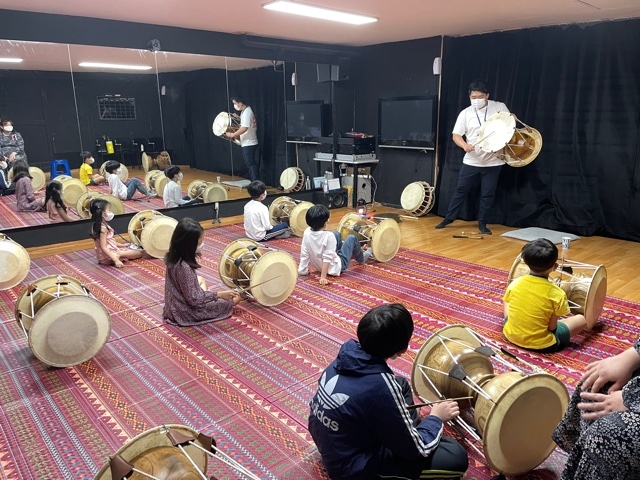
Gwangjin-gu (Mayor Seong-gap Kim) is recruiting participants for the ‘2022 Gwangjin Innovative Education Village School Contest Project.’
The ‘Gwangjin Innovative Education Village School’ is a project that utilizes local human and material educational resources to provide various experiential opportunities such as cultural, artistic, and physical activities, and social participation that are not covered in the regular school curriculum.
The district has been promoting the ‘Village School’ project since 2017 to enhance the educational capacity of the village (local area) and to form an educational community together with the district office.
The target for the Village School contest project is a local resident group or organization with three or more members possessing creative educational content for children and youth. However, the applying village school must secure its own class location, and the number of students recruited must be at least eight.
Interested organizations should fill out the village school application form available in the announcements section on the district office website and submit it via email by March 11.
After preliminary review, the district plans to select 20 village schools with diverse educational content such as cultural, artistic, physical activities, cooking, and social participation in April, providing up to 5 million KRW in support to the selected village schools.
For detailed inquiries, contact the Education Support Division of Gwangjin-gu Office.
Mayor Seong-gap Kim of Gwangjin-gu said, “We are promoting the ‘Village School’ project to expand learning and enhance creativity for children and youth through various experiences outside of school. We hope many creative and distinctive programs will be selected to provide diverse experiential opportunities for children.”
Jongno-gu is promoting the ‘Eco-friendly Green Parking Lot Creation Project’ to transform urban parking lots into safe and nature-friendly spaces by December this year, providing partial construction cost support to private parking lots in the area that wish to participate.
An ‘Eco-friendly Green Parking Lot’ refers to a future-oriented parking lot designed to preserve nature and harmonize with the natural environment while considering user safety and convenience.
By increasing green spaces within parking lots, the project improves urban aesthetics and provides various urban forest effects such as noise reduction. This project has been steadily promoted since 2010. As of January 2022, a total of 28 public parking lots in the area have been reborn as eco-friendly green parking lots.
Jongno-gu has gone further by revising ordinances and establishing detailed support criteria to encourage participation from private parking lots. Since last year, private parking lot owners have also been eligible for construction cost support for creating eco-friendly green parking lots, with the district directly managing the construction to ensure reliability.
For each parking lot, support is provided for ▲floor paving (grass planting, permeable paving) ▲landscaping work (flower bed creation, landscaping fences, street planters, wall greening), with up to 30 million KRW available. However, applicants must bear 10% of the construction cost, and support amounts vary depending on the number of parking spaces.
Additionally, the eco-friendly green parking lot must be maintained for at least five years after completion, with recovery measures applied if not complied with.
Applications and more detailed information about the eco-friendly green parking lot project can be found on the district office website or by contacting the Parking Management Division.
In 2020, Jongno-gu was the first local government nationwide to produce and distribute the ‘Eco-friendly Green Parking Lot Guidelines,’ which serve as a directive for creating eco-friendly green parking lots.
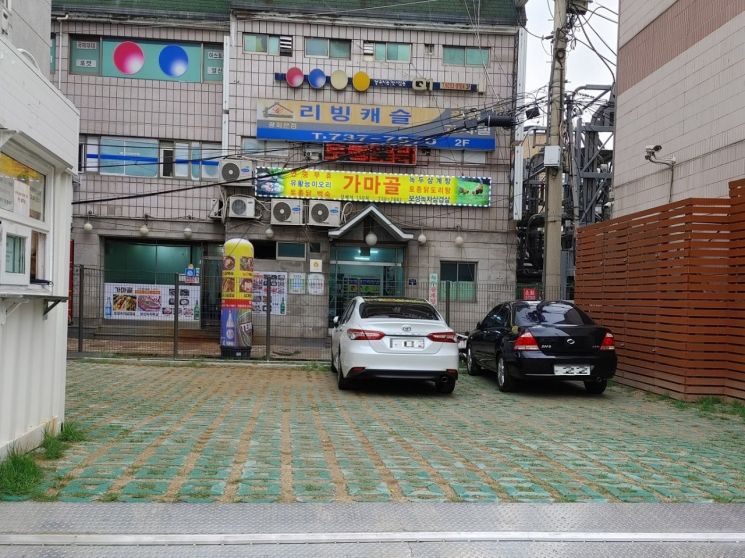
Through continuous efforts to encourage participation from private parking lots, last year a private parking lot in Chebu-dong was reborn as the region’s first ‘Private Off-street Eco-friendly Green Parking Lot.’
This parking lot was in a very poor condition due to its narrow space and the presence of air conditioner outdoor units, pipes, and wires on both walls. However, through construction, the floor was paved with permeable grass blocks, wooden screens were installed on the walls with air conditioner units, and old facilities were replaced, transforming it into a visually pleasing space with excellent environmental improvement effects.
A district official emphasized, “This year, we plan to intensify promotion efforts so that more private parking lots can be reborn as eco-friendly green spaces. As this project improves urban aesthetics and contributes to user safety, we hope many interested parties will participate.”

Gangbuk-gu (Mayor Kyeom-su Park) is conducting health monitoring for COVID-19 home treatment patients with severe underlying diseases to focus on managing high-risk groups with a high risk of death.
According to data released by the Korea Disease Control and Prevention Agency in January on underlying diseases of domestic COVID-19 deaths, about 95% of COVID-19 deaths in Korea had underlying diseases, with an average of about 1.9 underlying diseases per deceased person. The most common underlying diseases were cardiovascular diseases such as ▲heart failure ▲myocarditis ▲myocardial infarction ▲hypertension, followed by endocrine disorders such as ▲diabetes ▲pituitary dysfunction ▲adrenal diseases.
Accordingly, the district announced that it will conduct health monitoring for high-risk groups among home treatment patients who have underlying diseases such as hypertension, diabetes, and cardiovascular and cerebrovascular diseases, providing non-face-to-face medical consultation guidance and customized health management materials according to symptoms and risk levels to reduce the mortality rate of COVID-19 confirmed patients.
In addition to targeting high-risk COVID-19 patients, the district has launched a KakaoTalk channel called ‘Geonganghalkodang’ to prevent cardiovascular and cerebrovascular diseases among local residents.
By searching for ‘Geonganghalkodang’ on the mobile messenger KakaoTalk and adding the channel as a friend, users can access the latest information on cardiovascular and cerebrovascular diseases such as hypertension, diabetes, and dyslipidemia, various health events, and health promotion projects at public health centers. They can also receive consultations related to hypertension and diabetes via KakaoTalk messages.
Mayor Kyeom-su Park of Gangbuk-gu said, “We will focus on managing high-risk groups among home treatment patients to reduce the risk caused by COVID-19. We will also work hard to ensure that there are no gaps in quarantine measures until the end of the pandemic.”
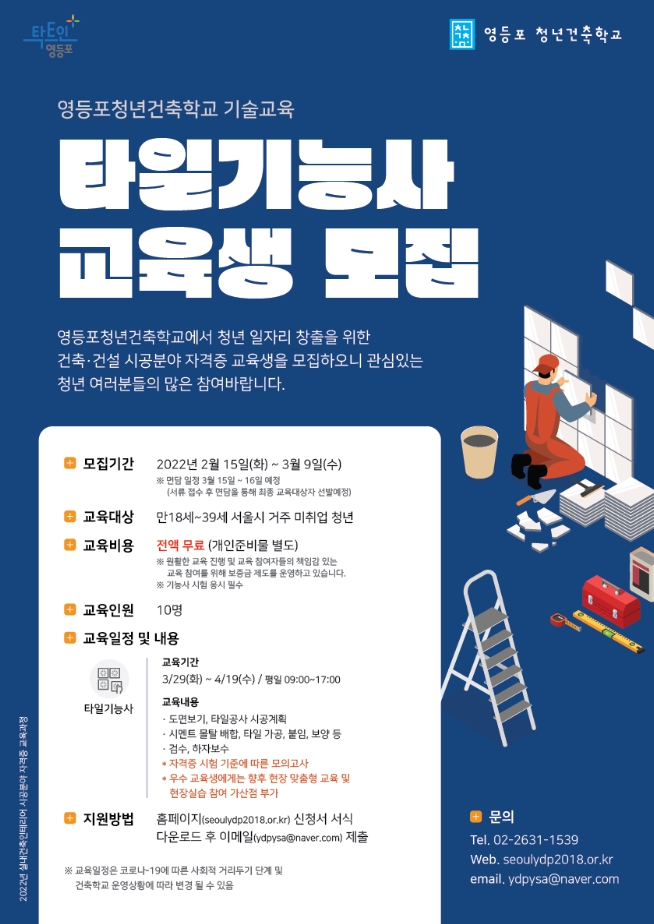
Yeongdeungpo-gu (Mayor Hyun-il Chae) is operating various educational programs with Yeongdeungpo Youth Architecture School to nurture young architects in the region, supporting their stable living and boosting self-esteem.
Accordingly, from March 29 to April 19, a tile technician training course will be held on weekdays from 9 a.m. to 5 p.m., and applications for participants will be accepted on a first-come, first-served basis until March 9.
The training will mainly cover ▲reading blueprints and planning tile construction ▲mixing cement mortar, tile processing, installation, and protection ▲inspection and defect repair. Outstanding trainees will receive additional points when participating in future field-customized training and practical work.
Youth aged 18 to 39 residing in Seoul who are unemployed and wish to participate can download the application form from the Yeongdeungpo-gu Office or Youth Architecture School websites and submit it via email to the person in charge.
A total of 10 trainees will be recruited. The training is free of charge, but participants must prepare their own personal supplies.
In addition, Yeongdeungpo Youth Architecture School plans to conduct various substantial architectural technology education programs throughout the year to nurture young architects and interior technicians.
Programs include ‘Certification courses in interior finishing,’ ‘On-site practical training in interior finishing,’ and employment and entrepreneurship linkage programs through acquiring professional architectural skills. They also operate the ‘Our Neighborhood Home Repair Support Program’ to assist vulnerable households, continuing social contribution activities through talent donation by graduates.
Furthermore, the ‘Our Neighborhood Housing Improvement Management Company Establishment Project’ will be expanded to support the establishment of youth-led home repair specialized companies and local housing management company platforms through customized entrepreneurship education covering home repair construction and home care necessary for overall local housing management.
Details about the programs of Yeongdeungpo Youth Architecture School can be found on the Yeongdeungpo-gu website or the Architecture School website. Inquiries can also be made by phone to the Social Economy Division of Yeongdeungpo-gu Office or Yeongdeungpo Youth Architecture School.
Mayor Hyun-il Chae of Yeongdeungpo-gu said, “We will continue to strengthen various youth architectural technology education and youth support policies so that aspiring architects in the region can find their career paths and visions, fully demonstrate their capabilities, and grow into professional architectural technicians.”
© The Asia Business Daily(www.asiae.co.kr). All rights reserved.
![Clutching a Stolen Dior Bag, Saying "I Hate Being Poor but Real"... The Grotesque Con of a "Human Knockoff" [Slate]](https://cwcontent.asiae.co.kr/asiaresize/183/2026021902243444107_1771435474.jpg)

















