How Long Can the Semiconductor Industry Withstand the Russia-Ukraine Crisis?
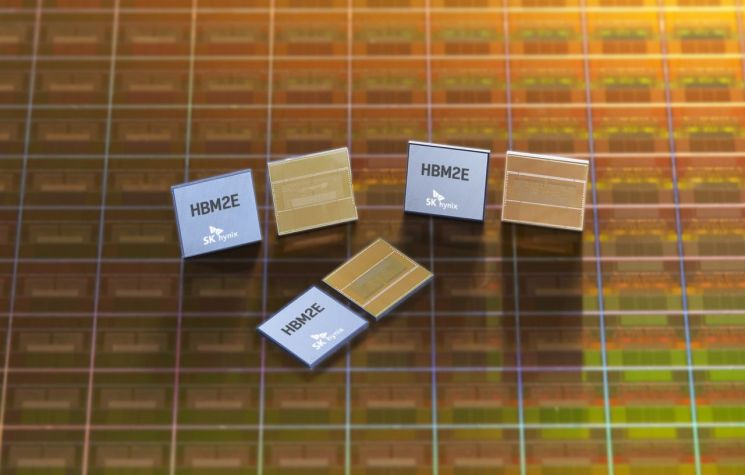
[Asia Economy Reporter Park Sun-mi] As South Korea imports key materials necessary for semiconductor production, such as neon and krypton, from Ukraine, the semiconductor industry estimates that the time they can endure using the major raw material stockpiles they have accumulated in advance is about three months.
According to the Export-Import Bank of Korea on the 26th, Ukraine accounts for 70% of the global neon gas supply. Ukraine is South Korea's second-largest neon import partner, with a share of 23% ($1.328 million) in 2021, and in 2020, it was the largest import country with a 52.3% share ($1.938 million).
Neon gas is mainly used in semiconductor DUV (Deep Ultraviolet) lithography technology. In the case of memory, NAND flash uses 100% DUV lithography technology. More than 90% of DRAM also uses DUV, with the remainder applying EUV lithography processes. This means that a shortage of neon gas could directly impact semiconductor production. ASML, a Dutch semiconductor equipment company serving global semiconductor companies such as Samsung Electronics, TSMC, and Intel, is seeking alternative supply sources due to concerns over neon supply disruptions caused by the worsening Russia-Ukraine situation.
Lee Min-hee, an analyst at BNK Investment & Securities, said, "There are concerns about semiconductor production disruptions due to special gas import difficulties caused by the worsening Russia-Ukraine situation," adding, "Ukraine is a major supplier of inert special gases such as neon, argon, krypton, and xenon, with neon gas accounting for 70% of the global supply."
However, the Korean semiconductor industry is believed to have secured at least three months' worth of semiconductor special gas raw materials, so the immediate risk from raw material supply is minimal.
The analyst explained, "However, companies like SK Hynix currently hold more than one quarter's worth of inventory, and considering inventory within the supply chain, there is no short-term concern about production disruptions due to raw material shortages." He added, "If the Ukraine situation prolongs, there could be risks of semiconductor production disruptions, but efforts to reduce usage proportionally in the manufacturing process through engineering or strengthening advance stockpiling measures can be utilized."
Kim Jang-yeol, an analyst at Sangsangin Securities, also said, "Key semiconductor raw materials such as neon gas are generally secured for one quarter (three months)," and analyzed, "Geopolitical risks related to semiconductor raw material supply can gradually be resolved if they do not last long-term (over three months)."
Some express concerns that if the timely supply of key materials necessary for semiconductor production is delayed for a long time, it could lead to semiconductor production disruptions, impacting the entire industry. Lee Jae-yoon, an analyst at Yuanta Securities, said, "Production disruptions in memory semiconductors could act as a factor for price increases," and warned, "In an extreme scenario, shortages in non-memory and memory semiconductor supply could lower production plans in the IT upstream industry, leading to a slowdown in demand for IT components outside of semiconductors."
© The Asia Business Daily(www.asiae.co.kr). All rights reserved.
![Clutching a Stolen Dior Bag, Saying "I Hate Being Poor but Real"... The Grotesque Con of a "Human Knockoff" [Slate]](https://cwcontent.asiae.co.kr/asiaresize/183/2026021902243444107_1771435474.jpg)















