Sim Sang-jung Mentions 'Mobility Rights for Disabled'
Jeon Jang-yeon Group, Protesting for 20 Days, Omits 'Boarding and Alighting Delay Protest'... Leading Change
"It's Meaningful That Disability Issues Were Mentioned in the Debate"
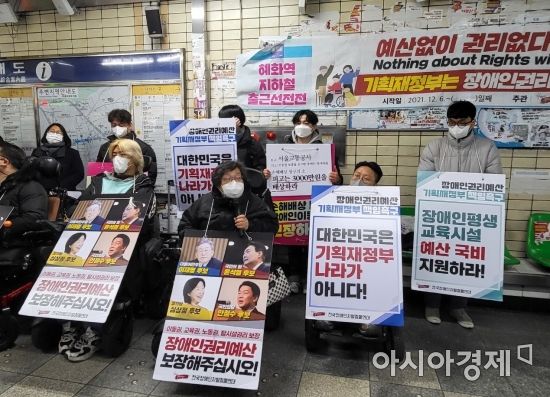 Lee Hyung-sook, Chairperson of the Seoul Disabled Independent Living Center Council, speaking at Hyehwa Station on Seoul Subway Line 4. The promotional materials attached to the wall behind the activists holding placards are damaged. Photo by Hyunju Park phj0325@
[Asia Economy Reporter Yoon Seul-gi] The protest method of the National Solidarity for the Elimination of Discrimination against Persons with Disabilities (Jeonjangyeon), which has been conducting subway boarding and alighting delay protests for 20 consecutive days to demand mobility rights, changed overnight. This change was driven by a single remark from Sim Sang-jung, the Justice Party presidential candidate, who said, "We will create an advanced country for persons with disabilities."
On the 22nd, Jeonjangyeon held a protest to urge the "guarantee of mobility rights for persons with disabilities," starting at 7:30 a.m. at Chungmuro Station on Seoul Subway Line 3, moving to Gyeongbokgung Station, and then alighting. However, the boarding and alighting delay protests, which had caused the greatest friction with citizens, were omitted, allowing the subway to operate normally.
Previously, Jeonjangyeon had deliberately delayed trains through boarding and alighting protests to highlight mobility issues. As these protests repeatedly occurred during busy morning commutes, citizens expressed discomfort despite understanding their urgency. Some online communities harshly expressed dissatisfaction toward them with hate attacks and other violent expressions. Jeonjangyeon also revealed that they have been subjected to insulting internet comments, verbal abuse, and threats both online and offline.
From Jeonjangyeon's perspective, since guaranteeing mobility rights is urgent, they planned to continue protests until the issue is resolved. Therefore, although there was no end in sight to the inconvenience caused to subway users, Jeonjangyeon announced that they would no longer conduct protests that deliberately delay subway operations. Park Kyung-seok, Jeonjangyeon's representative, said, "Yesterday, candidate Sim Sang-jung mentioned guaranteeing mobility rights for persons with disabilities during the TV debate," adding, "We will continue the subway morning commute protests but have decided not to conduct boarding and alighting delay protests to minimize friction with citizens."
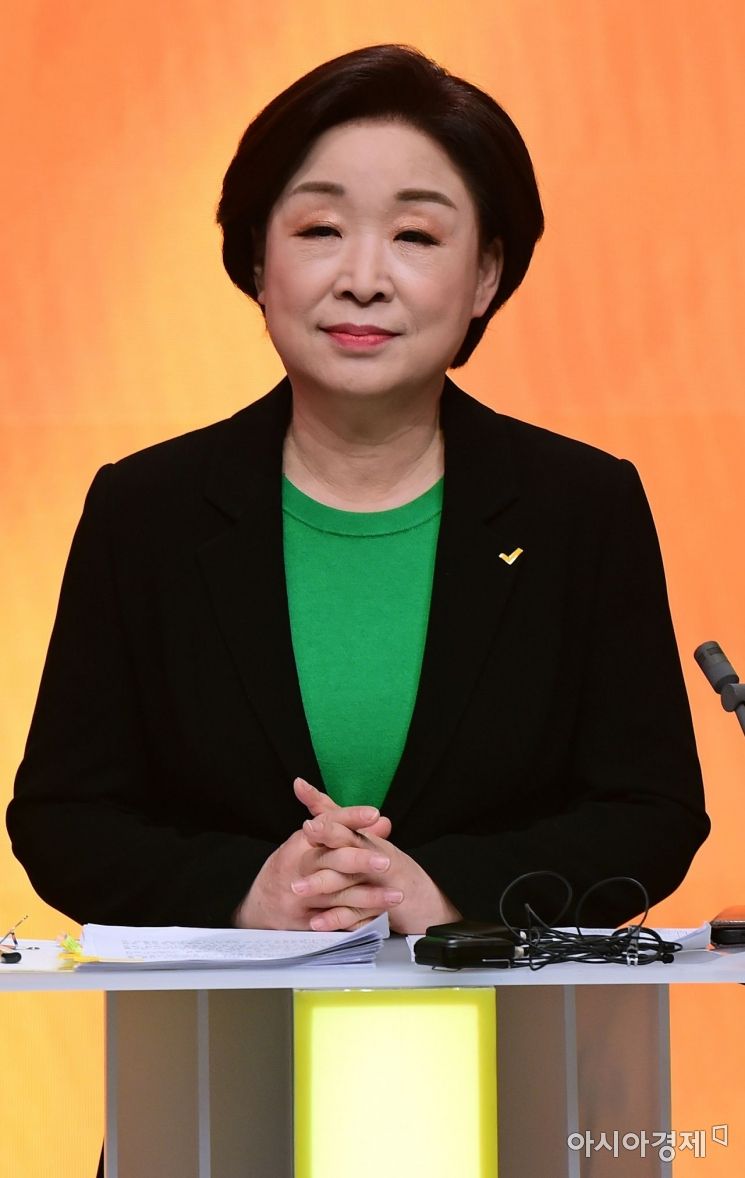 Sim Sang-jung, the Justice Party presidential candidate, is preparing for the debate at the first debate hosted by the National Election Commission held at MBC in Mapo-gu, Seoul on the 21st. Photo by the National Assembly Press Photographers Group
On the 21st, candidate Sim, during the one-minute closing remarks of the third four-candidate presidential debate held at MBC in Sangam-dong, Mapo-gu, Seoul, expressed sympathy for Jeonjangyeon's protest, stating, "Not only securing the budget for mobility rights but also creating an advanced country for persons with disabilities where they are treated with dignity," and urged, "Please end the protests now." Regarding Sim's remarks, Representative Park said, "It is meaningful that disability-related issues were mentioned in the debate," and added, "Since the politician has pledged to fulfill social responsibility, there is no need for severe clashes with citizens anymore." Sim's message to them appears to have opened the way for conflict resolution.
Meanwhile, the 20th presidential election has earned the stigma of being a "record-breaking election" due to continuous negative confrontations. Some candidates were criticized for promoting discrimination and hate. As the election approached, both ruling and opposition parties exchanged harsh language such as "Hitler," "fascist," and "shamanistic republic," escalating the tone of their remarks. However, there are calls for politicians to be cautious with their language, given their significant social influence.
The National Human Rights Commission of Korea (NHRCK) pointed out in its 2019 decision on preventing and responding to politicians' hate speech that "hate speech is rapidly spreading in the political sphere," and that politicians' social influence amplifies the harm caused. The NHRCK emphasized, "Politicians have the duty to advance the fundamental democratic values of diversity and respect for human rights across society, including the political domain," and "They bear greater social responsibility to control, prevent, and respond to hate speech."
© The Asia Business Daily(www.asiae.co.kr). All rights reserved.
![Clutching a Stolen Dior Bag, Saying "I Hate Being Poor but Real"... The Grotesque Con of a "Human Knockoff" [Slate]](https://cwcontent.asiae.co.kr/asiaresize/183/2026021902243444107_1771435474.jpg)
















