Putin "Does Not Want War"... Russia's Domestic Situation Also Difficult
US and West "Demand Concrete Evidence of Withdrawal"... Concerns Over Weakened Response Capability
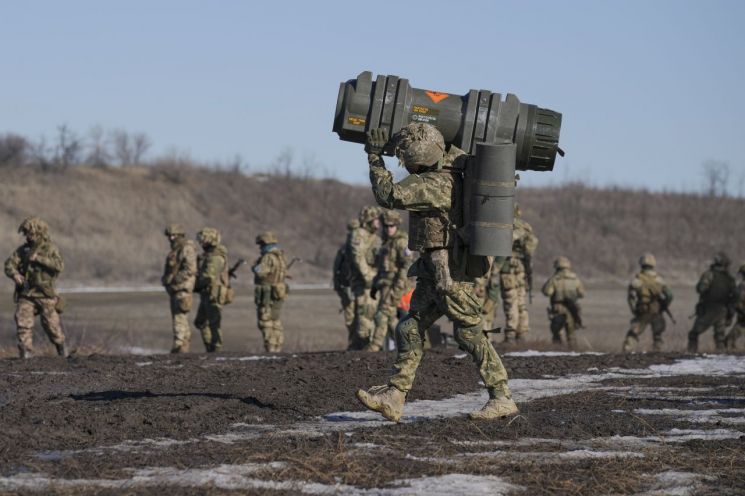
[Asia Economy Reporter Hyunwoo Lee] Russia, which had been causing military tensions in Ukraine, has withdrawn some of the troops deployed in the border area and emphasized a diplomatic solution, drawing attention to the background of this move. It is interpreted that Russia, which had been employing a ‘brinkmanship’ tactic toward Ukraine, has started to adjust the intensity as the risk of escalating into a full-scale war increased.
Western countries, including the United States, welcome the easing of tensions but remain cautious, demanding concrete evidence of troop withdrawal. Concerns remain that Russia’s superficial announcement of tension reduction could weaken the West’s joint response capabilities, so the standoff between the two sides is expected to continue for some time.
On the 15th (local time), the Russian Ministry of Defense announced in a statement that "the Russian Southern Military District troops deployed to the Crimean Peninsula for tactical training have returned to the Russian mainland." Igor Konashenkov, spokesperson for the Russian Ministry of Defense, emphasized, "A special train has been arranged to begin loading armored vehicles and weapons that were dispatched along with the soldiers."
Putin: "Does Not Want War"... Adjusting Brinkmanship Intensity
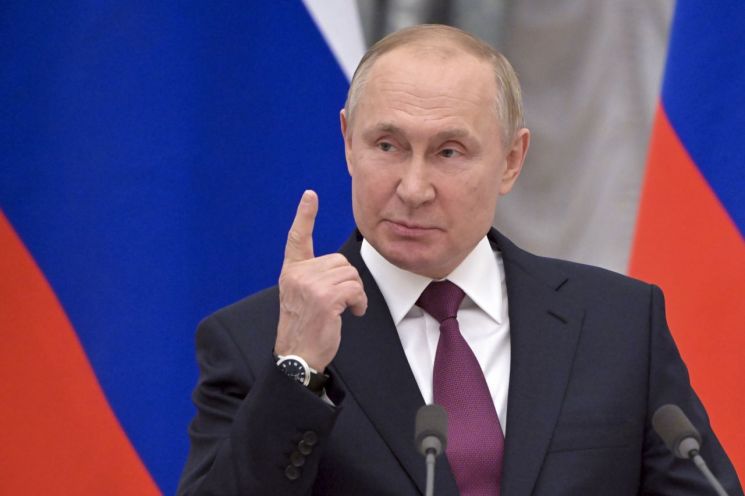
Russian President Vladimir Putin also stated that he does not want war. At a press conference following a summit with German Chancellor Olaf Scholz, who visited Russia that day, President Putin said, "Russia does not want war in Europe," and added, "We are ready to continue dialogue with the West on various issues, including missile deployments."
Earlier, the United States warned on the 16th that Russia could launch an invasion of Ukraine, raising fears of a full-scale war, which is interpreted as prompting Russia to quickly adjust its stance. The British weekly magazine The Economist analyzed, "Within Russia, there is no official government propaganda promoting an invasion of Ukraine, and most intellectuals view President Putin as using brinkmanship to gain a favorable position in negotiations with the West rather than pursuing full-scale war."
Within Russia, voices opposing the war are growing due to economic difficulties and soaring prices. On the 11th, the Russian Central Bank raised the benchmark interest rate by 100 basis points (1bp=0.01%) to 9.50%. This was because the January Consumer Price Index (CPI) inflation rate rose 8.7% year-on-year, more than double the Central Bank’s inflation target of 4%, triggering an emergency in price management. A public opinion poll conducted by the independent Russian polling agency Levada Center at the end of last month showed that over 60% of Russians oppose the war with Ukraine.
US and West Demand "Concrete Evidence" and Respond Cautiously
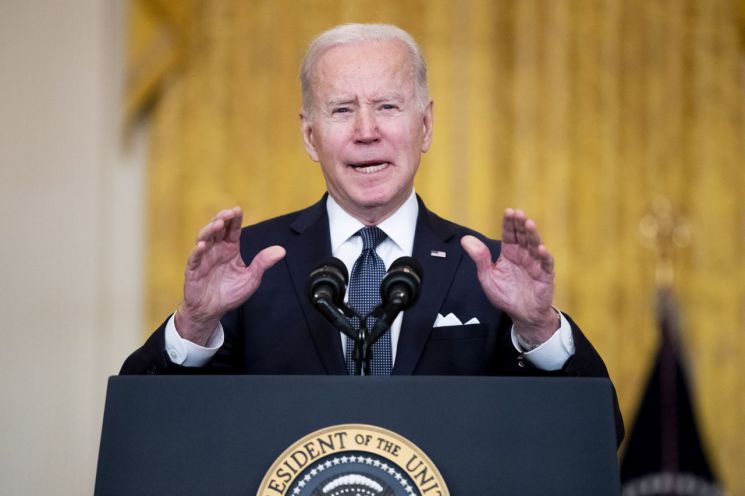
Western countries are demanding Russia provide concrete evidence of troop withdrawal and have begun crackdowns to prevent weakening of joint response capabilities. British Prime Minister Boris Johnson said in an interview with Sky News, "Russia is sending confusing messages of both dialogue and confrontation," and pointed out, "The number of troops withdrawn has not been specified, and military build-up continues with field hospitals being set up in Belarus."
The New York Times (NYT) noted, "The United States and major Western countries are in a position where they must continue persuading European countries, which must bear many sacrifices, to ensure that sanctions against Russia actually work." It is analyzed that if the easing signals are prematurely accepted positively while Russia still has large-scale troops deployed at the border, joint response capabilities could weaken.
Markets Cheer... Stock Rebound and Oil Price Decline

Meanwhile, expectations for easing tensions have grown, leading to a rebound in international stock markets and a drop in oil prices. The S&P 500 index, which had fallen sharply by 4% over the past three trading days due to heightened war risks surrounding Ukraine, closed up 1.58% at 4471.07, rebounding after four days. The Dow Jones Industrial Average closed at 29,988.84, up 1.22%, and the Nasdaq Composite surged 2.53% to 14,139.76.
European stock markets also closed higher across the board. The UK’s FTSE 100 index closed at 7608.92, up 1.03%, Germany’s DAX 30 index rose 1.98% to 15,412.71, and France’s CAC 40 index increased 1.86% to 6979.97.
However, market insiders remain cautious. Vincent Deluard, investment strategist at StoneX, said, "Just because the stock market rose for a day doesn’t mean we are out of the woods," diagnosing that the Ukraine situation remains a variable that can still shake the market.
International oil prices, which had threatened the $100 level, fell sharply by more than 3%. On the New York Mercantile Exchange (NYMEX), West Texas Intermediate (WTI) crude oil closed at $92.07 per barrel, down 3.55% from the previous day, and Brent crude on the London ICE Futures Exchange also fell 3.32% to $93.28.
© The Asia Business Daily(www.asiae.co.kr). All rights reserved.
![Clutching a Stolen Dior Bag, Saying "I Hate Being Poor but Real"... The Grotesque Con of a "Human Knockoff" [Slate]](https://cwcontent.asiae.co.kr/asiaresize/183/2026021902243444107_1771435474.jpg)

















