Imported Goods Price Index Turns Up After Three Months
Consumer Price Inflation Stays in 3% Range for Four Consecutive Months
Fuel Price Hike Hits Low-Income Economy Hard
Domestic Industry Also Struggles with Rising Costs
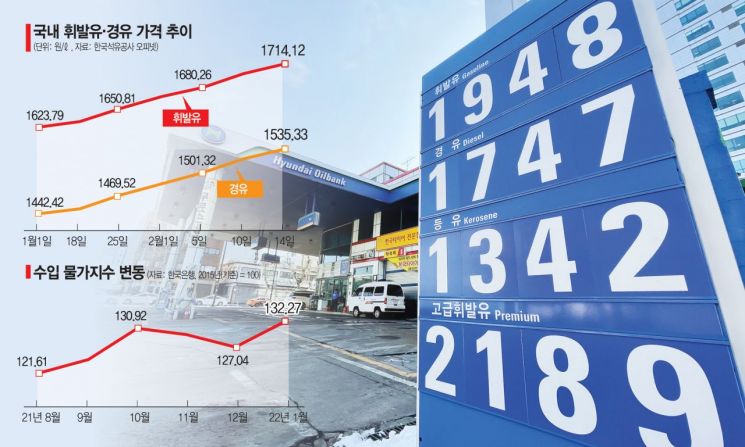
As the possibility of war between Russia and Ukraine pushes international oil prices close to surpassing $100 per barrel, concerns over rising domestic fuel prices and inflation are spreading. The surge in raw material and energy prices has driven import prices to their highest level in 9 years and 3 months, while the trade deficit is widening further, increasing the burden on our economy. Given the recent international trends, the likelihood of energy prices stabilizing soon is low, prompting calls for urgent government measures to alleviate the burden on ordinary citizens and industries.
Soaring Oil Prices... Direct Hit to the Household Economy
According to the 'January Import and Export Price Index' released by the Bank of Korea on the 15th, the import price index last month rose 4.1% from the previous month to 132.27. This is the highest level in 9 years and 3 months since October 2012 (133.69). The import price index had declined for two consecutive months in November and December last year due to a temporary dip in international oil prices but reversed to an increase after three months due to the rebound in oil prices.
The rise in import prices driven by oil prices directly affects domestic inflation. The domestic consumer price inflation rate already recorded 3.6% last month, surpassing the 3% mark for four consecutive months.
In particular, the increase in fuel prices is a direct blow to the household economy. According to Opinet, as of this day, the nationwide average gasoline price was 1,716 KRW per liter, up 49 KRW over two weeks from 1,667 KRW at the beginning of this month. Diesel prices also rose by 52 KRW from 1,485 KRW to 1,537 KRW. The cost burden on truck drivers and delivery workers is expected to be significant immediately. The market expects gasoline prices to exceed the pre-fuel tax cut level of 1,800 KRW per liter within this month. Consequently, there are concerns about the substantial cost burden on households as well as truck drivers and delivery workers.
The inflationary fear triggered by oil prices is not unique to South Korea. Bloomberg reported on the 14th (local time) that according to an Economics Shock Model analysis, if crude oil prices reach $100 by the end of this month, inflation rates in the US and Europe will increase by 0.5 percentage points in the second half of this year. Goldman Sachs, which expects oil prices to reach $100 in the third quarter, estimates that if oil prices increase by an additional 50%, inflation will rise by an average of 0.6 percentage points, with emerging markets expected to suffer the most damage.
JP Morgan forecasts that if international oil prices rise to $150 per barrel, inflation rates will exceed 7%. Peter Hooper, Head of Global Economic Research at Deutsche Bank, said, "An oil shock causes widespread inflation problems," adding, "As a result, global growth could slow significantly."
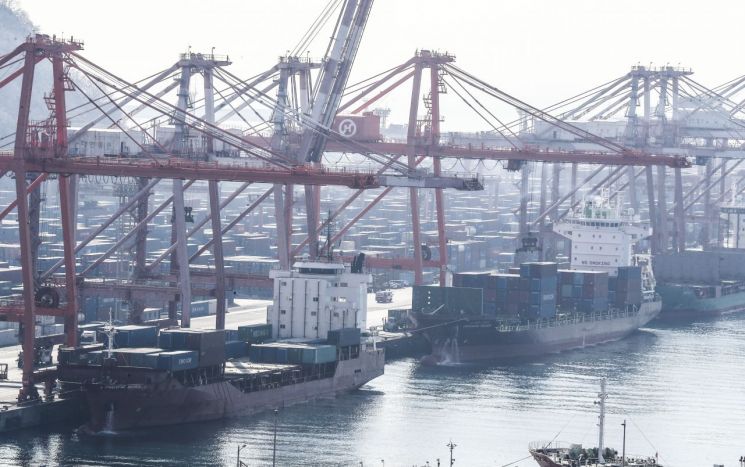 On the morning of the 11th, container unloading operations are underway at Busan Port Sinsundae Pier. [Image source=Yonhap News]
Industry on Alert Amid Soaring International Oil Prices
South Korea has the highest crude oil consumption relative to GDP among OECD member countries, making it highly sensitive to international oil prices. The aviation and logistics sectors are immediately under pressure. When oil prices rise, costs increase directly. Korean Air spent 1.8 trillion KRW on fuel last year, a 44.3% increase from 1.2474 trillion KRW the previous year. Fuel costs account for 20% of its revenue.
Refining companies are concerned that the short-term surge in oil prices caused by the Russia-Ukraine situation will significantly affect refining margins. Domestic product prices are determined based on the international market product price (MOPS) traded in the Singapore petroleum products market, freight rates, and exchange rates, with the Ukraine variable now added. If high oil prices persist and lead to product price increases, overall demand may shrink, prompting close monitoring of export markets.
The petrochemical industry faces a similar situation. The price of naphtha, a key raw material for petrochemicals, is also rising rapidly. Although relatively cheaper liquefied petroleum gas (LPG) or ethanol are partially used as alternative raw materials to naphtha, the first half's performance will depend on whether the increased oil costs can be reflected in product prices.
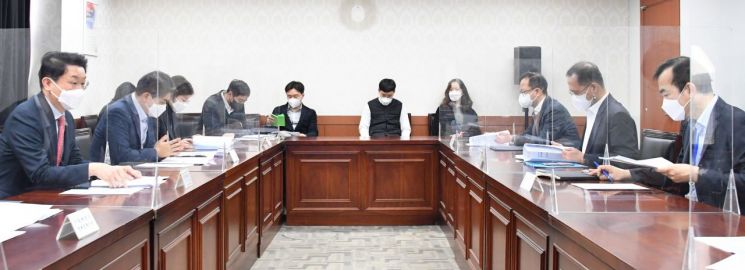 Deputy Minister of Strategy and Finance Lee Ok-won (left) is presiding over the '3rd Emergency Response TF Meeting on the Ukraine Crisis' at the Government Seoul Office on the 15th.
 [Image source=Yonhap News]
Government's Preemptive Securing of Raw Materials and Energy
As international military tensions rise, the government held the third emergency response meeting on the Ukraine situation, chaired by Lee Ok-won, First Vice Minister of Strategy and Finance, to discuss countermeasures. Given concerns that worsening geopolitical instability could negatively impact the economy through supply chain disruptions, constraints on real economic recovery, and increased financial market uncertainty, the government plans to prepare comprehensive response plans for various scenarios.
First, the government has taken follow-up measures such as establishing hotlines with businesspeople through KOTRA and the Korea International Trade Association to support local companies and small and medium-sized exporters. KOTRA headquarters and local trade offices will lead local task forces. Additionally, in emergencies, alternative transportation methods (air and maritime) for rail transport will be activated, and preemptive securing of key items such as raw materials, energy, and grains will be considered to reduce industry burdens.
Vice Minister Lee said, "We plan to mobilize all available policy tools to prevent real economic contraction and minimize financial market volatility in case of any emergency," adding, "We will also enhance action plans for each agency to ensure immediate response in emergencies."
© The Asia Business Daily(www.asiae.co.kr). All rights reserved.
![Clutching a Stolen Dior Bag, Saying "I Hate Being Poor but Real"... The Grotesque Con of a "Human Knockoff" [Slate]](https://cwcontent.asiae.co.kr/asiaresize/183/2026021902243444107_1771435474.jpg)

















