Used by 45,000 People Daily... Established as the Main Transportation Between Busan and Ulsan
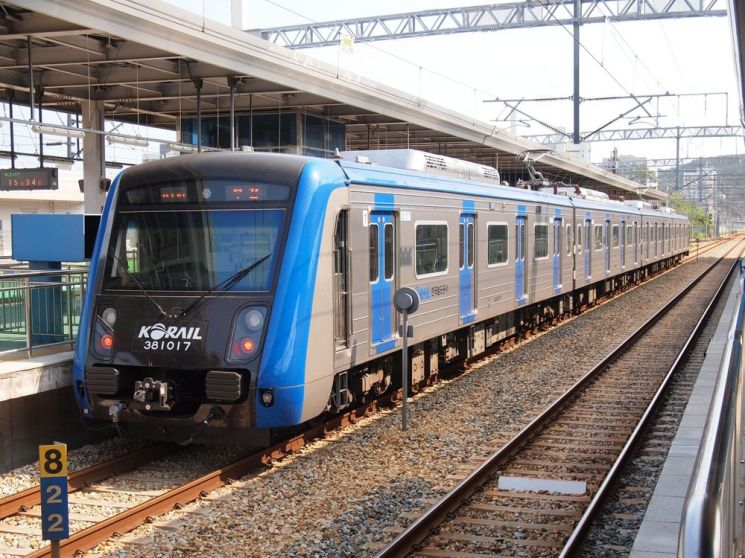
The Donghae Line metropolitan railway, which was fully opened on December 28 last year, has established itself as a representative transportation means between Busan and Ulsan, with 1.35 million users within just one month of operation.
According to Korea Railroad Corporation (KORAIL) on the 12th, after the opening of the second phase section of the Donghae Line (Ilgwang~Taehwagang), the cumulative number of metropolitan railway users between Busan Bujeon and Ulsan Taehwagang Station reached approximately 1.35 million as of January 26.
The average daily number of Donghae Line train users during the first month of operation was 45,038. The first phase section from Bujeon to Ilgwang saw 36,630 users, an 18.9% increase compared to 30,819 before opening, while the newly opened Ilgwang to Taehwagang section had 8,408 users.
In particular, the Ilgwang to Taehwagang section, which previously operated only 32 Mugunghwa trains, now runs 100 metropolitan trains and 28 Mugunghwa trains, increasing the number of users from 2,360 to 9,319 (8,409 metropolitan trains, 910 Mugunghwa trains), nearly four times more.
The stations with the highest metropolitan railway usage were Bujeon (5,099), Taehwagang (4,787), BEXCO (4,661), and Busan National University of Education (4,585). Compared to before the opening, Bujeon Station saw the largest increase in users at 88.5%, while Ilgwang Station decreased by 10.3%.
The newly opened section from Busan Ilgwang to Ulsan Taehwagang had an average weekend usage of 10,620, about 1.5 times higher than the weekday average of 7,604, indicating that leisure travelers outnumber commuters.
However, the number of passengers on the opening day was 51,541, which decreased to 44,456 two weeks later on January 11, and further to 43,014 four weeks later on January 25.
The highest congestion rate inside the train was about 110% on the BEXCO~Centum section, which is lower compared to the Seoul metropolitan area Bundang Line (182%), Gyeongin Line (163%), and Gyeonggang Line (150%).
Do Hyun-cheol, head of KORAIL’s Metropolitan Planning Department, said, “We will cooperate with local governments to revitalize the Donghae Line station areas and further improve services and convenience for Busan and Ulsan citizens. We will continuously monitor usage trends and consult with local governments on measures such as increasing train frequency if necessary.”
© The Asia Business Daily(www.asiae.co.kr). All rights reserved.
![Clutching a Stolen Dior Bag, Saying "I Hate Being Poor but Real"... The Grotesque Con of a "Human Knockoff" [Slate]](https://cwcontent.asiae.co.kr/asiaresize/183/2026021902243444107_1771435474.jpg)















