Respiratory Specialized Clinics Equipped for Testing and Treatment at Once
Many Designated Medical Institutions Do Not Conduct PCR Tests
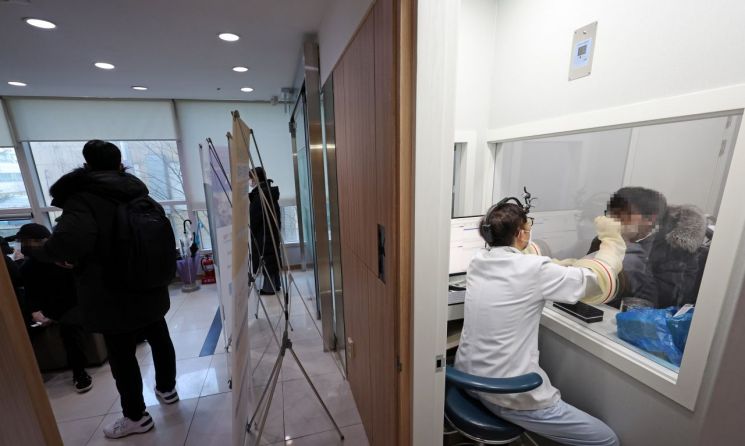 On the afternoon of the 3rd, a doctor is conducting a rapid antigen test at an otolaryngology clinic in Seoul. [Image source=Yonhap News]
[Asia Economy Reporter Kim Young-won] Since June 3rd, with the start of the Omicron response COVID-19 diagnosis and testing system, rapid antigen tests have become available at both ‘Respiratory Specialized Clinics’ and ‘Designated Respiratory Medical Institutions.’ While both institutions are medical facilities conducting COVID-19 tests, there are differences between them.
First, Respiratory Specialized Clinics are medical institutions equipped with a safe environment to prevent infection and provide care for patients with fever and respiratory symptoms. The government has been promoting these clinics since 2020 in preparation for the prolonged COVID-19 pandemic, and as of June 5th, 403 clinics are in operation.
To operate a Respiratory Specialized Clinic, it is mandatory to have infection control conditions such as separate movement paths and negative pressure facilities. Therefore, Respiratory Specialized Clinics were able to immediately participate in the system transition that began on June 3rd. The health authorities explained that since these clinics have the conditions to respond to infectious diseases, they apply a process where consultation, diagnostic testing, and home treatment are conducted all at once.
Designated Respiratory Medical Institutions refer to neighborhood clinics and hospitals that began operating on June 3rd after applications were accepted from May 27th to transition to the Omicron response system. Since these are medical institutions that previously provided general care and joined through application, many do not have the thorough infection control conditions like Respiratory Specialized Clinics. The health authorities require Designated Respiratory Medical Institutions to adhere to standards such as ▲strict appointment systems ▲ensuring safe distancing ▲wearing KF94 or higher masks ▲ventilation and disinfection protocols.
Due to these conditions, many Designated Respiratory Medical Institutions currently only perform some of the rapid antigen tests, polymerase chain reaction (PCR) tests, and home treatments. According to the Health Insurance Review and Assessment Service, as of June 6th, only 144 out of 476 designated institutions can perform PCR tests. Whether COVID-19 treatment is available cannot be confirmed from the list provided by the Review and Assessment Service. Also, depending on hospital circumstances such as kit stock, testing may become unavailable, so it is advisable to call ahead before visiting.
Meanwhile, health authorities explain that Respiratory Specialized Clinics and Designated Medical Institutions are basically places where tests are conducted ‘if symptoms are present.’ To get tested for COVID-19 without respiratory or fever symptoms, the basic policy is to get tested at screening clinics.
If symptomatic individuals get tested for COVID-19 at these medical institutions, consultation fees will be charged (5,000 KRW for clinics and 6,500 KRW for hospitals). All tests at screening clinics and temporary screening testing sites are free of charge.
© The Asia Business Daily(www.asiae.co.kr). All rights reserved.
![Clutching a Stolen Dior Bag, Saying "I Hate Being Poor but Real"... The Grotesque Con of a "Human Knockoff" [Slate]](https://cwcontent.asiae.co.kr/asiaresize/183/2026021902243444107_1771435474.jpg)















