Drama 'Jigeum Uri Hakgyoneun', 'Ogem' Rank No.1 on Netflix Within a Day
Students' Struggle to Avoid 'Zombie' Portrayed
Grotesquely Twisted Bodies, Torn Facial Skin... Brutal Direction
Netflix Broadly Recognizes Producer's 'Freedom of Expression'
But Faces Criticism for Featuring 'Cruel and Violent Content'
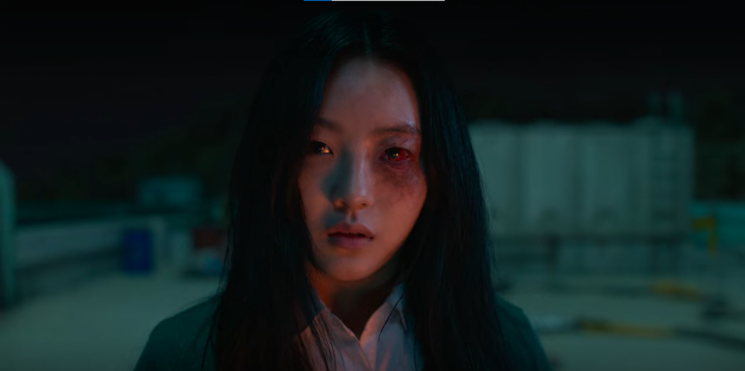
[Asia Economy Reporter Yoon Seul-gi] Domestic dramas produced as Netflix originals have consecutively ranked number one globally, achieving a huge success. The recently released "Now at Our School" (Jiwoo-hak) also quickly claimed the top spot in worldwide rankings, continuing the popularity of K-dramas. However, there are criticisms that, like "Squid Game" (Ogeom), it attracted viewers' attention by featuring violent and brutal scenes in the storyline.
Following the global sensation "Ogeom" in the second half of last year, "Jiwoo-hak" has also established itself as a K-zombie genre, demonstrating the strength of Korean dramas. According to the OTT (online video service) content ranking site "Flix Patrol" on the 7th, "Jiwoo-hak" took first place in the Netflix TV show category just one day after its release on the 28th of last month. Since then, it has maintained the top position for five consecutive days until the 2nd.
This is the third time a domestic Netflix series has ranked number one globally, following last year's "Squid Game" (Ogeom) and "Hellbound." "Jiwoo-hak," based on the webtoon of the same name by writer Joo Dong-geun on Naver, depicts students struggling to survive after a "zombie virus" spreads in a high school. With the area sealed off and no external help available, students fight to survive by pulling bows or breaking mop handles into sharp weapons to directly attack the zombies that bite people.
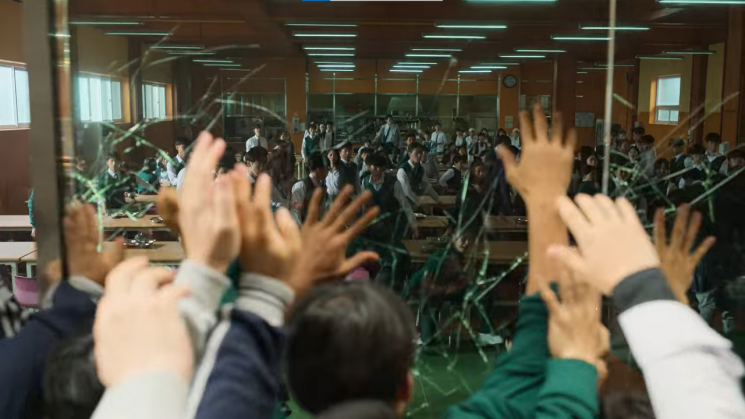 A scene from episode 1 of the Netflix original drama "All of Us Are Dead." Students are in a panic due to the sudden appearance of zombies. Photo by Netflix.
"Jiwoo-hak" showcases the unique action and visuals of the K-zombie genre. Especially, the scenes in episodes 1 and 2 where hundreds of students panic in the school cafeteria to escape threatening zombies made viewers want to "binge-watch overnight." A 20-year-old college student A, who watched the approximately 12-hour-long "Jiwoo-hak" in one day, said, "Since zombies appear, there are many bloody scenes. Because it is provocative, I couldn't take my eyes off it," adding, "The drama's ending makes you curious about the next episode, so I couldn't stop and watched it all night."
However, there are also criticisms that the level of brutality went too far due to excessive focus on visual stimulation. "Jiwoo-hak" vividly and brutally depicts the detailed skin of faces bitten and torn by zombies, as well as bizarre body postures with upper bodies completely bent backward during zombification, enhanced with sound effects.
Of course, "Jiwoo-hak" is an adult-rated work that received a "Restricted to Adults" (청불) rating from the Korea Media Rating Board (KMRB) before airing. The KMRB stated, "Due to realistic, continuous, and specific expressions of violence, dialogue, horror, drugs, and imitation risks, it is inappropriate for adolescents to watch and may have harmful effects, so it was rated as restricted to adults."
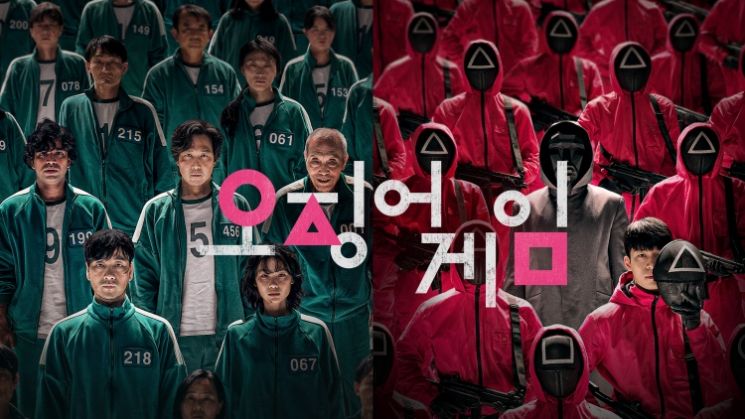
Nevertheless, criticism arises because, unlike public broadcast dramas that adjust the level even for adult ratings, Netflix dramas have virtually no "expression restrictions," attracting viewers with brutal and violent content. The "Ogeom," which led the K-drama craze, is also a destructive "death game" genre where 455 out of 456 participants die. Death games are a genre involving life-or-death games, which have been widely produced abroad but were rare in Korea.
As a result, voices criticizing the selection and violence of the work followed the popularity of "Ogeom." Some schools in the U.S. and Europe issued bans on "Ogeom" costume imitations, fearing that students might mimic violent scenes from the show ahead of Halloween.
Netflix is chosen by Korean creators due to its broad acceptance of expression and full production support. Kim Eun-hee, writer of "Kingdom," the originator of K-zombie, stated, "The reason for choosing Netflix is freedom of expression." However, domestic dramas produced and supported by Netflix such as "Jiwoo-hak" and "Ogeom" have repeatedly been stigmatized as content featuring unfiltered brutality, violence, and sexual content.
Cultural critic Jung Deok-hyun analyzed, "It is true that the level of content produced by Netflix is higher than what has been seen on public broadcasts so far," adding, "However, considering the entire work, it seems to be popular because of its high completeness, including social messages."
© The Asia Business Daily(www.asiae.co.kr). All rights reserved.
![Clutching a Stolen Dior Bag, Saying "I Hate Being Poor but Real"... The Grotesque Con of a "Human Knockoff" [Slate]](https://cwcontent.asiae.co.kr/asiaresize/183/2026021902243444107_1771435474.jpg)


















