Forum: "Land-based Waste Volume Control Implemented, but Maritime Area is Lawless"
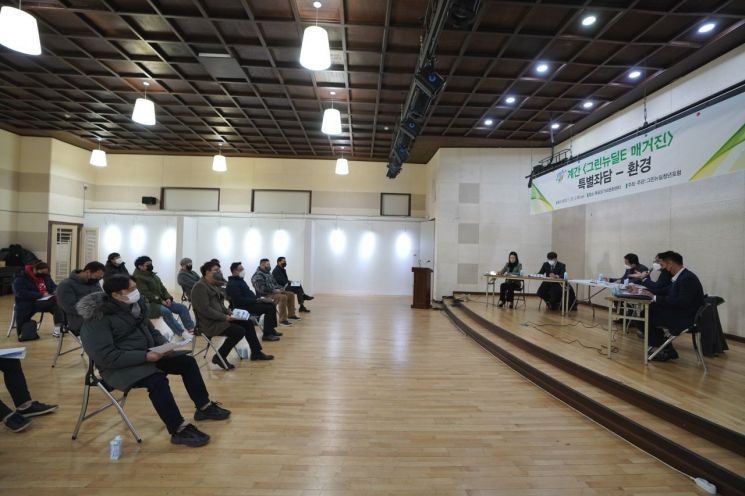
[Asia Economy Honam Reporting Headquarters, Reporter Jeong Seunghyun] The Green New Deal Youth Forum held an inaugural ceremony and a roundtable discussion on marine litter on the 27th.
The roundtable was moderated by Park Hyosang, a consultant at Jeonnam Credit Guarantee Foundation, with panelists including Jo Okhyun, spokesperson for the Jeonnam Provincial Council; Lee Jaekyung, professor at National Mokpo University; Jang Jinyoung, representative of Saenghwal ESG Jeonnam; and Shin Seon, president of the Green New Deal Youth Forum. Only a minimal number of forum members attended as the audience.
Due to the spread of COVID-19, the scaled-down roundtable served as an opportunity to share changes in the local environment and the current status of marine litter under the theme "Changes in the Regional Economy Due to the Green New Deal."
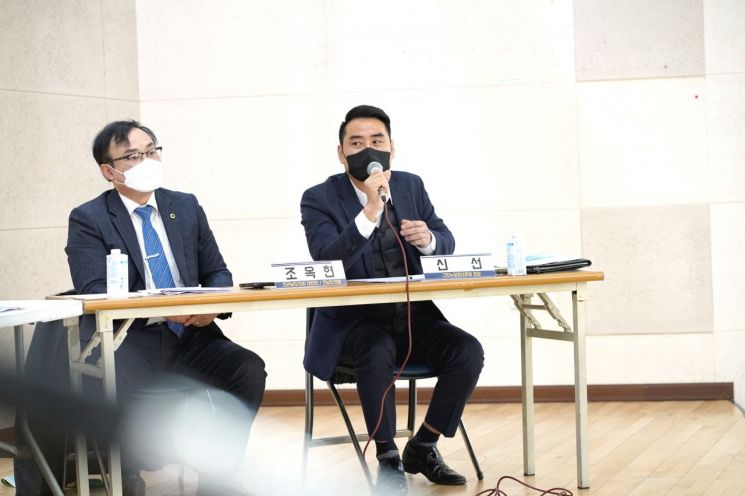 Shin Seon, President of the Green New Deal Youth Forum, briefing on the current status of marine debris near the local area.
Before the discussion, President Shin gave a presentation titled "Our Rotting Sea, the Current Status of Marine Litter," explaining the estimated existing amount of marine litter, related legislation, and policies.
The roundtable proceeded with four topics: views and necessity of the Green New Deal, cases of environmental destruction due to rapid industrialization, solutions to abandoned fishing gear that have become shackles for fisheries, and directions for sustainable fisheries.
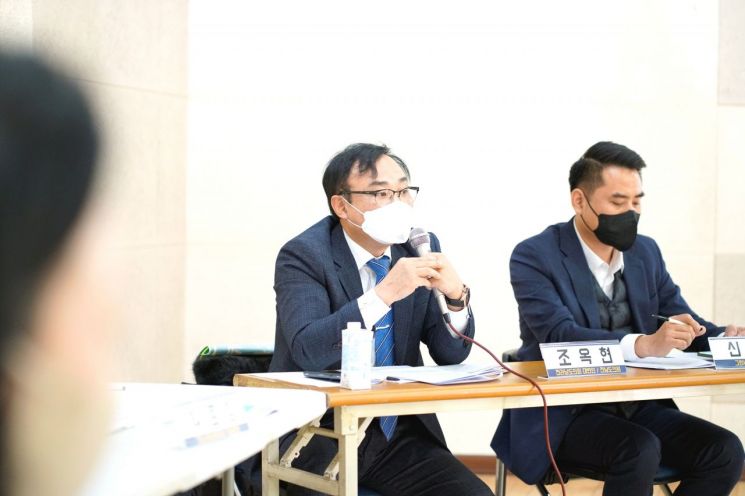 Jo Ok-hyun, spokesperson for the Jeonnam Provincial Council, says efforts must be made to continuously build social consensus on the Green New Deal.
Jo Okhyun, spokesperson for the Jeonnam Provincial Council, stated, "The Green New Deal is a policy aimed at radically solving the ongoing climate change and environmental issues. However, without social consensus and efforts among the public, it cannot be a solution."
He also advised, "How to sustain the Green New Deal policy requires close cooperation between the public and private sectors, and I hope that opportunities like today's roundtable will be held frequently."
In particular, while major advanced countries worldwide have already strengthened their climate crisis response efforts by declaring carbon neutrality (Net-zero), South Korea has also announced a comprehensive Green New Deal plan aiming to realize a carbon-neutral (Net-zero) society by 2050.
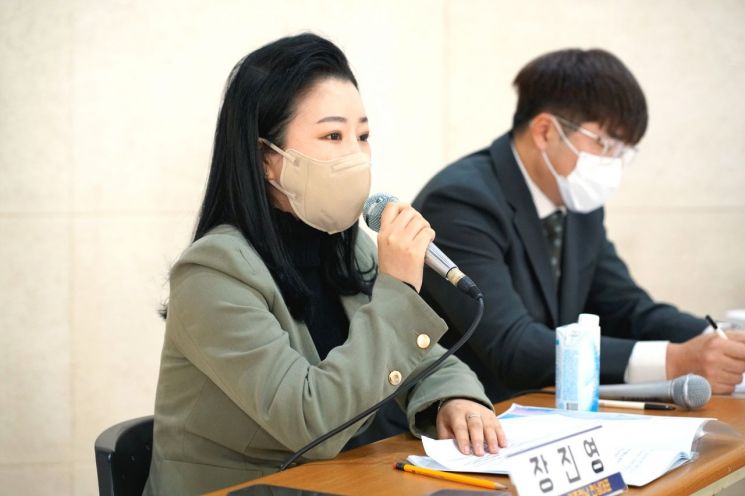 Jang Jin-young, Jeonnam Representative of Saenghwal ESG, stated that climate change response and economic growth must be achieved simultaneously.
Jang Jinyoung, representative of Saenghwal ESG Jeonnam, said, "We must achieve both climate change response and economic growth through renewable energy industries and green job creation. The Green New Deal, which can respond to the environmental crisis, is essential for us and must continue to grow sustainably. Activation must start from Jeonnam, the key area of the new growth strategy, the Green New Deal."
Regarding cases of environmental destruction due to rapid industrialization, President Shin criticized, "Currently, over 90% of marine litter near Sinan consists of abandoned fishing gear. While fisheries and related industries are developing day by day, the systems and improvement measures are grossly insufficient."
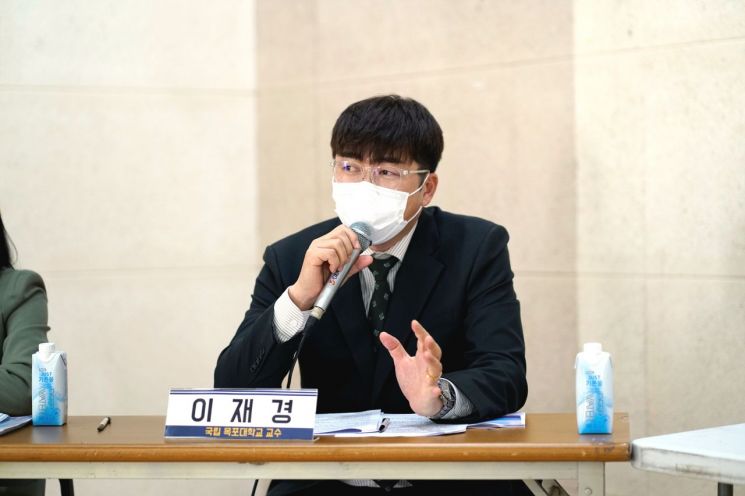 Professor Lee Jae-kyung of Mokpo National University says that the fishing industry must also undergo changes alongside the environment.
Professor Lee Jaekyung of Mokpo University also emphasized, "Until the 1960s and 70s, capture fisheries were central, but in the 1980s and 90s, aquaculture was focused on with the intention of cultivating fish species. However, as environmental changes persist and pollution accumulates, aquaculture yields have also decreased. The current direction of fisheries is no longer just catching or cultivating but requires systematic management."
The panelists attending the roundtable also proposed various alternatives regarding abandoned fishing gear, which have become shackles for fishermen, including fishing gear management, a net identification system, and fishing gear GPS projects.
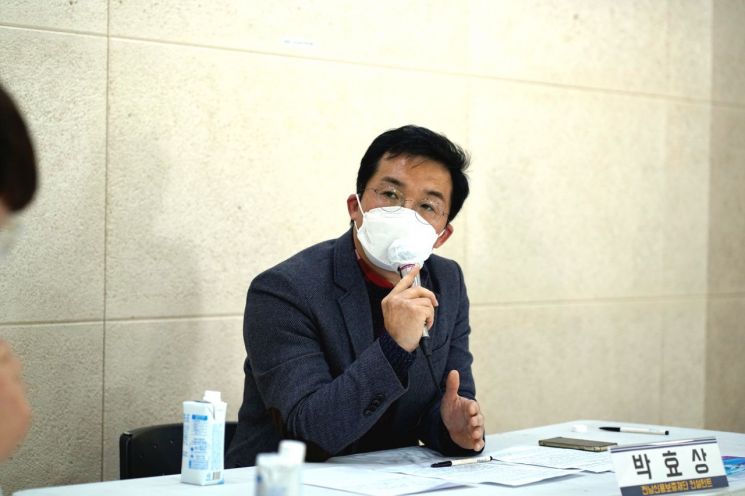 Park Hyo-sang, a consultant at Jeonnam Credit Guarantee Foundation, who is building consensus among panelists through the roundtable discussion.
Following this, Park Hyosang, a consultant at Jeonnam Credit Guarantee Foundation, said, "I asked maritime-related departments of nearby local governments about fishing gear management and status surveys, but there is not even accurate data. Thorough fishing gear management and continuous public-private cooperation are necessary."
Meanwhile, the Green New Deal Youth Forum, which hosted this roundtable, plans to publish the Green New Deal E-Magazine and operate as an organization proposing environmental governance and educational policies within the region.
© The Asia Business Daily(www.asiae.co.kr). All rights reserved.