Surge in Plastic Waste After COVID-19 Spread
Nearly 197.4 Million Tons in 2020 Alone
Korea Ranks 3rd Globally in Per Capita Plastic Waste
Experts: "Not Only Government, But Also Businesses and Individuals Must Change Behavior"
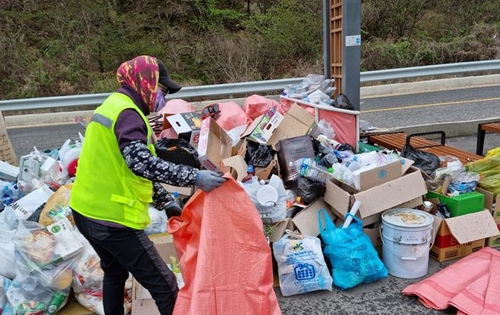
[Asia Economy Reporter Lim Juhyung] Will 'mountains of single-use waste' pile up on the streets again during this Lunar New Year holiday? Since the COVID-19 pandemic, non-face-to-face services such as food delivery have become more active, leading to a significant increase in the amount of single-use plastic containers being discarded. It has been revealed that the amount of plastic waste per capita in Korea ranks third highest in the world. There are concerns that plastic waste could become a serious environmental issue domestically in the future.
According to the Korea Environment Corporation under the Ministry of Environment, the average daily waste generation in 2020 was tentatively estimated at 540,872 tons (t). On an annual basis, this amounts to 19.74 million tons.
Domestic plastic waste generation recorded an average growth rate of 7% over the three years from 2018 to 2020, and if this trend continued last year, it is estimated that it has already exceeded 20 million tons.
Korea ranks very high globally in terms of plastic waste generation. According to data released last year by the U.S. National Academies of Sciences, Engineering, and Medicine, the average plastic waste per capita in Korea was 88 kg, ranking third in the world after the United States (130 kg) and the United Kingdom (99 kg).
The COVID-19 pandemic, which has disrupted daily life worldwide since 2020, also played a major role in increasing plastic consumption. Due to difficulties in face-to-face contact caused by COVID-19, non-face-to-face services became more active, and this was also true for restaurants. Consumers became accustomed to receiving food delivered in plastic containers through delivery applications (apps) rather than going directly to restaurants.
According to Statistics Korea, the total transaction amount for food delivery services in 2020, the year the COVID-19 pandemic began, was 17.4 trillion won. This is a 78.6% increase compared to 2019, before the spread of COVID-19.
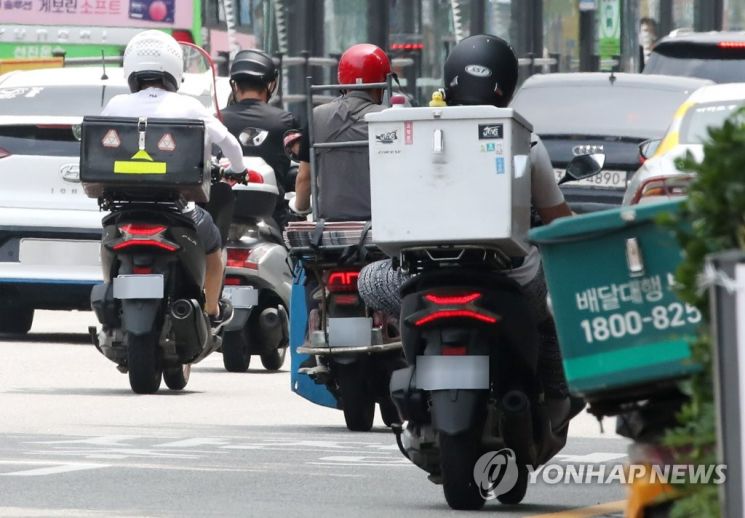 As COVID-19 spread and non-face-to-face services became more active, the number of citizens using food delivery also increased. / Photo by Yonhap News
Given this situation, there is a view that the amount of plastic waste could surge during this five-day Lunar New Year holiday as well. Especially since quarantine guidelines to suppress confirmed cases continue during this holiday, many people are expected to stay at home rather than travel to their hometowns. This raises concerns that plastic containers and packaging waste from food delivery and gift exchanges could increase significantly.
Citizens preparing for the holiday also expressed difficulty in coping with the increasing plastic waste.
A 20-something office worker, Mr. A, said, "These days, whenever I order delivery food, there are always at least three or four small single-use containers included. The waste piles up quickly, so cleaning up is hard, and I even feel guilty as if I am destroying the environment," he lamented.
Another office worker, Mr. B (31), said, "At the end of the holiday, there are always mountains of trash piled up all over the streets. I am worried this Lunar New Year holiday will be even worse. If you look at these waste mountains nationwide, they must be enormous, so I think measures are needed for the environment," he said.
Meanwhile, the government is promoting a 'transition to a plastic-free society' plan to improve the domestic waste management system and reduce plastic usage.
Earlier, the Ministry of Environment reported the '2021 Work Plan,' which includes measures for plastic waste management and reduction, to the National Assembly's Environment and Labor Committee last year.
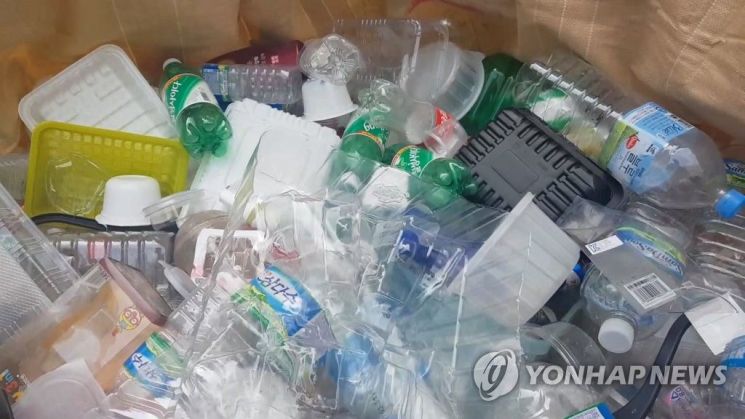
According to this plan, the Ministry of Environment will manage the reduction of single-use packaging by delivery companies through pre-inspections of excessive packaging, mandate the use of transparent PET bottles, promote the use of recycled raw materials by companies, and ensure stable collection of recyclable waste through mandatory public responsibility collection and price-linked systems.
Experts emphasized that to fundamentally solve the environmental problems caused by disposable waste, not only the government but also private sectors such as companies and individuals must actively cooperate in establishing a 'resource circulation system.'
The 'Resource Circulation Solidarity' stated, "Food delivery generates an average of about seven pieces of plastic waste including side dishes, sauces, spoons, and containers, while parcel delivery generates about four pieces of waste per item including boxes, cushioning materials, and ice packs. Excessive use of single-use items like this will lead to limits in waste disposal," they pointed out.
They added, "In addition to efforts by the government and local governments, companies and consumers must improve their consumption, production, and sales activities. It is necessary to establish a joint collection system, actively develop recyclable containers that can replace single-use items, and for delivery companies to build systems that promote the use of recyclable materials," they advised.
© The Asia Business Daily(www.asiae.co.kr). All rights reserved.