Older iPhone models released more than 10 years ago continue to enjoy strong popularity.
As of the 7th, older models such as the iPhone 6s, SE (1st generation), and 7 were being traded in the 100,000 won range on used-item platforms and at secondhand shops. The main purpose for buyers is photography. People keep an old iPhone as a dedicated camera phone, or use it for wedding photography known as "iPhone snaps."
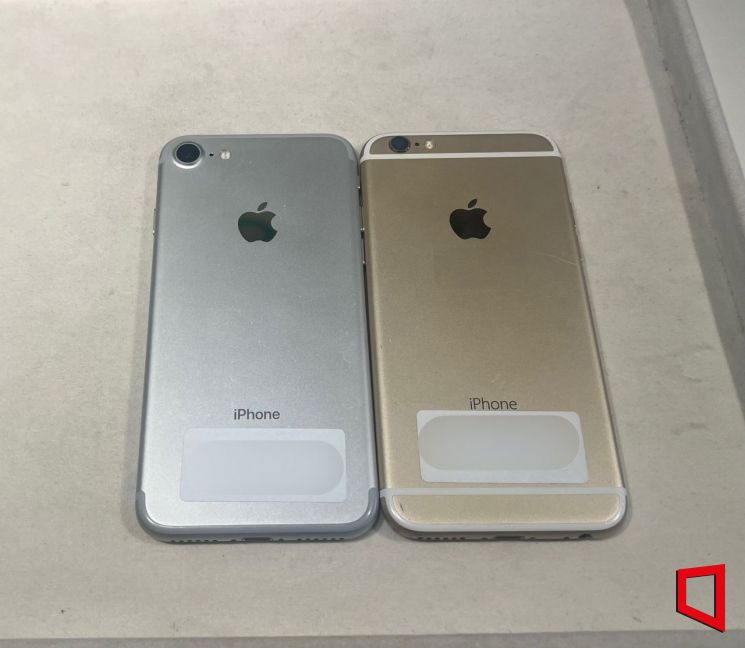 iPhone 7 (left) and iPhone 6s (right) being sold at a used mobile phone shop in Seodaemun-gu, Seoul. Photo by Lee Eunseo.
One of the reasons for the popularity of older iPhones is the camera. Unlike the latest device cameras, which provide vivid colors and strong contrast, the vintage tones of older iPhone cameras align well with the Millennials & Gen Z-led "newtro" culture (New + Retro, a culture of reinterpreting and enjoying old things with a modern sensibility). In contrast to the iPhone 17, which boasts a 48?megapixel dual fusion camera, the rear cameras of older models offer a relatively low resolution of 12 megapixels, yet still provide a digital-camera-like effect without filters. Unlike recent devices that feature a "camera island" with three lenses and components, these older models have a single camera and a smaller sensor size, which also means they produce more noise in low-light environments.
The absence of auto-correction features, allowing for more analog-style expression, is another factor driving demand for older iPhones. For example, Smart HDR, introduced starting with the iPhone XS, combines multiple photos with different exposures in real time in high-contrast environments such as backlighting. While it enhances the contrast between bright and dark areas, some users have found the resulting images to look unnatural. "Deep Fusion," introduced with the iPhone 11, is another auto-correction feature: it stores multiple frames before a shot is taken, then combines nine frames including the moment the shutter is pressed to produce the final image. Although it reduces noise and enhances detail, some say it lacks the warm emotional tone of photos taken with earlier iPhones.
Even among older iPhones that share the same 12?megapixel resolution, there are differences in color tone. For instance, the iPhone 7 tends to produce relatively bright and punchy images, whereas the 6s yields darker tones. A representative of a secondhand store that sells older iPhones explained, "Even with the same pixel count, photos come out differently depending on light intensity, and the color tone varies with the camera lens size and the light sensor," adding, "The 6s tends to shoot darker, and the 7 tends to shoot brighter." In fact, the iPhone 7 has an aperture value of f/1.8, while the SE (1st generation) and 6s have an aperture value of f/2.2, which indicates the aperture function that controls the amount of light. The higher the f?number, the less light enters through the lens, which generally results in darker photos.
Amid this trend, Apple moved to support long-term users by releasing new software updates for certain older iPhones on January 26. It is providing iOS 12.5.8 for the iPhone 5s and 6, and the iOS 15.8.6 update for the 6s, 7, and SE (1st generation).
However, because it is difficult to get older iPhones repaired at official Apple Stores, buyers need to pay attention to factors such as battery capacity when purchasing. Under Apple's policy, official service for older products is restricted depending on parts inventory, and once a device is classified as discontinued, hardware service is terminated. Currently, the iPhone 6, 6s (32GB), and SE are considered discontinued products, so if they break down, they must be repaired by unofficial third-party services.
© The Asia Business Daily(www.asiae.co.kr). All rights reserved.

















