Omicron Variant More Transmissible Than Delta... 5th Major Wave Becoming Reality
Concerns Over Surge in COVID-19 Cases Ahead of Seollal Holiday
Experts Urge Preparedness for Long-Term COVID-19 Aftereffects as Cases Rise
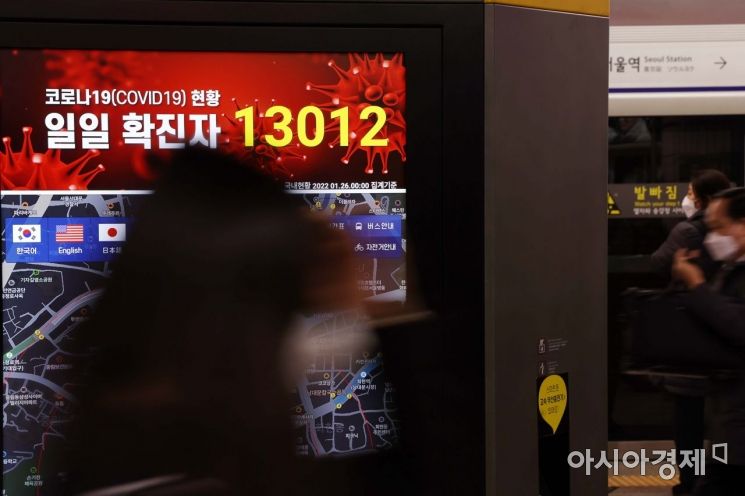 On the 26th, information about new COVID-19 confirmed cases is being displayed on the platform signboard at Seoul Station on Subway Line 1 in Seoul. Photo by Moon Honam munonam@
[Asia Economy Reporter Yoon Seul-gi] As the highly transmissible COVID-19 variant Omicron has become the dominant strain in South Korea, the fifth wave of COVID-19 has become a reality. With growing concerns over Omicron's rapid spread, the government announced that its goal is to reduce severe cases and deaths. However, given the intense spread of COVID-19, experts point out that in addition to quarantine measures, preparations for long-term aftereffects of COVID-19 are necessary.
As the Omicron spread continues, the number of new confirmed cases has set record highs for three consecutive days. According to the Central Disease Control Headquarters, on the 27th, new confirmed cases were estimated to be close to 15,000. The confirmed cases rapidly increased from 8,570 on the 25th, 13,010 on the 26th, to 14,518 on the 27th, bringing the total cumulative confirmed cases to 777,497. In particular, the number doubled from 7,512 on the 24th in just three days, raising concerns over the so-called 'doubling' phenomenon (an increase to more than twice the previous number).
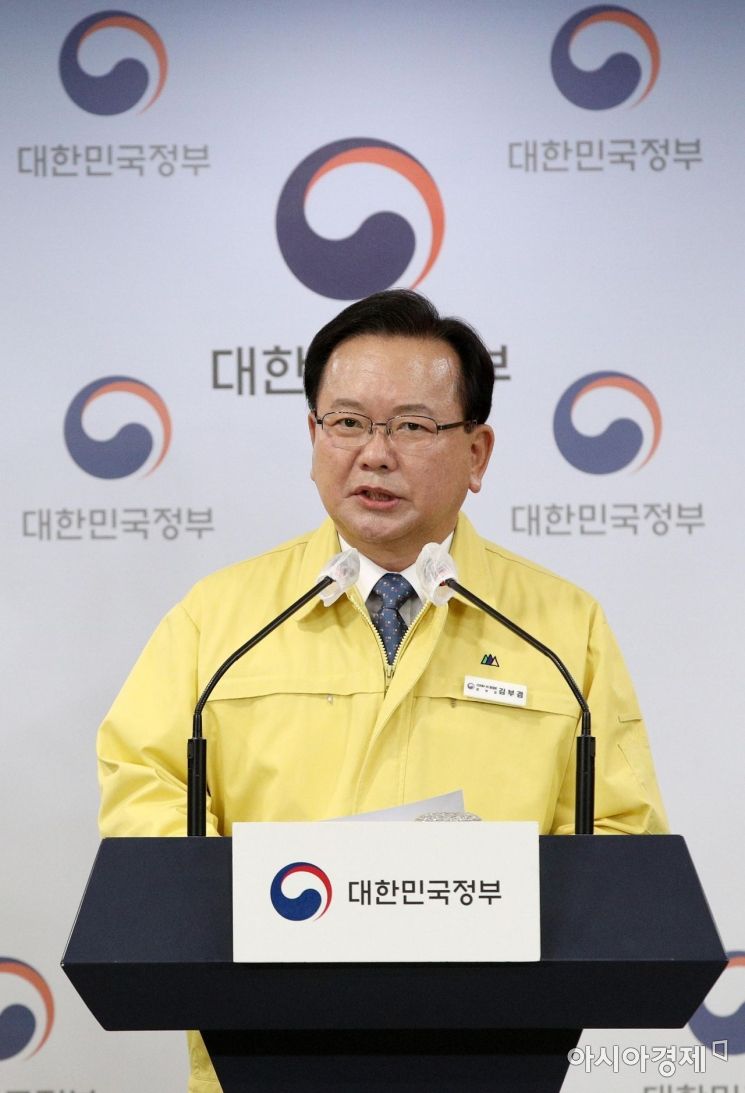 Prime Minister Kim Boo-kyum is delivering a public address on COVID-19 prevention ahead of the Lunar New Year holiday on the 24th at the Government Seoul Office in Jongno-gu, Seoul. Photo by Kim Hyun-min kimhyun81@
As the large-scale Omicron wave became a reality, the government announced that starting from the 29th, the 'Omicron Response System' will be expanded nationwide to focus testing and treatment capacity on high-risk groups such as the elderly. Prime Minister Kim Boo-kyum said at the COVID-19 Central Disaster and Safety Countermeasures Headquarters meeting and safety situation briefing held at the Government Seoul Office on the 26th, "The government has been preparing for Omicron by increasing the third-dose vaccination rate among the elderly, expanding hospital beds, and introducing oral antiviral treatments. From now on, the top priority of quarantine measures will be to reduce severe cases and deaths."
The problem is that with the Lunar New Year holiday approaching, large crowds traveling home and returning are expected, and daily confirmed cases could increase by up to 120,000. According to the 'short-term forecast results' submitted by the Central Disease Control Headquarters to Rep. Seo Jeong-sook of the People Power Party on the 26th, if the transmission rate of the Omicron variant is three times higher than that of the Delta variant, the number of confirmed cases is predicted to reach 8,700 to 10,000 by the end of this month, 27,000 to 36,800 by mid-next month, and 79,500 to 122,000 by the end of next month. With infection control becoming difficult, concerns are growing as there are worries that long-term aftereffects may occur even after recovery from COVID-19.
The World Health Organization (WHO) has already warned about 'long Covid,' the long-term aftereffects of COVID-19 infection. In October last year, WHO defined 'long Covid' symptoms as the occurrence of 'at least one unexplained symptom' within three months after COVID-19 infection that lasts for at least two months. The most common symptoms appearing after recovery include fatigue, shortness of breath, and cognitive impairment. In South Korea, results have shown that 9 out of 10 COVID-19 confirmed patients experienced one or more aftereffects.
In this situation, a study from the United Kingdom, which experienced Omicron dominance earlier, revealed that COVID-19 hospitalized patients are highly likely to suffer from aftereffects even after recovery. According to Bloomberg News on the 25th (local time), the London School of Hygiene & Tropical Medicine reported that people with a history of COVID-19 infection after recovery have twice the likelihood of readmission and five times the risk of death within 10 months compared to the general population. Even compared to flu patients, those with a history of COVID-19 infection have higher risks of readmission and death.
The research team explained, "Concerns about the medium- to long-term aftereffects of COVID-19 have existed, but related research results were insufficient. Through this study, we found that patients discharged after hospitalization for COVID-19 have significantly higher risks of readmission and death than the general population. This implies an additional burden on the healthcare system."
© The Asia Business Daily(www.asiae.co.kr). All rights reserved.