Market Outlook by Asset Management PBs
New Year Asset Price Decline
Market Volatility Normalization Process
Timing to Buy at Low Prices Needed

[Asia Economy Reporters Oh Hyung-gil and Ki Ha-young] Since the beginning of the new year, asset price declines have been observed in various places. Although nationwide housing prices recorded the highest increase in 19 years since 2002 last year, the upward trend has stalled or even reversed to a decline in some areas amid ultra-strong loan regulations and year-end and New Year’s 'transaction freeze.' The stock market has also seen a significant drop over the past month due to the impact of the Omicron variant, global supply chain instability, prolonged inflation concerns, and the possibility of interest rate hikes originating from the U.S.
However, experts interpret the current volatility not as a decline but as a normalization process and advise seizing the opportunity for low-price purchases. Excluding external variables, fundamentals remain sound, and from a valuation perspective, it is considered an attractive time. They recommend securing cash assets, observing market changes, and responding after the U.S. tapering (asset purchase reduction) ends in March and the first interest rate hike occurs.
Nam Heung-sik, PB Team Leader at Woori Bank TCE Headquarters Center, said, "The investment market is currently experiencing increased interest rate volatility centered on steep inflation, with geopolitical instability expanding in the U.S., Russia, and China, and suffering from the resurgence of COVID-19." He added, "Domestically, political and economic uncertainties have increased ahead of the presidential election, and with a series of large and small corporate accidents, foreign investors, institutions, and individuals have all lost their buying momentum."
Nam Myung-soo, WM Specialist at NH Nonghyup Bank, stated, "Since December last year, financial market volatility has expanded due to high inflation pressures and the normalization of advanced countries’ monetary policies, with the U.S. Federal Reserve’s (Fed) tightening stance." He assessed, "However, the current emotional turmoil is more about price changes than changes in stock value."
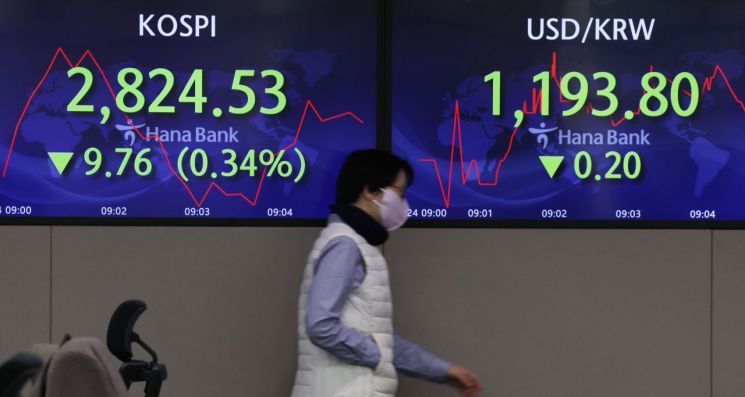
The prevailing opinion is that it is necessary to endure for a certain period rather than panic-selling assets. Choi Young-nam, PB Team Leader at Shinhan Bank Shinhan PWM Bundang Center, said, "Volatility will increase around the March interest rate hike in the U.S., so short-term volatility in stocks or bonds is unavoidable." However, he added, "After the first or second quarter, some tolerance to interest rate hikes will develop, and the market is likely to perceive this as a normalization process."
Park Hyun-sik, Team Leader of the Investment Strategy Unit at Hana Bank, said, "The focus should be on reducing risk factors rather than betting." He added, "Although bad times have come, it is a time to reduce the risks you carry and closely monitor the market to make low-price purchases with good times in mind."
Most PBs advised paying attention to the timing of the U.S. interest rate hikes for investment timing. Specialist Nam said, "Since it is a period of the Fed’s quantitative tightening and rising interest rates, it is necessary to secure cash assets to prepare for volatility, increase the proportion of bond inverse funds in the portfolio at the time of interest rate hikes, and have portfolio strategies that can respond to investment ideas and the market."
PB Team Leader Choi emphasized, "In the first half of the year, it is good to liquidate some assets to adapt to the market and seize opportunities. However, even if prices fall significantly, you should judge while observing market conditions rather than selling unconditionally." He added, "If you have not yet entered the market, it is better to wait and decide after observing the U.S. tapering completion and the first interest rate hike in March."

They particularly suggested portfolio adjustments to increase the proportion of still attractive stocks. PB Team Leader Choi said, "In crisis situations, marginal companies are cleared out, and the market influence of monopoly companies increases." He predicted, "Companies with surplus funds and technological capabilities may increase their market share during this adjustment."
PB Team Leader Nam also recommended, "Reduce the proportion of Nasdaq tech stocks and diversify risk through high-dividend equity funds, global REITs, and global infrastructure equity funds. For returns, I recommend additional purchases of platform, robo-tech, and mobility sector funds in the first half of the year." He added, "In Korea, phased investments in KOSPI 200, TOP10, and passive (index) funds are effective in the first quarter, but other emerging markets have potential for decline and volatility and require quick responses, so it is advisable to avoid approaching them for the time being."
Regarding the real estate market, it is expected to show a slightly weak trend for the time being due to reduced opportunities for price increases caused by tax burdens. Im Eun-soon, PB at KB Kookmin Bank Apgujeong Star PB Center, said, "The real estate market is bound to be weak in the first half and stabilize in the second half." She added, "Clients preparing to purchase commercial real estate have not yet made decisions but are watching the timing, considering the possibility of adjustments due to interest rate burdens."
They explained that high-net-worth individuals are not shaken despite the early-year uncertainties. Since the end of last year, they have advised increasing cash proportions and are not overly concerned about the recent adjustments.
Specialist Nam explained, "Major clients are increasing cash proportions and adopting global asset allocation strategies based on investment strategies that consider safety and returns during volatile periods." He added, "They are interested in dividend growth funds composed of companies with pricing power that pass on cost increases to consumers due to inflation."
PB Team Leader Choi said, "To prepare for interest rate hikes and market adjustments, some assets are held in cash, and those who view the first half as somewhat difficult are shifting assets to ELS products or REITs." He added, "Conservative clients tend to build assets with short-term bonds and deposits rather than long-term ones, as interest rates have moved several times."
© The Asia Business Daily(www.asiae.co.kr). All rights reserved.