[Asia Economy Reporter Baek Kyunghwan] The Supreme Court has ruled that the participation of satellite parties for proportional representation in the National Assembly elections to secure more proportional seats does not constitute grounds for election invalidation. Previously, in August last year, the Supreme Court also dismissed a similar election invalidation lawsuit.
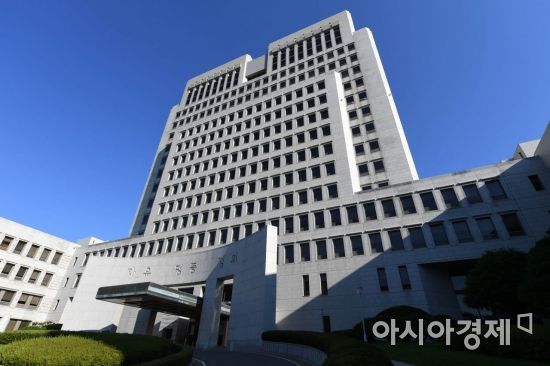
On the 19th, the Supreme Court's Second Division (Presiding Justice Min Yusook) announced that it dismissed the invalidation claim in the proportional representation election invalidation lawsuit for the 21st general election filed by Hwang Dosu, a constitutional scholar and Standing Executive Director of the Citizens' Coalition for Economic Justice (CCEJ), along with 83 civic activists.
In the 2020 21st general election, a "semi-proportional representation system" was introduced, which allocates seats based on the vote share. This system distributes proportional seats considering each party's nationwide vote share and the number of constituency seats secured. If a party has a high vote share but a low number of constituency seats, the difference is compensated with proportional representation seats.
Accordingly, the Democratic Party of Korea and the United Future Party (now the People Power Party) established satellite parties solely aimed at securing proportional representation seats: the Democratic Citizens' Party and the Future Korea Party, respectively. Voters were asked to cast their constituency votes for the original parties and their party votes for the satellite parties, resulting in the Democratic Citizens' Party securing 17 proportional seats and the Future Korea Party securing 19.
The CCEJ and others claimed the election was invalid. They argued that satellite parties for proportional representation, which lack the concept of a proper political party, were established with the intent to distort the political will of the people. They also claimed that treating these satellite parties separately from their parent parties undermined equal opportunity and fairness among parties.
However, the Supreme Court did not accept these claims. The court stated, "Each party can nominate candidates in elections according to the Public Official Election Act, and once the National Election Commission receives the necessary documents for candidate registration, it cannot refuse registration based on the party's purpose, organization, activities, or political nature," adding, "It is difficult to see any grounds to invalidate the candidate registration." The court also rejected objections regarding the satellite parties' joint election campaigns, stating, "It is possible for parties to form policy alliances or election cooperation to gain power."
Meanwhile, the Supreme Court also dismissed a similar invalidation lawsuit filed by a voter in August last year concerning the 21st general election. Election invalidation lawsuits are handled solely by the Supreme Court as the final instance.
© The Asia Business Daily(www.asiae.co.kr). All rights reserved.