The Anti-Corruption and Civil Rights Commission Achieves Top Rating in the 2021 Public Institution Anti-Corruption Policy Evaluation, Solely Among Urban Railway Operators... High Scores for Quantified Fairness Measures Including Penalties for Retired Executives and Dishonest Companies in Specific Technology Selection
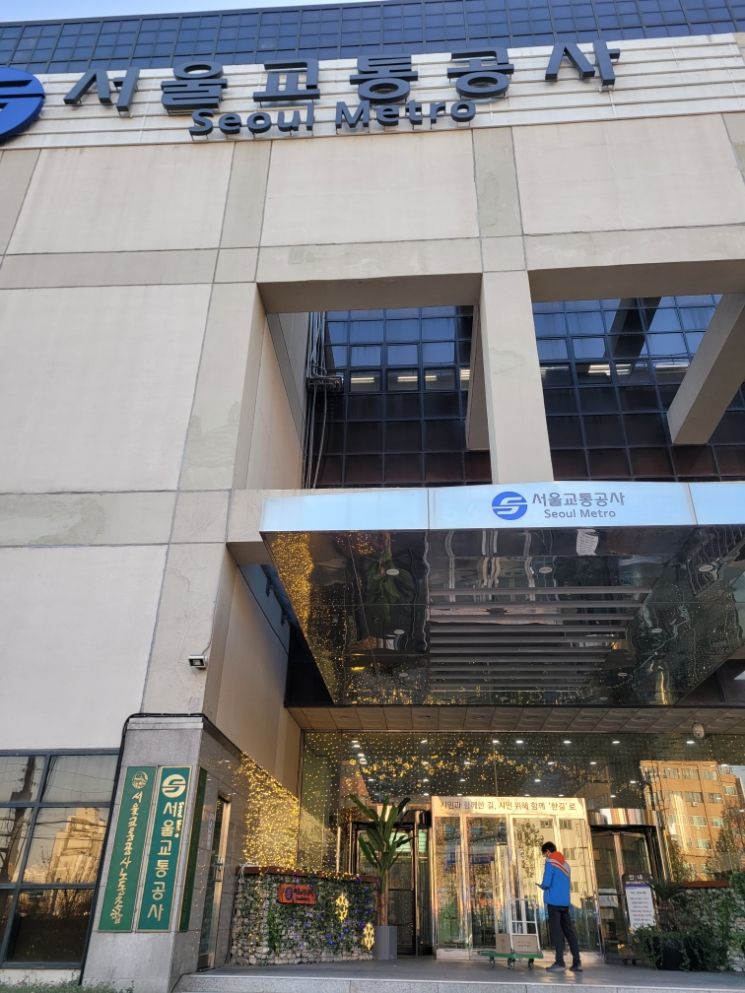
[Asia Economy Reporter Jongil Park] Seoul Metro (President Kim Sang-beom) achieved the highest grade, Grade 1, in the ‘2021 Public Institution Anti-Corruption Policy Evaluation’ conducted by the Anti-Corruption and Civil Rights Commission (ACRC).
This is the most outstanding achievement for two consecutive years following last year.
The ‘Public Institution Anti-Corruption Policy Evaluation’ is conducted by the ACRC by classifying an institution’s efforts and performance in anti-corruption and integrity activities for the relevant year into planning, execution, performance & dissemination, and penalty areas for evaluation.
The evaluation is carried out annually by the ACRC targeting public institutions nationwide, assessing each institution’s anti-corruption performance and efforts to enhance integrity. Last year, a total of 273 institutions, including Seoul Metro, were evaluated.
The evaluation criteria include ▲Establishment of Anti-Corruption Promotion Plans (15 points) ▲Creation of an Integrity Ecosystem (25 points) ▲Securing Effectiveness of Corruption Control (30 points) ▲Performance and Dissemination of Integrity Administration and Management (30 points) ▲Operation of Anti-Corruption Systems (penalty points). The evaluation is conducted through quantitative and qualitative assessments and is divided into five levels from Grade 1 (highest) to Grade 5.
Seoul Metro received Grade 1 in the categories of ▲Establishment of Anti-Corruption Systems ▲Operation of Anti-Corruption Systems ▲Anti-Corruption Policy Performance ▲Efforts to Disseminate Anti-Corruption Policies, and scored Grade 2 or higher in other categories, resulting in an overall Grade 1 rating.
Among urban railway operators in the same industry, Seoul Metro is the only institution to achieve Grade 1. Following the ACRC’s Integrity Evaluation announced in December last year (which showed a two-year consecutive grade improvement), Seoul Metro’s efforts to improve integrity and prevent corruption were highly recognized in this anti-corruption policy evaluation as well.
In this evaluation, Seoul Metro received positive recognition for ▲Improving operational systems for fair evaluation when selecting specific technologies ▲Proactively preparing various countermeasures in anticipation of the Conflict of Interest Prevention Act scheduled to be enforced in May this year.
Regarding the improvement of the operational system for selecting specific technologies, the core idea is to create a checklist based on clear criteria instead of relying on customs when selecting specific technologies to be applied to the subway, and to conduct evaluations accordingly. Through this, a penalty of 5 points was applied to companies where retired executives are employed or that have been sanctioned for fraudulent acts, preventing suspicions such as collusion in advance.
In fact, since operating this system from April last year, when selecting specific technologies for installing bidirectional electric dust collectors for fine dust, a penalty was applied to a company employing a retired executive, excluding the company and fundamentally blocking preferential treatment for retirees.
To effectively respond to the Conflict of Interest Prevention Act scheduled for enforcement in May this year, Seoul Metro identified potential conflict of interest cases employees might face during work (covering 11 fields such as personnel, contracts, procurement, evaluation, totaling 83 cases) in advance, sought solutions, and devoted efforts to creating internal management manuals and conducting related training.
Conflicts of interest mainly involved cases where employees were asked to handle matters related to Seoul Metro’s work by people with whom they had familial or regional ties, or where employees evaluated such individuals. In these cases, actions were taken according to manuals rather than arbitrary judgment.
Additionally, Seoul Metro continues its efforts to improve integrity by operating an integrity promotion system based on full participation and cooperation led by the institution’s head under the vision of ‘Becoming a top public enterprise trusted by the public based on integrity.’
Other anti-corruption and integrity policies implemented by Seoul Metro include ▲Management of major large-scale projects through a risk management system ▲Introduction and implementation of an integrity system for the production process of new electric trains ▲Establishment of a one-stop management system for subway rental shops ▲One-point customized training for personnel in integrity-vulnerable tasks such as recruitment and contracts.
Kim Sang-beom, President of Seoul Metro, stated, “Achieving Grade 1 in the ACRC’s anti-corruption policy evaluation for two consecutive years is a positive result of all employees working together to create an honest organizational culture.” He added, “We will continue to build a solid and meticulous safety net and spread an honest organizational culture trusted by citizens without corruption or wrongdoing.”
© The Asia Business Daily(www.asiae.co.kr). All rights reserved.