A Pioneering Figure in Monetary Credit Policy
Enhancing Transparency and Predictability of Monetary Policy
Exceptional Crisis Response to MERS and COVID-19
Unafraid to Speak Candidly to Political Circles and Government
Soft on the Outside, Strong on the Inside (外柔內剛).
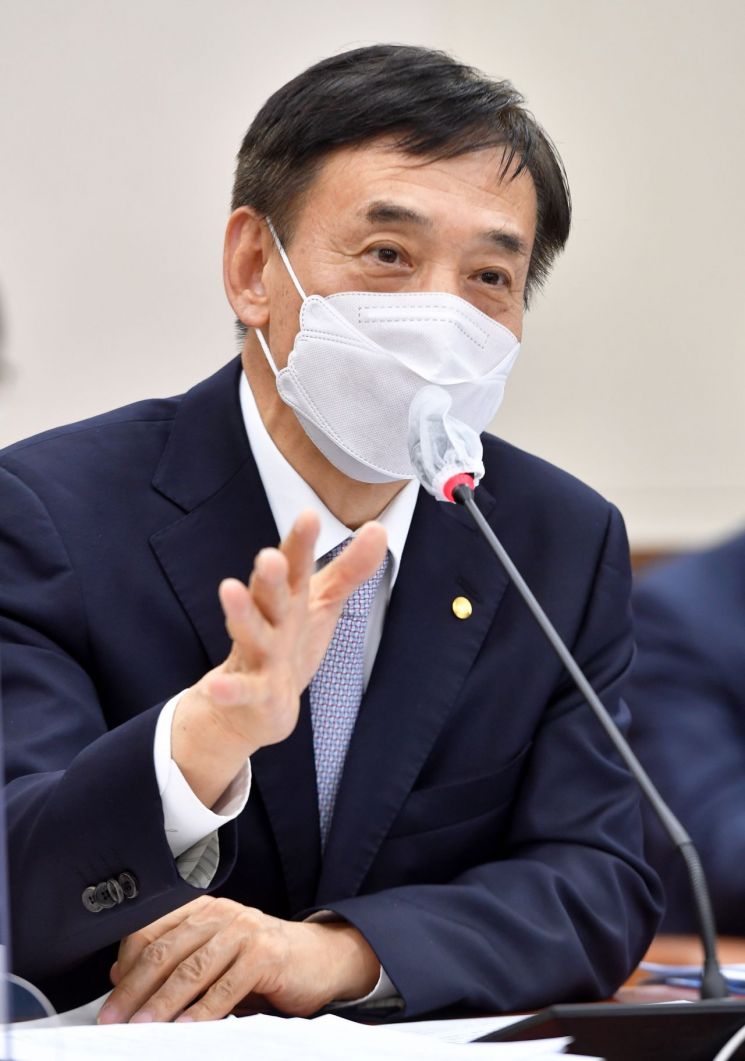
This is how the evaluation of Lee Ju-yeol, Governor of the Bank of Korea (BOK), can be summarized. The common consensus inside and outside the BOK is that the reason he was able to set the record as the first governor to be reappointed in 44 years was precisely because of this characteristic.
A BOK official commented, "He did not lean toward any political faction but operated monetary policy solely considering the central bank’s core missions of financial stability and price stability." This is why both conservatives and progressives appointed him. Another financial authority said, "He appeared very gentle externally, but often spoke strongly about the need to adapt to changing times," adding, "He paid attention not only to organizational innovation but also to improving internal infrastructure."
Governor Lee, whose term ends at the end of March, is a pioneering figure in the field of monetary and credit policy. After joining the BOK in 1977, he held key positions such as Director of the Research Department, Deputy Governor in charge of monetary policy, and Deputy Governor. He briefly left the BOK in 2012 to serve as an advisor at Hana Financial Research Institute and a special professor at Yonsei University. He then made a grand return as BOK Governor in 2014 and secured the title of 'the first reappointed governor in 44 years' in 2018.
During his eight-year tenure, Governor Lee implemented flexible monetary policies suited to economic conditions. He raised the base interest rate five times and lowered it nine times. The highest level reached was 2.25% per annum, and during the COVID-19 pandemic, he cut the rate to a historic low of 0.50%.
Early in his term, he showed a hawkish (monetary tightening preference) stance, but as economic sentiment weakened due to events such as the Sewol ferry disaster in 2014, the MERS outbreak in 2015, and slowing growth, he boldly shifted to a dovish (monetary easing) stance. By June 2016, he had cut rates five times, lowering the base rate to 1.25% per annum. Later, in line with economic recovery, he raised it to 1.50% in November 2017. However, as the global economy was shaken again by the COVID-19 crisis, he operated a preemptive monetary policy, lowering the rate to 0.50% in May 2020.
Governor Lee also focused on enhancing the transparency and predictability of monetary policy during his term. To secure an appropriate time series, he adjusted the frequency of monetary policy decision meetings from 12 times a year to 8 times. Additionally, he integrated the Inflation Report into the Monetary and Credit Policy Report and increased its publication frequency from twice to four times annually.
His cautious and refined choice of words is also credited with contributing to market communication. A BOK official said, "He understood the importance of communication well and was very careful in his language choices," emphasizing, "He always stressed that one must consider the listener’s perspective rather than just the speaker’s position." The fact that he provided forward-looking guidance alongside base rate decisions was also considered important.
Governor Lee put much thought into mechanisms to explain the internal discussions of the Monetary Policy Committee (MPC) consistently and logically. He decided to disclose on the day of the meeting whether there were dissenting opinions during the base rate decision and to reveal the names of the dissenting members to provide detailed directional guidance.
Strengthening the foreign exchange safety net through currency swaps was another major achievement. To resolve foreign currency liquidity shortages caused by the COVID-19 crisis, Governor Lee revived the Korea-US currency swap after 10 years. In addition, he renewed currency swap agreements with major trading partners such as the UAE and sequentially extended agreements with Australia, Indonesia, and China.
Foreign exchange reserves also increased significantly. From $351.79 billion at the end of February 2014, when Governor Lee took office, reserves rose to $463.91 billion by the end of November 2021, ranking ninth globally.
His role as a director at the Bank for International Settlements (BIS), where he voiced Korea’s position on international financial issues, also earned high praise. Furthermore, he actively discussed medium- to long-term challenges such as infrastructure investment and climate change at international forums including the G20 and the International Monetary Fund (IMF).
Inside the BOK, opinions vary. One official said, "Since he was a reappointed governor, the independence of the central bank was certainly guaranteed," adding, "Especially in areas like currency swaps and strengthening international cooperation, Governor Lee’s personal capabilities played a significant role." Another official noted, "It is meaningful that he established the 52-hour workweek and PC-off policies," but also expressed regret, saying, "However, in terms of wage increases, self-development training, and external lectures, there was a tendency to maintain the status quo."
The market is paying close attention to how the end of Governor Lee’s term will affect the pace of future interest rate hikes. After the MPC meeting on the 14th, Governor Lee hinted at further increases, stating, "Even if the base rate reaches 1.50%, it cannot be considered tightening." The last MPC meeting during his term will be held on the 24th of next month.
Meanwhile, the BOK has recently begun preparing a publication on 'Governor Lee’s Major Achievements During His Tenure.' The booklet will include content on ▲monetary and credit policy operations ▲strengthening international cooperation ▲external communication, among other topics.
© The Asia Business Daily(www.asiae.co.kr). All rights reserved.