Revision of the
Cultural Heritage Protection Act for Research and Preservation
Including 'Transmission Communities' as Bearers of Intangible Cultural Heritage
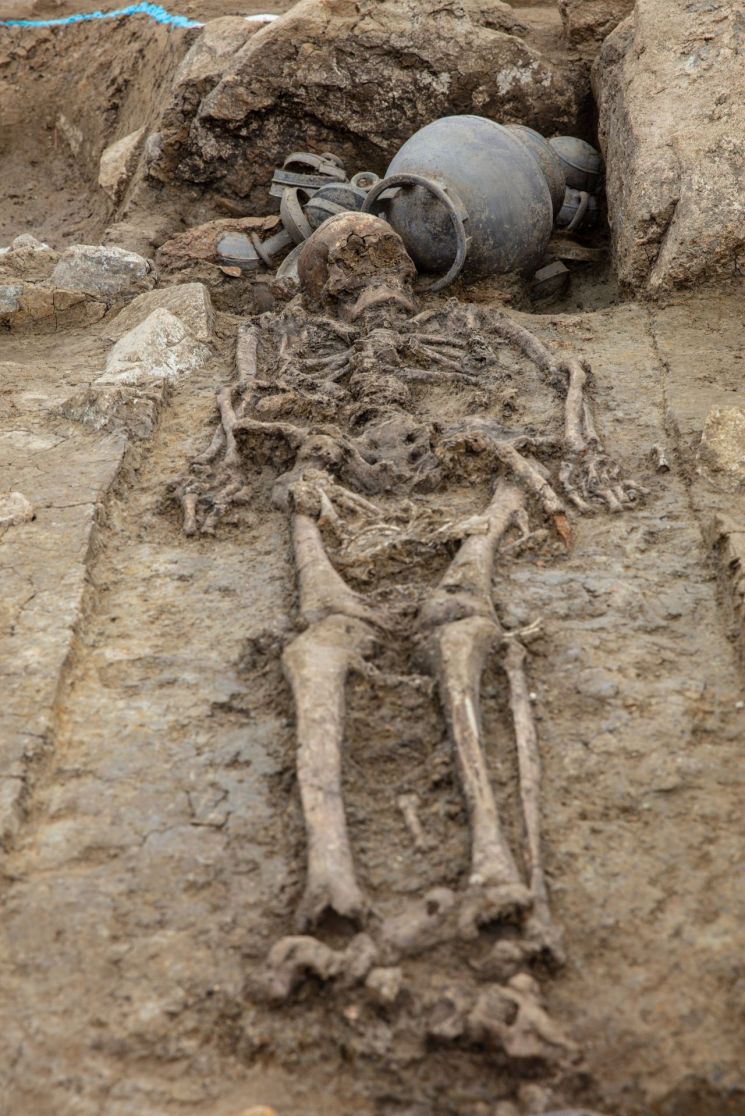
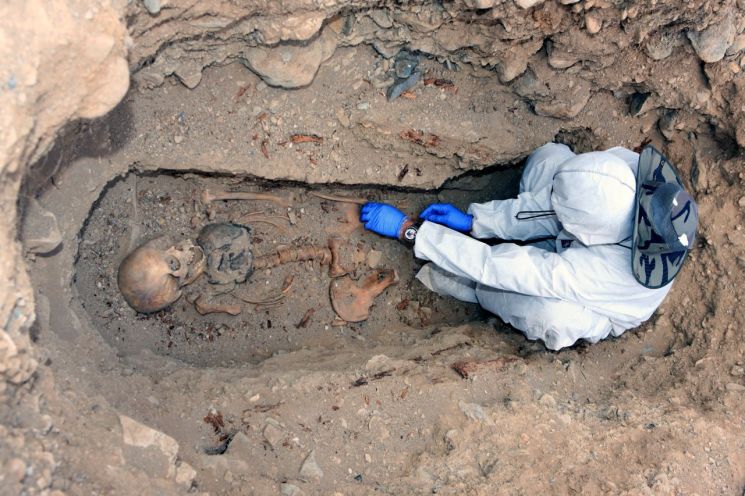
Human bones and mummies are important clues to uncovering the history, culture, and lifestyle of our ancestors. Until last year, even if they were discovered, they had to be cremated or reburied because there were no regulations to consider them cultural heritage. Only tangible cultural properties such as land or underwater artifacts, natural caves, and fossils were included, which made academic research difficult. This year, things have changed. On the 18th, the Cultural Heritage Administration announced an amendment to the Act on the Protection and Investigation of Buried Cultural Properties, requiring that human bones and mummies excavated during buried cultural property investigations be studied and preserved after examination by two or more experts. From now on, anyone who discovers human bones or mummies must immediately report them to the cultural heritage authorities. The state or local governments can conduct surface surveys. This will allow detailed examination of relics and artifacts on the surface, enabling more effective protection and management of cultural heritage.
On the same day, the Cultural Heritage Administration also announced amendments to five laws including the Cultural Heritage Protection Act, the Intangible Cultural Heritage Act, the Historical and Cultural Areas Act, and the Cultural Heritage Repair Act. The Cultural Heritage Protection Act now includes hygiene and quarantine management measures to respond to infectious diseases in cultural heritage-related facilities and zones. Provisions were also added regarding the establishment and implementation of intelligent cultural heritage policies, development and practical application of intelligent cultural heritage technologies, and the construction of intelligent cultural heritage service platforms. Furthermore, a basis was established for the Overseas Korean Cultural Heritage Foundation to receive donations and goods to repatriate and utilize Korean cultural heritage abroad, and to award individuals who have contributed to cultural heritage repatriation.
The amendment to the Intangible Cultural Heritage Act focuses on supporting 'transmission communities' and establishing grounds for international cooperation. Until now, transmission entities were defined only as individuals (holders) and groups (holder organizations), unlike the UNESCO convention which includes individuals, groups, and communities. Because of this, it was difficult to effectively preserve and foster national intangible cultural heritage such as 'Arirang' and 'Kimchi making,' which did not recognize specific individuals or groups. Going forward, support for transmission communities will be possible based on institutional grounds. The scope of the Cultural Heritage Administration's activities to protect humanity’s intangible cultural heritage will also expand. The related provisions were revised to enable various projects with other countries, international organizations, and expert groups.
The Historical and Cultural Areas Act was amended to expand the 'Mahan Historical and Cultural Area' from the Jeonnam region centered on the Yeongsan River basin to include Jeonnam, Chungcheong, Gwangju, and Jeonbuk. The 'Jungwon Historical and Cultural Area (Chungbuk, Gangwon, Gyeongbuk, Gyeonggi),' where Goguryeo, Baekje, and Silla cultures fused and developed, and the 'Yemaek Historical and Cultural Area (Gangwon),' centered on the Yemaek people widely distributed even before ancient states, were newly established. The Cultural Heritage Repair Act replaced the Japanese term 'Noim (勞賃)' with 'wage,' which is commonly used in the Labor Standards Act and other laws. An official explained, "This amendment is to enhance public understanding," and added, "Like the other amendments, it will take effect six months after enactment."
© The Asia Business Daily(www.asiae.co.kr). All rights reserved.