Korea Teachers' Union Announces 15 Key Tasks for Presidential Election Education Pledges
Includes Enhancing Innovation Schools and Reviving Education Chief Secretary
Mandatory Establishment of Public Kindergartens and Expansion of Local Government Elementary Care Spaces
Proposes Balanced Admissions Between Early and Regular Admissions and Expansion of Opportunity-Equalized Admissions
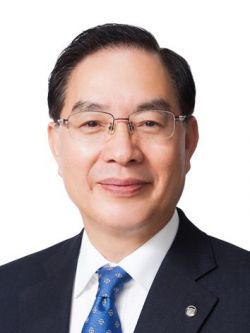 Hayunsoo, President of the Korea Federation of Teachers' Associations
[Asia Economy Reporter Han Jinju] The Korea Federation of Teachers' Associations proposed to presidential candidates to postpone the full implementation of the high school credit system until 2025 and to introduce policies that support autonomous private high schools (Jasago) and foreign language high schools (Oego) according to their founding purposes.
On the 10th, the Federation announced the "15 Major Tasks for Education Pledges in the 20th Presidential Election" and delivered them to all political parties and presidential candidates.
The Federation emphasized the need to diversify high school types and provide tailored support, opposing the abolition of special-purpose high schools and autonomous private high schools. They argued for operational support aligned with the founding purposes of Jasago and Oego, strengthening the capabilities of general high schools, and postponing the full implementation of the high school credit system until 2025.
They also stressed the necessity of a transparent and fair college admission system without parental advantage, including balanced selection between early and regular admissions, disclosure of university-level selection processes, appropriate expansion of opportunity-equalizing admissions, and resolving discrepancies in objective student records and teacher entries.
The Federation proposed ▲guaranteeing basic academic skills and closing achievement gaps through a national continuous basic academic skills diagnostic system ▲revival of the Presidential Office's Education Secretary position ▲reconsideration of the Innovation School policy ▲prioritizing budget allocation to reduce the number of students per class ▲deciding the timing of the high school credit system introduction after infrastructure is secured.
Additionally, they pointed out the need for ▲mandatory expansion of national and public kindergartens and integration of kindergartens and childcare facilities for ages 3 to 5 ▲legislation mandating elementary care spaces in apartments and other multi-family housing ▲establishment of a local government-centered elementary care system ▲reduction of students per class for individualized education of students with disabilities.
The Federation stated, "Every election, children become victims of education governance being reorganized and education policies changing abruptly according to factional logic. Education that the majority of the people want, beyond regimes and ideologies, must be adopted as each candidate's pledge."
Ha Yun-su, president of the Federation, said, "We educators will actively support a 'Education President' candidate who transcends political factions and ideologies, reflects the aspirations of the education community in their pledges, and places education, focusing solely on students, at the center of national governance."
© The Asia Business Daily(www.asiae.co.kr). All rights reserved.
![Clutching a Stolen Dior Bag, Saying "I Hate Being Poor but Real"... The Grotesque Con of a "Human Knockoff" [Slate]](https://cwcontent.asiae.co.kr/asiaresize/183/2026021902243444107_1771435474.jpg)














