Granting Termination Rights Upon Closure Due to COVID-19
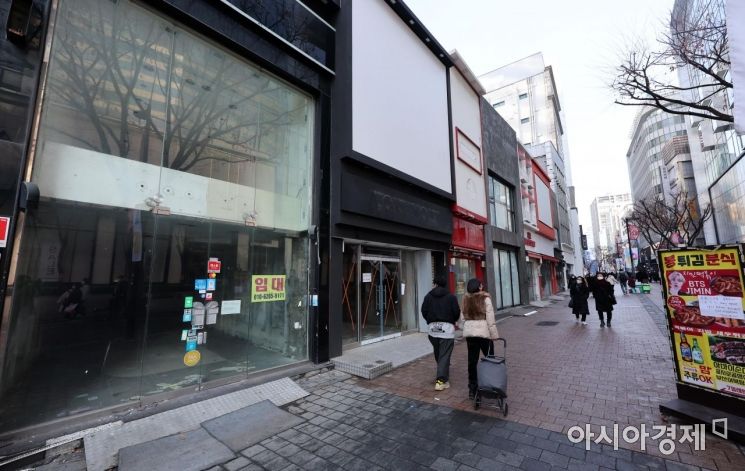 As the government announced a two-week extension of the current social distancing measures limiting private gatherings to four people and restaurant and cafe operating hours until 9 PM, shops on Myeongdong Street in Seoul were empty due to closures and other reasons on the 2nd. Photo by Kim Hyun-min kimhyun81@
[Asia Economy Reporter Ryu Taemin] Self-employed business owners who closed their businesses due to gathering restrictions and bans caused by the COVID-19 pandemic can now terminate their commercial lease contracts early. This is expected to alleviate the burden on self-employed individuals who suffered from unpaid rent even after closing their businesses due to a lack of customers.
The Ministry of Land, Infrastructure and Transport announced on the 5th that it promulgated and immediately enforced an amendment to the "Commercial Building Lease Protection Act" on the 4th, which includes these provisions. According to the amendment, if a business closes due to government-imposed gathering bans or restrictions lasting three months or more to prevent infectious diseases such as COVID-19, the tenant of the commercial property is granted the right to terminate the lease contract. The termination takes effect three months after the landlord is notified of the contract termination.
Previously, as domestic consumption and spending shrank due to the impact of COVID-19 and many self-employed business owners closed due to a sharp decline in sales and income, the government discussed measures to ease their burdens. Among these was the need to improve the situation where businesses forced to close due to social distancing measures still had to pay rent under existing lease contracts. Reflecting this, the government drafted the amendment, which was approved at the Cabinet meeting in August last year and passed the National Assembly plenary session in December.
According to a survey conducted in October last year by the Korea Federation of Self-Employed and Participatory Solidarity, which surveyed 791 small business owners, self-employed individuals, and indoor sports facility operators nationwide, 50.7% of respondents reported being behind on rent payments. Among these, one in four businesses were at risk of contract termination due to rent arrears exceeding three months, with the average monthly rent arrears amounting to approximately 7 million KRW.
Meanwhile, according to a survey by the Korea Real Estate Board, the vacancy rate of medium to large commercial properties nationwide reached 13.1% as of the second quarter of last year. In particular, Myeongdong, considered a representative commercial district in Seoul, suffered significant damage from COVID-19, with nearly half of small commercial establishments closing due to a decrease in foreign tourists.
© The Asia Business Daily(www.asiae.co.kr). All rights reserved.