Increased Demand During Graduation and Admission Season... Surge in New Lease Fraud Cases
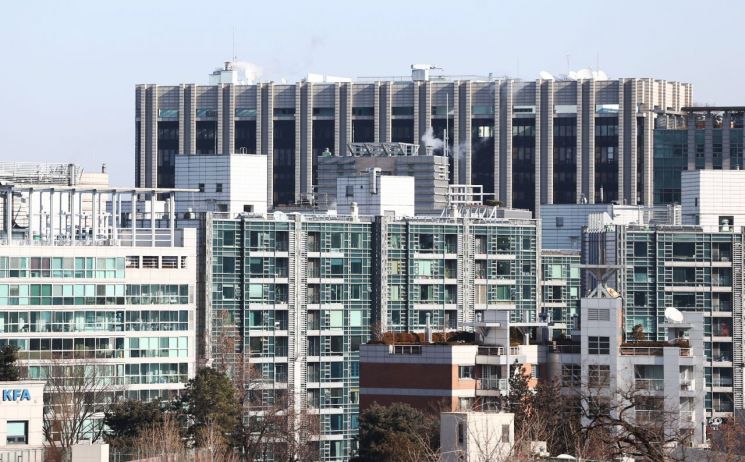
Recently, Mr. A, who listed an officetel near Bupyeong Station in Incheon for 200 million won, heard from a real estate agency that a corporation was interested in purchasing it. The problem was that the corporation proposed to pay the purchase price of 200 million won by receiving a jeonse deposit of 240 million won. Faced with a transaction where the jeonse price was 40 million won higher than the sale price, Mr. A could not dismiss suspicions of a fraudulent deal.
As demand for jeonse on small officetels rises during personnel transfers, graduations, and school admissions, a new type of rental fraud using “empty jeonse” is spreading, requiring caution.
According to the Ministry of Land, Infrastructure and Transport’s real transaction price disclosure system on the 4th, a 16㎡ officetel in Gongdeok-dong, Mapo-gu, Seoul, was sold for 108 million won in early November last year, but the jeonse transaction for the same area that month ranged from 120 million to 130 million won. Also, a 20㎡ officetel in Dangsan-dong, Yeongdeungpo-gu, changed hands for 187 million won in October last year, while the jeonse contract for the same area was signed at 200 million won that month. In both complexes, the jeonse price exceeded the sale price.
A representative from B Real Estate in Gongdeok-dong said, "For small officetels, jeonse loans are relatively easy to obtain, making them popular among university students and office workers," adding, "Due to a shortage of listings, jeonse prices inevitably rise."
In particular, as the reversal phenomenon between sale prices and jeonse prices continues, new types of rental fraud exploiting this are rampant. If the landlord who purchased the property disappears, tenants face the risk of the officetel becoming an “empty house,” where even if the property is sold, they cannot recover the full jeonse deposit.
Recently, such empty jeonse frauds have become more frequent not only in officetels but also in villas and multi-family houses, deliberately creating victims. In fact, the number of jeonse deposit non-return cases reported to the Housing and Urban Guarantee Corporation (HUG) surged more than 70 times from 33 cases in 2017 to 2,408 cases in 2020. Last year, 1,290 cases were reported in just the first half. Because of this, experts point out that caution is necessary when entering the officetel market, where investment demand and jeonse demand are intertwined.
© The Asia Business Daily(www.asiae.co.kr). All rights reserved.