After Contract Renewal, Tenant Can Terminate Anytime
Tenant May Vacate Without Brokerage Fee 3 Months After Notice
Some Landlords Say "Unfair... Just Don't Return Deposit"
Landlords Face Rent Increase Loss if Terminated Within One Year
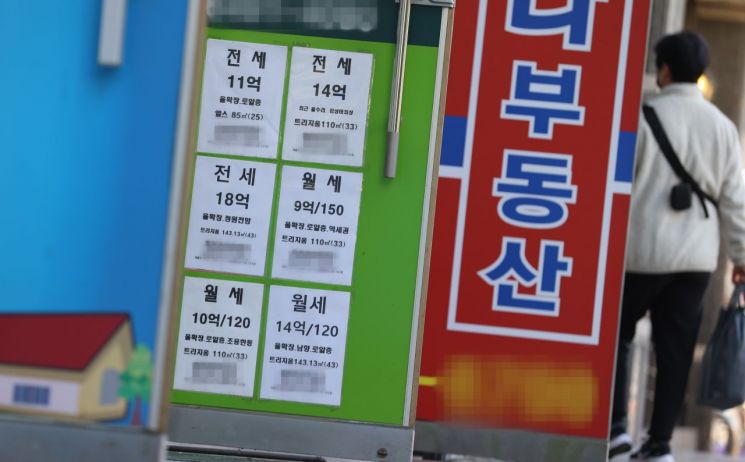
Conflicts between landlords and tenants are increasing over the regulation that allows tenants to terminate the lease contract at any time when extending the lease using the right to request contract renewal. Although the regulation is intended to protect tenants, who are relatively weaker, some landlords inevitably suffer losses, and tenants also find it practically difficult to exercise their rights, leading to expectations that disputes will continue in the future.
According to the Ministry of Land, Infrastructure and Transport and the real estate industry on the 23rd, when a tenant exercises the right to request contract renewal to extend a jeonse or monthly rent contract, the tenant can terminate the contract at any time, and the termination takes effect three months after notification. This regulation, originally applied only to tacit renewals under the Housing Lease Protection Act, was expanded last year through amendments to the Lease Act to include contracts where the right to request renewal is exercised.
Recently, with the rapid rise in jeonse prices in Seoul and other metropolitan areas, the use of the right to request contract renewal has increased, and as this regulation has become more widely known, it is acting as a new catalyst for conflicts between landlords and tenants. By using this regulation, tenants who need to move out due to circumstances can notify the landlord three months in advance and receive their deposit back without bearing any brokerage fees for finding the next tenant.
In general lease contracts, tenants must bear responsibilities such as brokerage fees or compensation for damages if they leave early, but this burden disappears under this regulation. In fact, looking at recent cases published by the Ministry of Land, Infrastructure and Transport regarding housing lease dispute mediation, there was a conclusion that a tenant who notified early termination of a jeonse contract had to pay the landlord 3 million won in damages.
In online communities where landlords gather, there is backlash against this regulation, calling it "excessive tenant protection." One landlord pointed out, "It is too much that the landlord has to pay brokerage fees even when the tenant leaves before the contract period ends." While ordinary landlords can raise the deposit or monthly rent when accepting new tenants, registered rental business operators, who face restrictions on rent increases, suffer greater losses.
Registered rental business operators cannot raise rent within one year even if the tenant changes after signing the lease contract. Therefore, if a tenant exercises the right to request contract renewal and then notifies termination within less than a year, the landlord must bear the full brokerage fee and the rent increase period is delayed by up to one year until two years have passed after accepting a new tenant.
As a result, some rental business operators even resist by saying, "The deposit cannot be returned unless one year of the contract period has passed." Tenant A, living in Gangseo-gu, Seoul, said, "Due to urgent circumstances, I recently notified termination according to this regulation, but the landlord insists that they will not return the deposit even if it goes to court, which is very frustrating."
The problem is that when landlords obstruct tenants' contract termination by not returning the deposit, there is no effective solution. Tenants must go through dispute mediation or litigation to receive their deposit, but dispute mediation is practically ineffective, and litigation involves high costs and time, making it relatively advantageous for landlords.
Um Jeong-sook, a lawyer at Beopdo Comprehensive Law Office, said, "If the tenant has notified termination and three months have passed but the deposit is not returned, it is expected that the tenant can receive the deposit and delayed interest through litigation. However, if the tenant suffers other damages, such as being unable to pay the balance for a property purchase due to delayed deposit return, it may be difficult to prove causation and receive compensation."
© The Asia Business Daily(www.asiae.co.kr). All rights reserved.
![Clutching a Stolen Dior Bag, Saying "I Hate Being Poor but Real"... The Grotesque Con of a "Human Knockoff" [Slate]](https://cwcontent.asiae.co.kr/asiaresize/183/2026021902243444107_1771435474.jpg)















