Additional Diagnostic Forms After Confirmation
Authorities: "Detection at Confirmation Stage Is a Technical Limitation"
Distributed Nationwide Until the 29th, Used from the 30th
Simultaneous Identification of 5 Major Variants Including Existing Variants
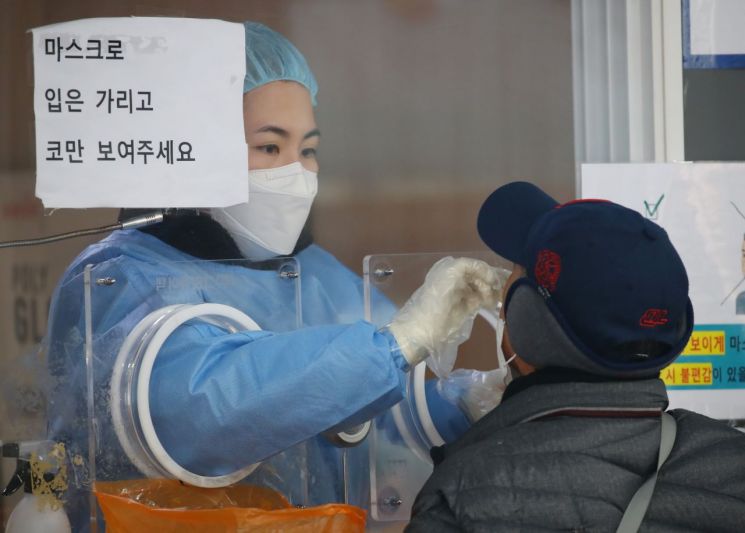
[Asia Economy Reporter Lee Chun-hee] A rapid PCR test for detecting Omicron variant COVID-19 infection through direct genetic amplification (PCR) will be distributed to local governments nationwide next week. Accordingly, from the 30th, it will be possible to confirm the presence of the Omicron variant within 3 to 4 hours after a positive diagnosis. This PCR test, capable of detecting existing variants such as Alpha, Beta, Gamma, Delta, as well as stealth Omicron all at once, is the first of its kind in the world.
The Korea Disease Control and Prevention Agency (KDCA) announced on the 24th that it has developed a rapid PCR reagent for Omicron variant detection through public-private cooperation and will distribute it to local governments nationwide by the 29th.
Following the designation of the Omicron variant as a major variant by the World Health Organization (WHO) last month and its spread domestically, the quarantine authorities prepared a plan to develop a rapid PCR reagent for Omicron variant detection to expand surveillance and formed a private expert advisory committee to support reagent manufacturers' development with the goal of introducing it within the year.
Kim Eun-jin, head of the testing and analysis team at the Central Disease Control Headquarters, explained at a COVID-19 briefing that "the newly developed PCR showed a target match rate of over 95%, with negative and positive match rates at 100%," adding, "It operates by amplifying specific regions of the spike protein where Omicron mutations occur, and its operating principle is the same as existing PCR."
Subsequently, reagent manufacturers produced prototypes, and after discussions by the advisory committee, the KDCA conducted efficacy evaluations. Selected suitable products will be distributed by the 29th to 23 local government institutions nationwide (5 regional response centers and 18 city/provincial health and environment research institutes).
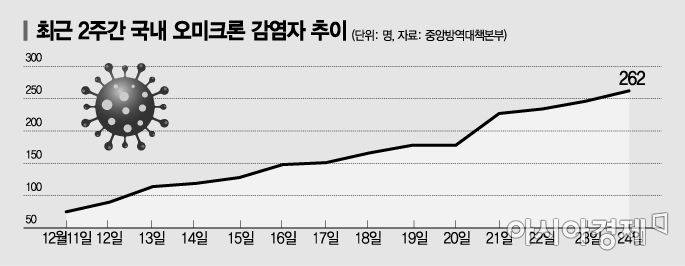
Accordingly, from the 30th, local governments will be able to rapidly detect not only Alpha, Beta, Gamma, and Delta but also Omicron variants including stealth Omicron through variant PCR analysis. Notably, this is the world's first PCR test capable of identifying five major variants in a single analysis.
As a result, the determination of Omicron variant status, which previously required 3 to 5 days through genomic analysis after a positive diagnosis, is expected to be possible within 3 to 4 hours after confirmation with the introduction of the new PCR reagent.
The quarantine authorities explained that it is difficult to perform both COVID-19 diagnosis and detection of all variants in a single test, so the current method is considered the best option. Currently, overseas methods estimate Omicron variant presence when the spike protein target is not detected, but this approach is unstable for COVID-19 diagnosis itself. Furthermore, such methods cannot detect 'stealth Omicron,' which has additional spike protein mutations, thus presenting more limitations according to the authorities.
Regarding whether the developed PCR reagent can be applied at the initial positive diagnosis stage, Team Leader Kim stated, "The indicators that can be differentiated through a single PCR are limited, making it difficult to detect all variants including COVID-19 diagnostic targets at once," and added, "The newly developed reagent requires about 3 additional hours of PCR after extracting ribonucleic acid (RNA) from the specimen, so it can be seen as combining tests to some extent."
© The Asia Business Daily(www.asiae.co.kr). All rights reserved.
![Clutching a Stolen Dior Bag, Saying "I Hate Being Poor but Real"... The Grotesque Con of a "Human Knockoff" [Slate]](https://cwcontent.asiae.co.kr/asiaresize/183/2026021902243444107_1771435474.jpg)
















