Political Views Differ Between Young Men and Women in Their 20s
Significant Gap in Support Rates for Moon Administration in 2018
Divided Votes of Men and Women in April 7 By-elections
'Gender Conflict' May Be at the Center
Experts Say "Different from Traditional Conservative-Liberal Divide, a Post-Ideological Generation"
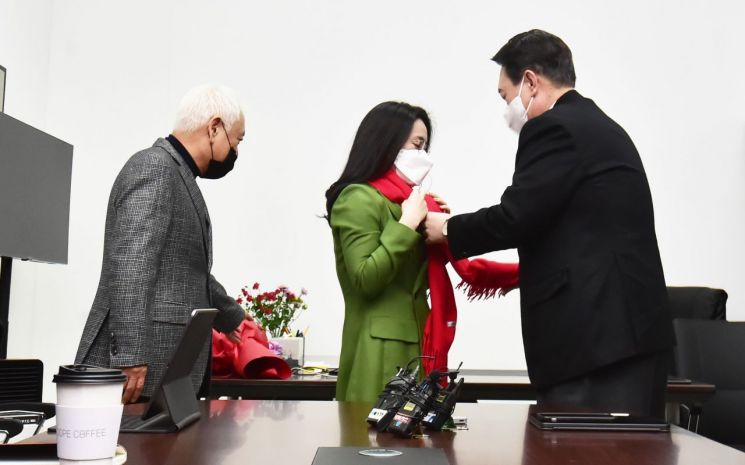 On the 20th, Yoon Seok-yeol, the presidential candidate of the People Power Party, draped a red scarf around Shin Ji-ye, the newly appointed chief vice chairman, at the welcoming ceremony for newly recruited personnel held in the chairman's office of the New Era Preparation Committee in Yeouido, Seoul. / Photo by Yonhap News
[Asia Economy Reporter Lim Juhyung] As the presidential election approaches, the competition between the two major party candidates to woo voters in their 20s is reaching a fever pitch. Yoon Seok-yeol, the presidential candidate of the People Power Party, has adopted Shin Ji-ye, the former head of the Korean Women's Political Network known as a so-called 'feminist politician,' as a party recruit, while Lee Jae-myung, the presidential candidate of the Democratic Party of Korea, is campaigning by visiting online communities mainly used by men in their 20s.
However, winning the hearts of voters in their 20s is expected to be a very challenging task. The younger generation, heavily influenced by the recent 'gender conflict' that erupted in online spaces, shows varying preferences for parties and politicians depending on whether they are 'Idaenam' (male voters in their 20s) or 'Idaenyeo' (female voters in their 20s). Experts describe voters in their 20s as a 'post-ideological generation,' characterized by moving according to their own interests rather than traditional progressive or conservative lines.
◆Both Major Party Candidates Make All-Out Efforts to Woo Idaenam and Idaenyeo
On the 20th, the People Power Party recruited former representative Shin as the chief vice-chairperson of Yoon's direct organization, the 'New Era Preparation Committee.' At the welcoming event for the new recruit, Vice-Chairperson Shin explained her reason for joining the People Power Party, saying, "Candidate Yoon promised to solve violence against women, respond to the climate crisis, and create a Korea that moves forward beyond left and right, so I decided to join."
Candidate Yoon also emphasized that to win the upcoming presidential election, the party must transform into a 'big tent' party that embraces not only conservatives but also women and youth. He said, "Ms. Shin is not very different from the People Power Party members," adding, "The People Power Party must broaden its support base and expand its philosophy and camp."
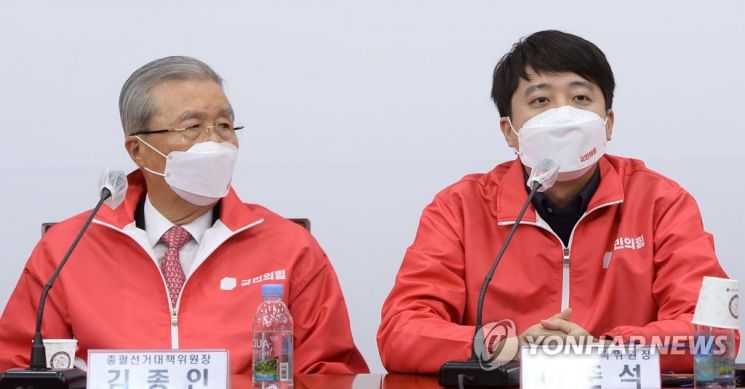 Lee Jun-seok, leader of the People Power Party (right), is speaking at the Central Election Countermeasures Committee meeting held at the National Assembly in Yeouido, Seoul on the 20th. / Photo by Yonhap News
However, immediate backlash arose within the party. On the afternoon of the same day, Lee Jun-seok, the leader of the People Power Party, warned in an interview with MBC's 'News Outside' that "if we align with the strong feminist trend and actions, we cannot help but deliver strong criticism." Ha Tae-kyung, a party lawmaker, expressed opposition on Facebook, saying, "I am concerned about Yoon Seok-yeol's campaign team taking gender conflict lightly."
The internal strife over policies for voters in their 20s is not limited to the People Power Party. Lee Jae-myung, the Democratic Party's presidential candidate, is also actively courting young voters in their 20s by visiting online communities such as 'DC Inside' (DC) and 'FM Korea' (FMKO), which are mainly used by men in their 20s.
On the 10th of last month, Lee shared a post on Facebook titled 'A Letter from Hongkadan to Candidate Lee Jae-myung,' recommending, "Please read it together." The letter, written by a young man who had previously supported Hong Jun-pyo of the People Power Party, criticized the Democratic Party for being obsessed with 'female-favoring policies' and demanded "Stop the madness of feminism."
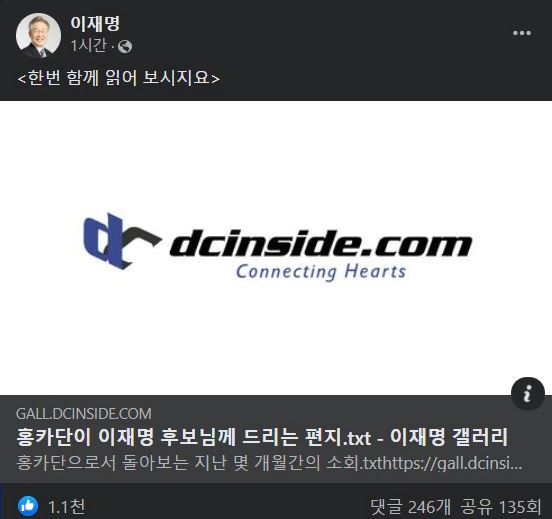 Lee Jae-myung, the Democratic Party of Korea's presidential candidate, shared this post on his Facebook on the 10th of last month / Photo by Facebook
Some Democratic Party supporters expressed concern over Lee's moves, suggesting that he might be neglecting women's policies to attract 'Idaenam' voters. One supporter wrote on Facebook, "They keep saying youth, but aren't women youth too?" and pointed out, "Isn't stirring up gender conflict to gain some male votes counterproductive?"
◆Idaenam and Idaenyeo Have Different Voting Preferences
The somewhat confusing stance of the two major party candidates on 'policies for voters in their 20s' is seen as a result of the unique characteristics of this age group. Their political tendencies can differ not only by income level or left-right political orientation but also by 'gender.'
Although Idaenam and Idaenyeo are grouped in the same age bracket, they show significant differences in political preferences. This characteristic became prominent starting in 2018.
In 2017, during the early days of the Moon Jae-in administration, the political tendencies of men and women in their 20s were not significantly different. However, from the second half of 2018, the support rate among men in their 20s began to decline.
According to a December 2018 survey by the polling firm Realmeter on government approval rates by age and gender, the approval rate among men in their 20s was 29.4%, the lowest among all age and gender groups. In contrast, women in their 20s had the highest approval rate at 63.5%.
 On the afternoon of July 5 last year, former Chungnam Governor Ahn Hee-jung leaving Gwangju Prison. Former Governor Ahn was indicted and sentenced to prison for charges including sexually assaulting and molesting his executive secretary. / Photo by Yonhap News
Although women in their 20s continued to show relatively high support for the government and ruling party, they gradually withdrew support as sexual misconduct scandals involving senior ruling party officials such as former Chungnam Governor Ahn Hee-jung and the late Seoul Mayor Park Won-soon surfaced one after another.
The characteristics of Idaenam and Idaenyeo were also evident in the April 7 by-elections. According to the National Election Commission, 72.5% of male voters in their 20s supported Oh Se-hoon for Seoul mayor, while Park Young-sun, the Democratic candidate and former Minister of SMEs and Startups, received only 22.2% of the vote.
Women in their 20s showed slightly higher support for Park (44%) than for Oh (40.9%). This clearly illustrates the significant divide in voting preferences between Idaenam and Idaenyeo.
◆'Gender Conflict' Is Also a Major Issue for Voters in Their 20s... Expert: "Post-Ideological Generation Votes According to Interests"
Why do Idaenam and Idaenyeo hold different political views? Some suggest that the recent 'gender conflict,' which erupted mainly in online spaces, may have contributed to the divergence in perspectives.
The year 2018, when the government approval rates of Idaenam and Idaenyeo began to diverge, was also when women's rights issues were actively discussed, including the #MeToo revelations by prosecutor Seo Ji-hyun and the 'Hyehwa Station protests' condemning the police's biased investigation of illegal filming. Fierce debates over feminism took place in online communities mainly used by people in their 20s at that time.
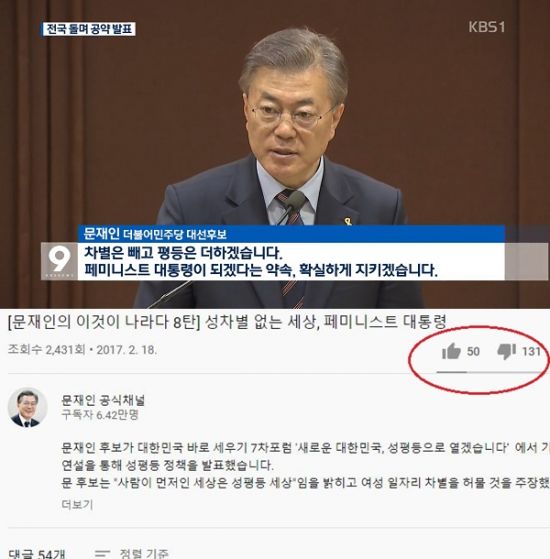 President Moon Jae-in promised to become a "feminist president" when he announced his gender equality pledge in 2017. Some netizens expressed their opposition through 'dislikes' on the YouTube channel where the related video was posted. / Photo by KBS Broadcast, YouTube Capture
Among these, some claimed that "the government is implementing female-biased policies." Some male netizens criticized a remark made by President Moon Jae-in during his 2017 presidential campaign when he announced a gender equality pledge.
At that time, President Moon said, "I will firmly keep my promise to become a feminist president," which triggered a flood of malicious comments such as "Are soldiers treated like leftovers?" and "Did we elect Moon Jae-in to make a feminist president?"
The gender conflict, mainly involving people in their 20s, now affects not only politics but also everyday life. For example, during the 2020 Tokyo Olympics, anti-feminism backlash targeted archery national team athlete An San (20, Gwangju Women's University). Some male-centered communities raised suspicions that An San's short haircut indicated she was a feminist.
This suspicion escalated into the 'short hair feminist' controversy, leading to a 'gender war' between male netizens criticizing An San and female netizens defending her.
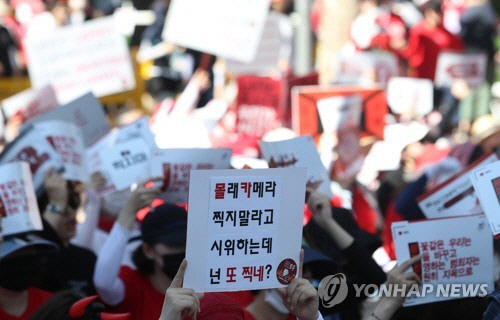
The differing perceptions of gender between the two groups are also evident in surveys. According to a gender equality perception survey conducted last year by the Korean Women's Development Institute targeting 6,570 young people aged 19 to 34, 51.7% of young men responded that "our society is unfair to men," while 74.6% of women answered that "it is unfair to women."
Conversely, those who perceived "our society is gender-equal" were a minority among both men (29.7%) and women (17.7%) in their 20s.
Experts define the current generation in their 20s as a 'post-ideological group' and predict that a different election strategy is needed to gain their support.
Political commentator Lee Jong-hoon said, "Just as Idaenam suddenly shifted away from the ruling party to the People Power Party in the recent by-election, voters in their 20s show significant changes in voting preferences based on gender. Both parties tend to show aggressive behavior as they try to respond to these volatile voters."
He added, "The current generation in their 20s cannot be understood through traditional ideological lenses like progressive or conservative. The basic premise is that they are a 'post-ideological' generation. They move and vote according to their interests, and presidential candidates should keep in mind that these voters will shape the future political generation as they approach the election."
© The Asia Business Daily(www.asiae.co.kr). All rights reserved.
![Clutching a Stolen Dior Bag, Saying "I Hate Being Poor but Real"... The Grotesque Con of a "Human Knockoff" [Slate]](https://cwcontent.asiae.co.kr/asiaresize/183/2026021902243444107_1771435474.jpg)

















