"Clinical Study Results in Animal Models Show Dementia Treatment and Prevention Effects"
Development of Herbal Dementia Treatment, Research Paper Published in SCI Journal
"Confirmed Activation of Brain Immune-Enhancing Enzymes in Animal Models"
Patent Application Pending for Parkinson's Disease Treatment Research
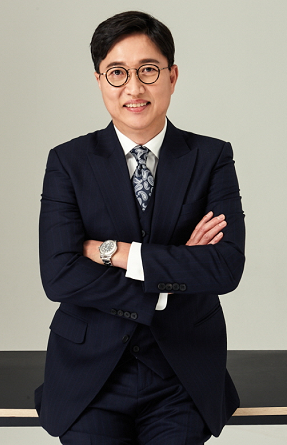
[Asia Economy Reporter Hyungsoo Park] Research and development to develop dementia treatments are ongoing. In Korean traditional medicine as well, attempts to treat dementia based on herbal prescriptions continue. Jin-ho Park, CEO of Cheongnohan Clinic, established Cheongno H&D and has officially embarked on developing dementia treatments using herbal extract components.
Jin-ho Park, CEO of Cheongno H&D, said, "We confirmed that long-term administration of herbal extracts in animal models helped activate enzymes that enhance the brain's immune function," adding, "it also suppresses dementia-causing substances and improves cognitive function, so it could be applied to dementia patients."
He continued, "We aim to research materials specialized in degenerative brain neurological diseases to develop treatments for intractable diseases that can improve quality of life and widely distribute them."
The following is a Q&A with CEO Park.
▲What was the background for establishing Cheongno H&D?
-Cheongno H&D is a bio company that researches and develops herbal medicine materials. Over several years, we conducted various pharmacological experiments, researching and developing dementia prescriptions and dementia treatment substances. This year, we received a domestic patent and started the business. We began this venture with the hope that people could live their later years happily without pain or fear through dementia treatments.
▲What is the composition of the development personnel at Cheongno H&D?
-To strengthen research and development (R&D) capabilities, we established the Cheongno Korean Medicine Bio Research Institute. Jin-hyuk Lee, a brain disease research expert, is in charge of R&D. Director Lee has served as a non-standing researcher at the National Institute of Korean Medicine and as a director of the Spine and Nerve Chiropractic Society of the Korean Medicine Association. He has conducted long-term research on brain and dementia diseases at Jaseng Korean Medicine Hospital and Ubo Korean Medicine Research Institute. He also collaborated with Dongguk University Korean Medicine Hospital’s Department of Neuropsychiatry on research and development of Korean medicine dementia treatments and jointly filed domestic patents.
▲What differentiates your dementia treatment from existing ones?
-In animal models induced with dementia, administration of herbal extracts simultaneously suppressed beta-amyloid plaques and neurofibrillary tangle formation caused by tau protein degeneration, which are considered the main causes of dementia. Unlike existing single-component new drugs, it inhibited both dementia-causing substances and improved cognitive function. It also has antidepressant and anti-anxiety effects, so it is expected to be applicable to anxiety disorders and cognitive impairments. Another positive aspect is that it contains no components that burden the liver.
▲To what extent were dementia-causing substances suppressed in the animal models?
-Herbal prescriptions have been administered steadily to patients in clinical settings for a long time, so their safety has been sufficiently verified. To scientifically prove the pharmacological mechanism, animal models were conducted. When simply compared with donepezil, a widely used dementia treatment component, the suppression effect on causative substances was better. It suppressed more than half compared to the dementia control group. The research results verified the treatment effect through patents and were published in an SCI journal, which we believe confirms the accuracy and fairness of the experiments themselves.
▲How is the development of the dementia treatment progressing?
-We conducted research for over six years to find effective substances for dementia treatment in collaboration with Dongguk University Korean Medicine Hospital’s Department of Neuropsychiatry. Starting with the first animal model in 2015, we proceeded to the second animal model until June last year. Using prescriptions passed down in Korean medicine, we developed a dementia treatment using herbal extract components and obtained a domestic patent. Various clinical studies were also conducted to scientifically verify the treatment effects. Based on the research results, a research paper on Korean medicine dementia treatment was published in March this year in the SCI international journal, Journal of Alzheimer’s Disease.
▲How is dementia treated with Korean medicine?
-Many documents mentioning dementia can be found even before the Ming Dynasty in China. The reason Korean medicine has not actively treated dementia is that it has not effectively persuaded how the treatment mechanism works. Recently, the government is conducting pilot projects for dementia treatment using herbal medicine, so we expect it to become more active.
▲Is it possible to develop a Parkinson’s disease treatment as well?
-Currently, experimental results related to Parkinson’s disease have also demonstrated significant validity. A patent application is underway, and we expect patent registration to be possible soon.
▲What is Cheongno H&D’s roadmap?
-We plan to distribute the newly developed Korean medicine dementia treatment and continue researching substances effective for dementia treatment. Following dementia, we are investing heavily in research and development of Parkinson’s disease treatments, known as intractable diseases in the elderly. We are researching pharmacological experiments on treatments for degenerative brain neurological diseases such as forgetfulness, headaches, sleep disorders, and Parkinson’s disease. We also plan to actively collaborate with academia and medical institutions related to the development of treatments for elderly diseases such as stroke and cerebral infarction.
© The Asia Business Daily(www.asiae.co.kr). All rights reserved.
















