Kwon Il-yong 'Profiling Case Study'
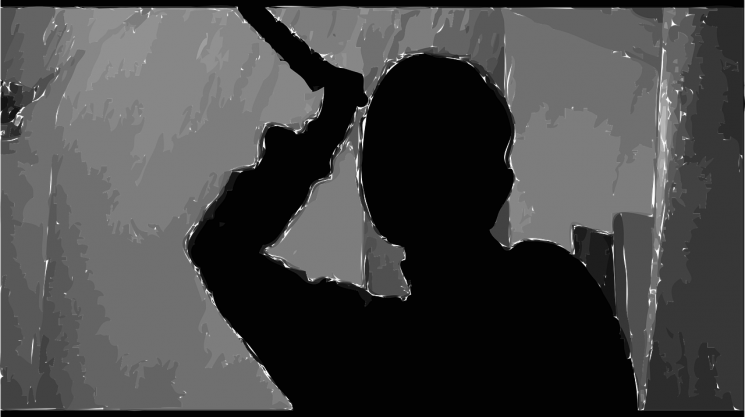
[Asia Economy Reporter Seomideum] In traditional Korean society, murder crimes had a statute of limitations of 15 years. The existence of a statute of limitations means that investigations are halted after 15 years. It is a declaration of surrender, indicating that dragging out the case any longer is pointless. However, as the incidence of brutal crimes increased, the statute of limitations has now been abolished for murder and sexual crimes against minors. Profilers played a significant role in this change.
The first profiler appeared in Korea in 2000. Before that, causal relationships and motives for crimes were relatively clear, but with incidents involving unspecified victims such as the Hwaseong serial murders (1989), the Jijeonpa case (1994), and the Makgapa case (1996), profiling investigative techniques emerged. Kwon Ilyong, the first profiler and author of the book Profiling Case Study, explains, “Criminals have certain patterns. It is based on the premise that those who commit similar crimes have similar personality traits,” and adds, “Profilers can be defined as those who analyze people's behavior.”
Serial killers have several characteristics: “economic helplessness, a sense of social inequality and unfairness, projective thinking that their misfortune is caused by such social conditions, social barriers and resulting relative deprivation, victimization during their developmental years, and troubled family relationships.”
It is a misconception to simply consider serial killers as psychopaths. Psychopaths have “a highly heightened awareness of controlling and manipulating people,” so they “constantly try to control or manipulate those around them in some way,” whereas serial killers are “merely despicable and arrogant individuals who attack socially vulnerable people.” Lee Chun-jae, Jung Nam-gyu, and Yoo Young-chul are representative serial killer cases.
Sexual crimes mostly originate “from viewing minor sexual exploitation materials.” This is why possession of child sexual exploitation materials is punishable by over 10 years in many countries. The sexual offenders the author met commonly possessed excessive amounts of sexual exploitation videos and constantly pursued sexual fantasies in daily life. They “derive psychological satisfaction not from pursuing their own gratification through sexual acts but rather from completely destroying the victim’s life.”
The common mindset of indiscriminate criminals is relative deprivation. They believe they have not reached the same level as ordinary people. Feeling disconnected from society’s members, they possess a “psychological state in which they do not feel guilt even if they attack someone.” This explains why they claim “I am also unfairly treated” when their faces are revealed through the media.

Regarding mental disorders, schizophrenia is the most representative. Since many mentally ill offenders known to the public have schizophrenia, people have a strong fear of it. However, according to experts, violent crimes caused by mental disorders account for less than 1%. The common belief that schizophrenia patients are unpredictable and can attack anyone anytime is also incorrect. “If they receive help from those around them, they can live smoothly without causing significantly different problems from normal people.” This is also why the former term “schizophrenia” was renamed to “jo-hyeon” (meaning “harmonizing the strings”) disease. However, it is true that the rate of violent crimes by mentally ill patients is higher than in other countries, which is because “many seek experts only after problems arise due to fear of being stigmatized as mentally ill.” For this reason, the author insists, “Misunderstandings and stigma about mental disorders must be properly addressed. Simply dismissing crimes as caused by symptoms of mental illness without fundamental approaches is irresponsible,” and emphasizes, “It is urgent to establish a system where treatment can be involved.”
© The Asia Business Daily(www.asiae.co.kr). All rights reserved.
![Clutching a Stolen Dior Bag, Saying "I Hate Being Poor but Real"... The Grotesque Con of a "Human Knockoff" [Slate]](https://cwcontent.asiae.co.kr/asiaresize/183/2026021902243444107_1771435474.jpg)

















