Ministry of Employment Changes Administrative Interpretation of Annual Paid Leave
[Sejong=Asia Economy Reporter Moon Chaeseok] The government has decided to change its administrative interpretation of annual paid leave for one-year contract workers from the existing 26 days to 11 days. This change comes after the Supreme Court ruled on October 14 that "annual leave for one-year contract workers is 11 days," marking the first reinterpretation in 15 years since 2006. Going forward, workers who have worked for 365 days without taking any annual leave can only claim compensation for up to 11 days of unused leave.
The Ministry of Employment and Labor announced on the 16th that it has revised its interpretation to state that if a worker has worked at least 80% of the contract period during the 365 days after joining, the annual leave of '15 days' for the first year will only take effect if the employment relationship continues on the first day of the following year (the 366th day after joining). Previously, even if a worker resigned on the 366th day without taking annual leave, they could claim compensation for the full '15 days' of annual leave for the first year from the employer.
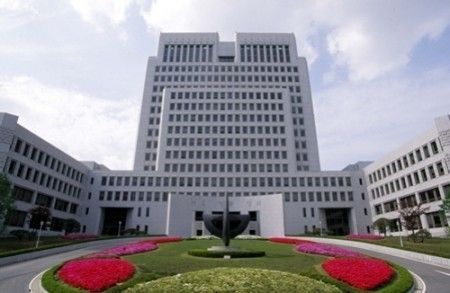
The reason for the Ministry's reinterpretation is the Supreme Court ruling on October 14. The Supreme Court held that to accrue annual leave, the employment relationship must continue on the 366th day, which is one day after completing one full year. The court stated, "If the employment relationship ends due to resignation or other reasons before the 366th day, which is the day after completing one year of work, the worker cannot claim compensation for annual leave."
Until now, the Ministry had guided that for one year of work, paid leave could be granted up to a maximum of '26 days' by adding the '11 days' of paid leave accrued monthly and the '15 days' of annual leave granted for 80% attendance over the year. It was understood that if the contract ended on the 366th day and the worker could not use the annual leave, they could claim compensation for the unused leave from the employer. However, the Supreme Court ruled this to be inappropriate, prompting the Ministry to change its administrative guidelines.
Due to the Ministry's reinterpretation, confusion has arisen, especially among workplaces that have already paid unused annual leave compensation to workers following the Supreme Court ruling. However, the Ministry has not made any specific comments regarding this issue. The Ministry only stated, "The Supreme Court ruled in 2005 that the annual leave for contract workers who worked one full year was 26 days, which led to the reinterpretation in 2006."
The Ministry of Employment and Labor plans to promote the annual leave system so that it can be implemented according to its original purpose of guaranteeing workers' right to rest rather than monetary compensation. Park Jongpil, head of the Labor Inspection Policy Division at the Ministry, said, "Although the annual leave system was implemented to provide rest opportunities as compensation for past work, recently there has been a tendency to emphasize monetary compensation aspects."
© The Asia Business Daily(www.asiae.co.kr). All rights reserved.
![Clutching a Stolen Dior Bag, Saying "I Hate Being Poor but Real"... The Grotesque Con of a "Human Knockoff" [Slate]](https://cwcontent.asiae.co.kr/asiaresize/183/2026021902243444107_1771435474.jpg)















