[Seoul District News] First Academic Research on the Sole Historical and Cultural Heritage within Yongsan Base: Yongsan Detention Center in Photos, Maps, and Drawings on A4 Size (210mm x 297mm), 176 Pages Including Historical Timeline, Essays, and Data... Yangcheon-gu Supports Independent Living of Children Aging Out of Care with Warm Attention... Mapo-gu’s ‘Anything Consultation Desk’ Established as a Problem Solver for Residents, Receiving Enthusiastic Response... Gangnam-gu Saemaeul Women’s Association Delivered 8 Types of Side Dishes to 200 Vulnerable Households... Jung-gu Selected for Outstanding Public Administration Case That Moved Citizens... Nowon
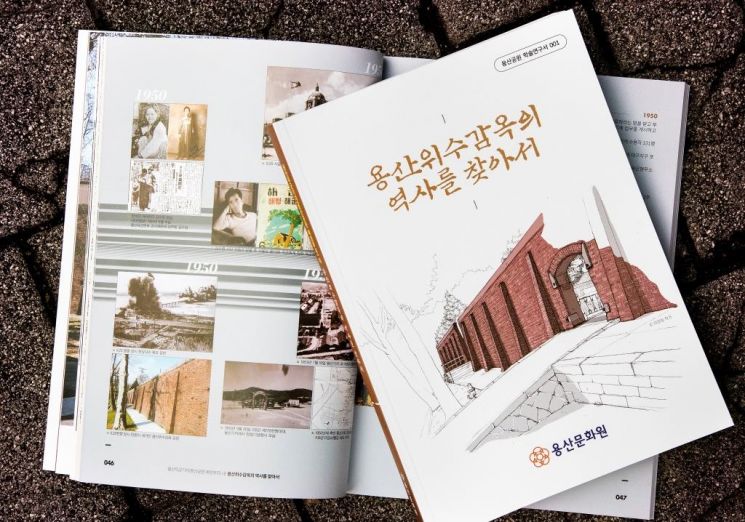
[Asia Economy Reporter Park Jong-il] Yongsan-gu (Mayor Seong Chang-hyun) Yongsan Cultural Center has published 200 copies of the booklet "Tracing the History of Yongsan Military Prison," marking the first academic research achievement dealing with a single historical and cultural heritage within the Yongsan Base.
The booklet is A4 size (210mm x 297mm) and 176 pages long. It is organized into ▲Yongsan Military Prison through photos, maps, and drawings ▲Chronology of Yongsan Military Prison history ▲Essays ▲Materials.
Yongsan Military Prison is a meaningful place where one can examine the history of the Japanese colonial period, the liberation era, and the US military occupation all at once. It is also the only remaining building in the world that still exists from the military prisons (prisons built to detain soldiers and military personnel) established by the Japanese army.
In 1906, the Japanese Empire decided to build a permanent base in Yongsan to achieve the colonization of the Korean Peninsula and their continental invasion ambitions. Many buildings constructed by the Japanese remain within the Yongsan Base, and especially the military prison, completed in 1909, has preserved much of its original appearance even after 112 years.
The name changed over time: Yongsan Military Prison (1909?1923), Yongsan Military Detention Center (1923?1945), US 7th Division Detention Center (1945?1949), US Forces Korea Prison (1949), Army Prison (1949?1953), US 8th Army Detention Center (1953?1963), US 65th Medical Brigade Headquarters (unknown?2017). All refer to the same building.
According to current research, it appears that notable figures such as the militia leader Kang Gi-dong, general's son Kim Du-han, suspect Park Gwang-ok in the assassination of Jang Deok-su, Namro Party organizer Lee Joong-eop, secretary of Park Heon-young Park Si-hyun and liaison Jeong Jae-han, assassin of Baekbeom Kim Gu An Doo-hee, Korean Mata Hari Kim Soo-im, and poet Kim Soo-young passed through Yongsan Military Prison.
A district official said, "Despite being a military facility, due to various historical and political incidents, it seems that many civilians as well as soldiers were imprisoned here," adding, "You can see this at a glance through the chronology included in the book."
There are four essays: ▲The initial function and spatial characteristics of the Japanese military prison in Yongsan during the Japanese colonial period (Professors Hwang Seon-ik of Kookmin University and Kim Cheon-su, Director of Yongsan Cultural Center's Historical and Cultural Research Office) ▲The 1947 Daehanmincheong Incident and Yongsan Military Prison during the US military government period (Researcher Seo Jun-seok of Seoul History Compilation Institute) ▲Military Purge and Yongsan Military Prison (Professor Noh Young-gi of Chosun University) ▲Changes in Yongsan Base Military Prison before and after the Korean War (Researcher Jeon Gap-saeng of Seoul National University Social Development Research Institute).
All are results from the academic symposium "Tracing the History of Yongsan Military Prison" held at Yongsan Cultural Center last October.
Additionally, materials such as US military government trial documents related to Kim Du-han and the Daehanmincheong Incident, trial documents related to the assassination of Jang Deok-su, recorded testimonies of An Doo-hee, and poet Kim Soo-young’s memoir "This is How I Was Released" are included to deepen the content.
Kim Cheon-su, the chief planner of the booklet, said, "Research on the military prison is an important opportunity to understand the layered history of Yongsan Base," adding, "We will expand the subjects and themes in the future and deepen and develop the research."
Seong Chang-hyun, Mayor of Yongsan-gu, emphasized, "The historical buildings and heritage numbering over 1,000 within Yongsan Base are history itself that has witnessed and proven modern Korean history," and "I hope more citizens can understand the historical significance and value buried here."
The district also published an integrated volume titled "Tracing the History of Yongsan Base" this year. It consists of three volumes and 1,028 pages. As the first comprehensive achievement clarifying the base's history, it covers the construction and operation processes of the Japanese and US military bases since modern times. It features many illustrations and materials collected from the US National Archives and Records Administration (NARA) and others.
There are friends who have to grow up faster than others at the early age of eighteen. Whether they want to or not, they must overcome the high walls of livelihood and education in the face of immediate reality. These friends are youths about to age out of care.
Protected children aging out refers to children who have turned 18 or whose protection purpose has been fulfilled, ending their care in child welfare facilities or foster care according to the Child Welfare Act. Nationwide, about 2,600 children prepare to stand on their own alone every year.
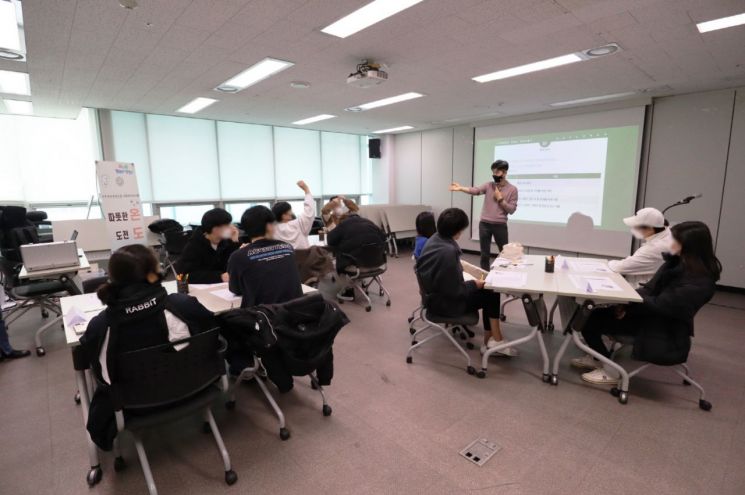
Yangcheon-gu (Mayor Kim Soo-young) launched the "Warm Challenge, ONDO (?度)" project in November to support the independence of these youths aging out of care. This project, started for the first time this year, involved 12 children whose protection ends this year among about 130 children under care in Yangcheon-gu facilities and foster families.
First, psychological and emotional lectures linked with the Yangcheon Mental Health Welfare Center were provided to help them care for their body and mind and view themselves positively.
On December 4 and 11, over two days, a self-reliance support program operated by the social enterprise "Brothers Keeper" was conducted. Practical life programs such as real estate contracting, integrated housing support services, money management and future planning, and cooking were provided. Emotional education on self-expression methods and stress relief was also offered to support independence.
Programs to help recover self-esteem, career education, and sharing independence experiences by seniors who actually left the facilities were also conducted to help them accept and acknowledge the fact that everyone becomes alone.
"Brothers Keeper" is a social enterprise run by actual former residents who have left care. CEO Kim Sung-min of Brothers Keeper said, "Friends who have to prepare for independence immediately often have no adults around to help or consult. The labels 'orphan' and 'childcare center' are the words they hate most, and they often get frustrated because they cannot be free even after entering society. So, I thought it might be more necessary to help them build the capacity to accept this reality and raise their self-esteem, which led to the creation of this social enterprise."
A child who must become independent next month repeatedly asked questions and sought advice during breaks in the education. When asked if they wanted to participate at first, some children asked, "Do we have to participate?" but once the program started, they were very enthusiastic and focused. Despite the training schedule running from morning to afternoon, no one dropped out.
Kim Soo-young, Mayor of Yangcheon-gu, said, "What children aging out of care really need is interest and effort to stay by their side and cheer them on. Next year, we will reflect more of the children's thoughts and opinions to provide practical help and work harder."
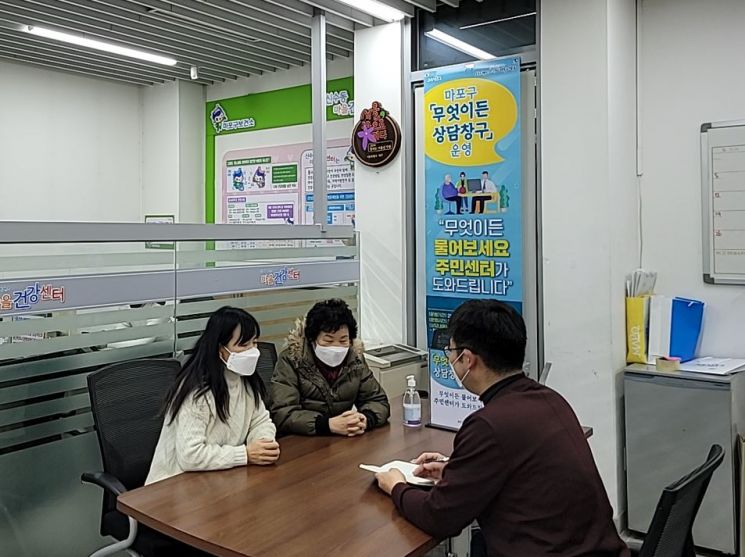
Since February last year, Mapo-gu (Mayor Yoo Dong-gyun) has been operating the nation’s first "Anything Consultation Desk," which has become a hot topic for effectively solving residents' difficulties and concerns.
Earlier this year, the Anything Consultation Desk at Sinsu-dong Community Service Center received a case of a single elderly person who had suffered multiple cerebral hemorrhages. Facing economic difficulties due to continuous medical expenses, the desk supported surgery and additional medical costs, enabling the elderly to focus on treatment without worry.
Also, this elderly person had hoarding tendencies, accumulating about 10 tons of miscellaneous junk at home. Due to long-term hospitalization from relapse, the neglected junk caused discomfort to the landlord and neighbors.
The Anything Consultation Desk used home care primary doctor services for vulnerable housing and case management funds to collect the accumulated trash inside and outside the house, resolving neighbors' complaints and helping the discharged elderly recover health in a safe and pleasant environment.
Considering the elderly’s lack of practical care from family and relatives, the desk linked services such as Care SOS Center meal support, customized elderly check-ins, and hospital accompaniment to ensure continuous aftercare.
Thus, the district has been providing life-close administration through the Anything Consultation Desk, solving various residents' difficulties. In March, it supported psychiatric treatment and hospital accompaniment for a single elderly person suffering from phantom noise due to floor noise, and recently provided home convenience repair services such as installing stair safety handrails for a physically disabled elderly person who fell at home.
Launched to help resolve residents' difficulties and conflicts, the Anything Consultation Desk has become a pillar of the 7th local government’s communication-oriented administration. It is characterized by consulting on issues beyond the district’s jurisdiction, such as unemployment and neighbor disputes, and is installed and operated in all 16 neighborhoods and the Civil Affairs Passport Division of Mapo-gu.
The district is promoting the Anything Consultation Desk widely and enhancing resident accessibility by providing non-face-to-face consultation services via phone and email. Since June, it has expanded the promotional team started in Seongsan 2-dong to all neighborhoods. Along with this, it offers customized consultations linked with various experts through the operation of "One-day Counselors" utilizing local human resources.
Yoo Dong-gyun, Mayor of Mapo-gu, said, "The Anything Consultation Desk is a representative case showing what warm-hearted administration is," adding, "We will do our best to operate the desk so that any resident can comfortably come, share their difficulties, and receive help."

Eunpyeong-gu (Mayor Kim Mi-kyung) will hold the "2021 3rd Eunpyeong Policy Research Forum" at 3 p.m. on the 16th via the district’s YouTube channel.
Now in its third year, this forum aims to review the achievements and significance of the Eunpyeong Policy Research Group, launched as the "Eunpyeong Policy Think Tank," and discuss the future direction of local policy research.
The forum is themed around the combination of the Korean consonants 'ㅇ' and 'ㄱ' from the word "research," and is divided into three subtopics: ▲Story ▲Here ▲Connection.
Part 1, "Story," will present a video covering the research activities, community participation, writing, and advisory work of the Eunpyeong Policy Research Group members from 2019 to this year.
Parts 2 "Here" and 3 "Connection" will feature panel discussions with researchers from five local government research groups including Seongdong-gu, Seoul, discussing ▲Achievements and significance of basic local government policy research ▲Tasks to strengthen local policy capabilities.
The forum will be broadcast live on Eunpyeong-gu’s YouTube channel and is open to everyone. It is expected to be an active communication platform with the audience through real-time online comments.
Kim Mi-kyung, Mayor of Eunpyeong-gu, said, "With the increase in local projects and growing resident participation desires, the trend of decentralization is strengthening. The policy capabilities of each local government are more important than ever," adding, "I hope this forum provides an opportunity for more residents to take interest in local issues and discuss policy visions for sustainable growth."
Since its launch with the 7th local government in 2019, the Eunpyeong Policy Research Group has conducted 32 policy research projects across urban planning, resident autonomy, culture, welfare, and other fields. It has participated in advising and writing for major district projects, striving to derive policy alternatives unique to Eunpyeong-gu. Detailed information can be found in research reports and policy research newsletters on the Eunpyeong-gu website.
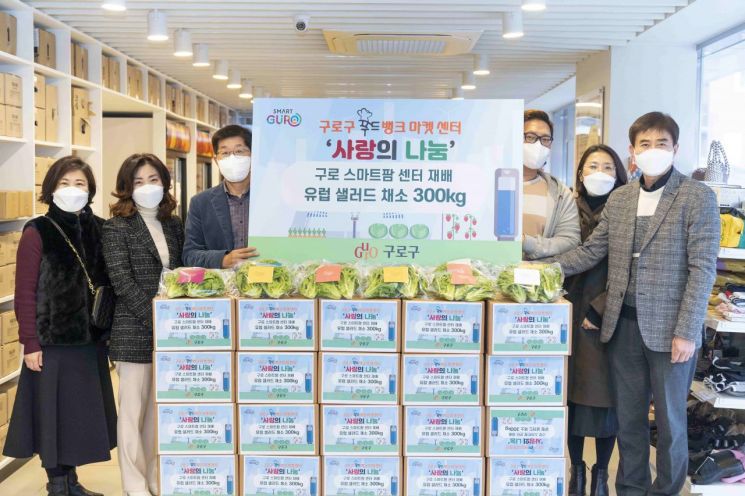
Guro-gu (Mayor Lee Sung) delivered crops grown at the "Guro Smart Farm Center" to neighbors in need.
The "Guro Smart Farm Center" (Hang-dong 145-1), located within the Hang-dong Urban Agriculture Experience Center, opened on the 11th of last month and is actively producing leafy vegetables such as lettuce and European salad greens, as well as strawberries.
Leafy vegetables are grown in a five-tier vertical farm (216㎡), and strawberries are cultivated in a smart greenhouse (144㎡).
Guro-gu plans to donate a total of 300kg of leafy vegetables harvested in December to the Guro Food Bank Market Center to provide to vulnerable groups in the community. The first harvest of 40kg this month was delivered to neighbors in need at a ceremony held on the 14th at the Guro Food Bank Market Center.
A district official said, "We will closely cooperate with the Guro Food Bank Market Center to regularly donate the harvest from the Guro Smart Farm Center to vulnerable groups," adding, "We will continue to strive to create exemplary cases that simultaneously promote urban agriculture and neighborly love."
Meanwhile, the Hang-dong Urban Agriculture Experience Center (9,977㎡) was also developed around the Guro Smart Farm Center, featuring a purification pond, terraced rice paddy experience field, and observation deck as spaces for residents to relax and experience.
Additionally, Guro-gu plans to link existing facilities such as Cheonwangsan Family Camping Site (Hang-dong 149-1), Ecological Park (Hang-dong 148), artificial rock climbing wall, Green Arboretum, and Book Rest Area (Hang-dong 149) to provide various services such as ecological exploration and experiential learning for visitors and nearby residents.
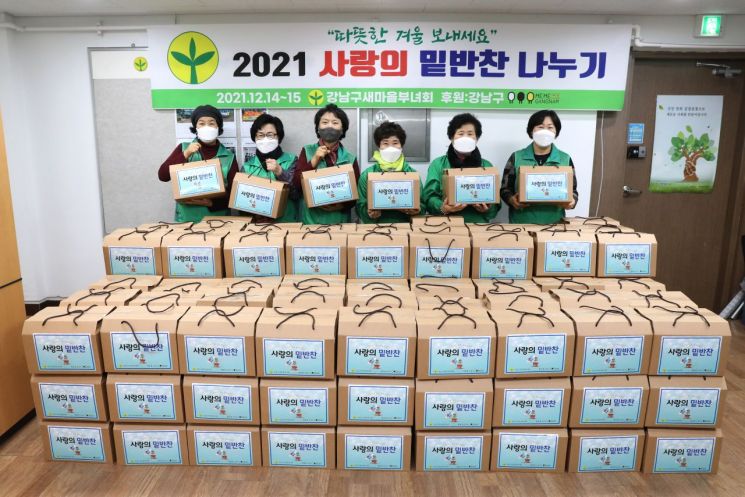
Gangnam-gu (Mayor Jung Soon-gyun) held a "Sharing Love Side Dishes" event on the 15th at the Saemaul Movement Gangnam Branch to support vulnerable groups in the area.
The Saemaul Women's Association packaged eight types of side dishes (rice cake soup rice cakes, cheonggukjang, seasoned perilla leaves, stir-fried lotus root, beef bone soup, dried radish strips, stir-fried anchovies, seaweed) and delivered them to 200 households including elderly living alone, child-headed households, and disabled persons.
Sixteen people attended the event, including Park Soo-kyung, president of the Saemaul Women's Association, executives, and neighborhood women's association presidents. Gangnam-gu and the Saemaul Women's Association previously held a "Jeong Package Sharing Event" during Chuseok and a "Love Kimchi Sharing" event last month.
Choi Kyung-hee, head of the Women and Family Division, said, "Gangnam is known as a wealthy area, but among Seoul's 25 districts, it ranks 12th in the number of basic livelihood security recipients, showing clear wealth disparity and polarization," adding, "With the 'Mimiwi Spirit,' we will look after marginalized neighbors and lead the creation of a community that lives together."
"Mimiwi Gangnam" means "Me (ME), You (ME), Us (WE) Gangnam," embodying the community values of "togetherness, consideration, and respect" for a dignified Gangnam.
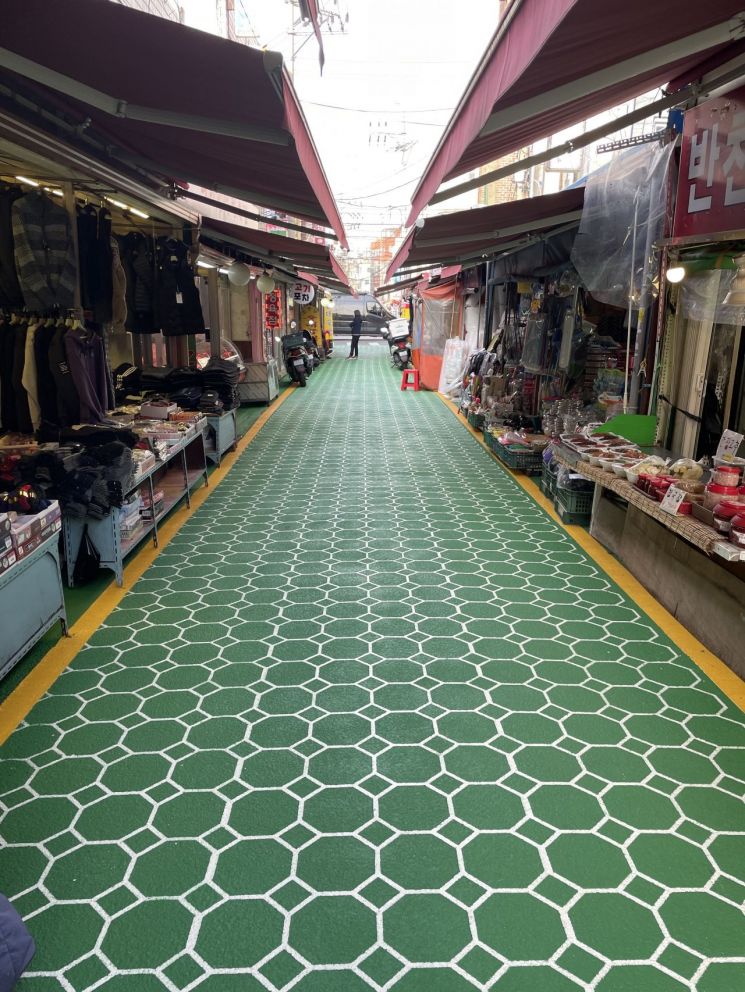
Gwangjin-gu (Mayor Kim Seon-gap) is taking steps to improve facilities and revitalize traditional markets that have been depressed due to COVID-19 social distancing measures.
First, at Hwayang Jeil Alley Market, a merchant education center (office) was established, stencil (anti-slip pavement) was applied, and tilted utility poles were repaired to create a pleasant and safe market environment.
At Myeongok Market, the public restroom was remodeled for residents' convenience, and stencil was applied to the central market aisle. At Jayang Traditional Market, fire alarm facilities were installed for residents' safety, and old electrical wiring was repaired at Yeongdonggyo Market and Hwayang Jeil Alley Market to prevent electrical accidents.
Additionally, to respond to the latest consumer trends, a visible radio will be installed at Junggok Jeil Market. After installation, broadcasting operation training and consulting will be conducted.
Also, with Myeongok Market newly designated as a neighborhood shopping district in January 2021, various modernization projects are being supported to secure self-sustainability and revitalize the commercial area.
Through this project, the district supports ▲commercial area status analysis by professional consulting firms ▲customer payback events ▲Christmas and year-end event street decorations to attract customers.
The commercial area revitalization consulting is conducted by professional firms analyzing the commercial area to explore facility improvements and long-term management strategies suited to the market environment.
The customer payback event runs from December 13 to 31, providing market coupons (worth 5,000 won) to customers who purchase a certain amount.
Kim Seon-gap, Mayor of Gwangjin-gu, said, "Traditional markets have been depressed due to the prolonged COVID-19 pandemic, and we are making various efforts to revitalize them," adding, "We will strive to create markets where residents want to visit by discovering projects that highlight each market's characteristics, along with facility modernization and event implementation."
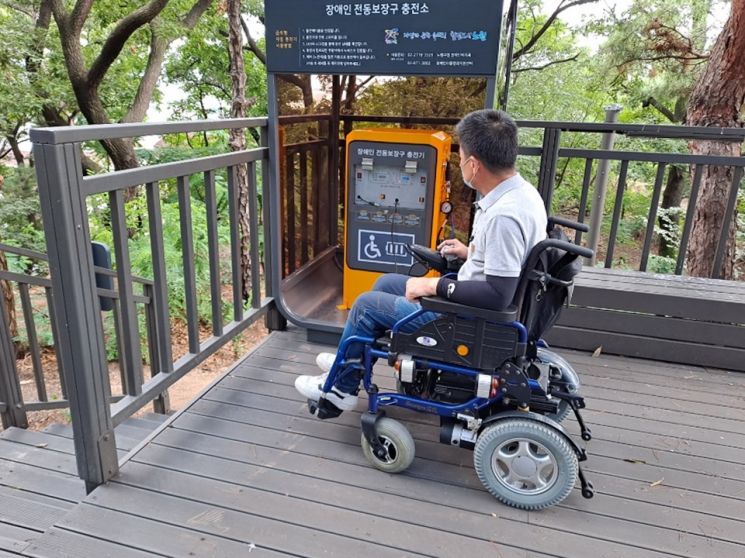
Nowon-gu (Mayor Oh Seung-rok) announced that it is making every effort to guarantee mobility rights for people with disabilities.
Since establishing the Disability-Friendly City Team in 2018, the district has been promoting projects such as "expanding rapid chargers for electric mobility aids," "supporting repair costs for mobility devices," "installing ramps," and "creating disability-friendly pedestrian environments."
First, the "expansion of rapid chargers for electric mobility aids" targets users of electric wheelchairs and electric scooters. As the use of electric mobility aids has increased among socially vulnerable groups such as the elderly and disabled, the need for charging stations has grown. Unlike general chargers that take about 8 hours, rapid chargers complete charging in 1?2 hours, making them more convenient.
Currently, Nowon-gu has 58 electric mobility charging stations, the most among Seoul's 25 districts. This year alone, 14 new stations were installed, and two old chargers were replaced. They were installed mainly along local circular walking trails and major subway stations to improve accessibility. Additionally, by downloading the "Nowon-gu Smart City" app, users can check charger locations via their phones.
The "repair cost support project for mobility devices," started in January this year, has received great response with over 700 users. Repairs can be done at six designated repair shops in the district, and up to 150,000 won per person annually is supported for repairs of manual wheelchairs, electric wheelchairs, and electric scooters.
The "small-scale facility ramp installation project" was also carried out. Ramps were installed in small-scale facilities not covered by the Act on Convenience Promotion for Persons with Disabilities, where stairs or curbs made access difficult. This was implemented in 42 stores frequently used daily, such as cafes and fruit shops, improving accessibility not only for wheelchairs but also for strollers and people with mobility difficulties.
Finally, efforts are being made to create disability-friendly pedestrian environments by minimizing bollards that obstruct walking, installing and replacing tactile blocks, and maintaining audible traffic signals at crosswalks.
By this year, sidewalks around 53 exits of 10 subway stations including Hagye, Gongneung, and Junggye stations, as well as sidewalks around five public places such as Nowon Citizens' Hall and Nowon Culture and Arts Center, have been renovated. Construction is also planned for sidewalks around 10 exits of Nowon Station.
Oh Seung-rok, Mayor of Nowon-gu, said, "Guaranteeing mobility rights for people with disabilities is essential to promote their social participation," adding, "We will listen to voices from the field and reduce inconveniences so that differences do not lead to discomfort."
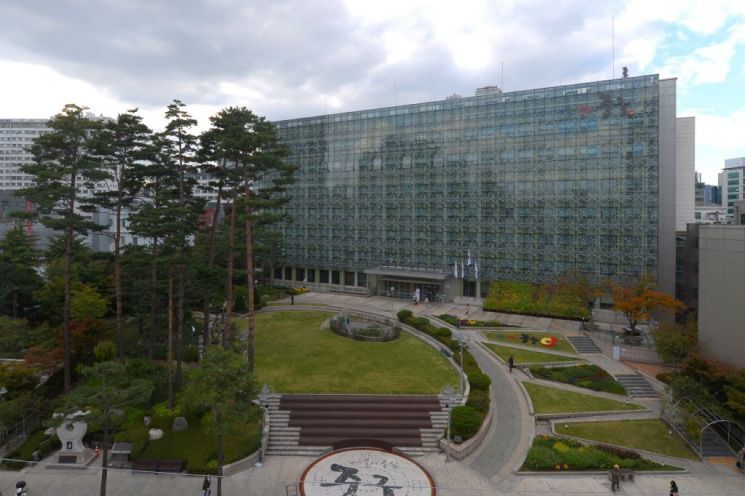
Jung-gu, Seoul (Mayor Seo Yang-ho) announced that six cases that moved civil petitioners at the residents' level were selected through the "2021 Civil Petition Administration Excellence Case Essay Contest."
The contest was held from October targeting all district offices and community service centers, selecting one grand prize, two excellence awards, and three encouragement awards.
The grand prize went to the Land Management Division of Jung-gu Office for their proactive administration titled "May the 70-year-long wish come true..." which worked on ownership organization of the Ssangnim-dong 182 area, which had been a collective land for over 70 years and a subject of collective civil petitions.
The Ssangnim-dong 182 area was a property left by the Japanese, which after liberation was distributed to related parties by registration transfer and divided into 87 parcels in 1954. However, it was registered as shared ownership rather than divided ownership, with over 80 co-owners registered to this day.
This required real estate transaction reports and registration adjustments for all 87 parcels whenever ownership was transferred. As owners aged and passed away, development requiring shared consent became practically impossible, causing the area to become increasingly neglected, making it urgent to find a solution.
The Land Management Division investigated over 50,000 closed registration books, computerized registration changes, various real estate documents, and occupancy status, and reviewed litigation cases, resolving the issue through pre-litigation conciliation and joint lawsuits.
Through continuous communication with residents, including persuading overseas residents, the district achieved 100% pre-litigation conciliation among owners of 72 parcels with confirmed divided ownership in June. Additionally, a lawsuit jointly filed by 72 participants to transfer shares of the remaining 12 co-owners is scheduled for trial.
The lawyer handling the case said, "It is rare to see so many people reach conciliation and jointly file a lawsuit at once. Without Jung-gu Office's support, it would not have even started, and the press releases and petitions reflecting the mayor's will made conciliation and swift litigation possible."
The excellence award went to the "Visiting Ssaksseuri Home Care" service created based on voices from Dasan-dong residents. In the aging residential area, the most needed services were pest control, simple home repairs, and welfare checks. Through the "Ssaksseuri Home Care Task Force," about 30 vulnerable households are visited monthly to check on their well-being, inspect heating/cooling devices, fire alarms, and fire extinguishers, and check for needed repairs. Based on the inspection, necessary materials and equipment are brought back for pest control and repair services.
An elderly couple living in Dasan-dong who experienced the Ssaksseuri Home Care service said, "They come to check on us and take care of us so attentively; it warms my heart," expressing their gratitude.
Other joint excellence awards included ▲"Giving the happiest moment in life" (Gwanghui-dong Community Service Center), and encouragement awards went to ▲"Ambulance carries love" (Hwanghak-dong), ▲"Knock knock! Elderly, please open the door!!" (Pildong Community Service Center), and ▲"We will find the forgotten 2 million won" (Sindang 5-dong Community Service Center).
Jung-gu ranked 3rd among 25 districts in the "2021 Seoul Civil Petition Administration Service Evaluation" in the legal and response office civil petition handling category.
Seo Yang-ho, Mayor of Jung-gu, said, "We will continue to improve civil petition systems and proactively administer so that residents can feel and be moved by our daily administration."
© The Asia Business Daily(www.asiae.co.kr). All rights reserved.
![Clutching a Stolen Dior Bag, Saying "I Hate Being Poor but Real"... The Grotesque Con of a "Human Knockoff" [Slate]](https://cwcontent.asiae.co.kr/asiaresize/183/2026021902243444107_1771435474.jpg)

















