20 Central Banks Hold Monetary Policy Meetings This Week... Fed Expected to Expand Tapering Scale
ECB and BOE Maintain Existing Quantitative Easing Policies... Inflation Pressure Likely to Increase in Emerging Markets
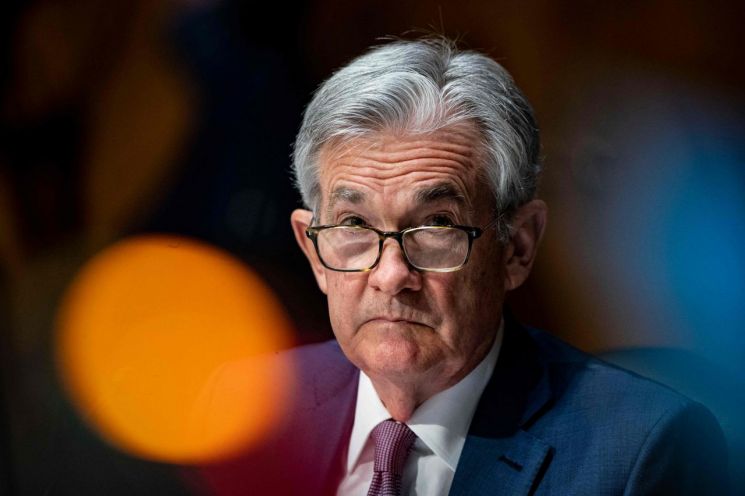
[Asia Economy Reporter Park Byung-hee] The U.S. central bank, the Federal Reserve (Fed), will hold its final Federal Open Market Committee (FOMC) meeting of the year on the 14th-15th (local time), along with about 20 central banks worldwide holding monetary policy meetings this week. While the Fed is expected to expand the scale of tapering (asset purchase reduction), the European Central Bank (ECB) is expected to maintain its existing quantitative easing scale. As the monetary policy directions of the Fed and ECB diverge, there are forecasts that the dollar's strength could intensify.
"‘Temporary Inflation’ is Fed’s Worst Diagnosis"
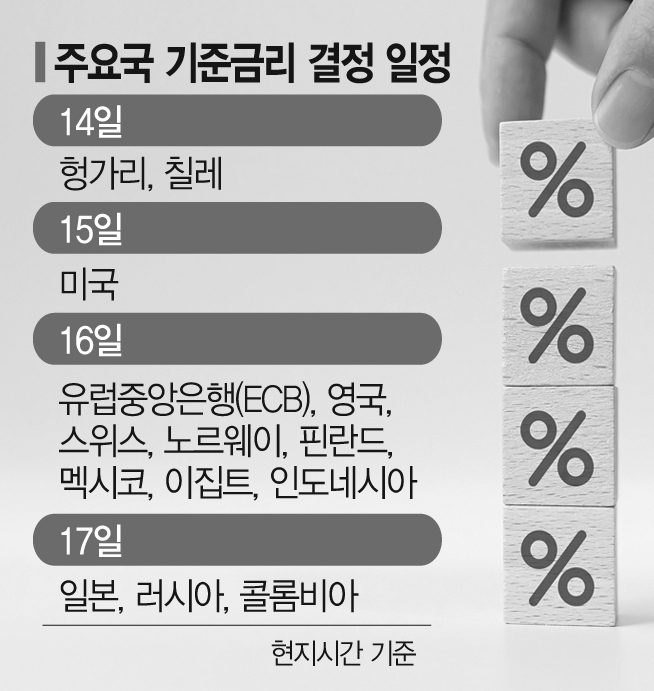
According to Bloomberg on the 12th, in addition to the Fed and ECB, about 20 central banks worldwide, including those of the UK, Japan, Switzerland, Russia, Norway, Finland, and Mexico, will hold monetary policy meetings this week.
The Fed is expected to increase the tapering scale to $30 billion per month at this FOMC, double the current $15 billion per month. This is to end quantitative easing policy quickly by next spring and hasten the base interest rate hike. The consumer price inflation rate announced by the U.S. Department of Labor on the 10th soared to 6.8%, the highest since June 1982, raising calls for tightening.
Calls for tightening, previously raised mainly by the opposition Republican Party, are now emerging within the Democratic Party as well. This is due to growing concerns about the midterm elections scheduled for November next year. Democratic Representative Jake Auchincloss of Massachusetts said, "The Fed needs to end quantitative easing immediately and raise the base interest rate," adding, "Both can be completed by March next year."
Criticism of the Fed’s economic diagnosis errors is also increasing. Mohamed El-Erian, Allianz’s economic advisor, appeared on CBS’s ‘Face the Nation’ on the same day and said, "Considering inflation as temporary is the worst in Fed history," adding, "This greatly increased the possibility of monetary policy mistakes." He warned, "The Fed must move quickly starting this week; otherwise, it will lead to higher inflation expectations."
Record-high Inflation Hits Europe Amid Omicron
Unlike the Fed, the ECB is likely to maintain its existing quantitative easing policy.
Despite growing calls for tightening centered on Germany, ECB President Christine Lagarde maintains the stance of sustaining the stimulus. The Eurozone consumer price inflation rate also recorded 4.9% in November, the highest since related statistics began in 1997. However, President Lagarde claims that prices will gradually decline next year and is not confident that the conditions for a base interest rate hike will be met next year.
The ECB has been implementing a quantitative easing policy by purchasing Eurozone government bonds worth a total of 1.85 trillion euros through the Pandemic Emergency Purchase Programme (PEPP) introduced in March last year. PEPP is scheduled to end in March next year.
The Bank of England (BOE), which caused market confusion by deciding to keep the base interest rate unchanged at its November monetary policy meeting contrary to expectations of a hike, is also likely to maintain the freeze this time. The possibility of a BOE base rate hike has further diminished as the UK government declared a state of emergency on the 12th due to the spread of the Omicron variant.
Norway is expected to raise rates by an additional 0.25 percentage points. The Norwegian central bank hinted at the possibility of further hikes after raising the base interest rate for the first time since the COVID-19 pandemic in September.
Dollar Strength Poses Burden on Emerging Markets
Unlike the Fed, the ECB and BOE are maintaining their existing stimulus policies, and the dollar is expected to strengthen. The dollar index, which reflects the relative value of the dollar against the currencies of six major countries, was below 90 as recently as May but has risen to around 96. Although it has stalled after surpassing 96 at the end of last month, it may strengthen again depending on the results of this week’s monetary policy meetings.
If the Fed’s tightening reduces dollar liquidity, emerging market currencies may weaken, increasing inflation burdens in emerging markets. Countries such as Russia, Hungary, Chile, and Colombia are expected to simultaneously raise their base interest rates this week amid worsening inflation.
© The Asia Business Daily(www.asiae.co.kr). All rights reserved.
![Clutching a Stolen Dior Bag, Saying "I Hate Being Poor but Real"... The Grotesque Con of a "Human Knockoff" [Slate]](https://cwcontent.asiae.co.kr/asiaresize/183/2026021902243444107_1771435474.jpg)
















