[Seoul District News] Seong Jang-hyun, Yongsan-gu Mayor, Visits Home Treatment TF Office on 10th to Check Current Issues... Encourages Staff; Expands TF to 38 Members in 3 Teams for Home Treatment Management, Support, and Unassigned Patient Care... Seongdong-gu Fully Supports Quarantine Taxi Fees for Residents Leaving Other Area Treatment Centers from This Month and Provides Accommodation Fees for Quarantined Families; Also Establishes New Treatment Centers to Secure Additional Hospital Rooms... Geumcheon-gu Selected as Excellent Institution for 2020 Public Ethics System Operation... Seongbuk-gu Conducts Online Cleaning in Metaverse VR Exhibition Space
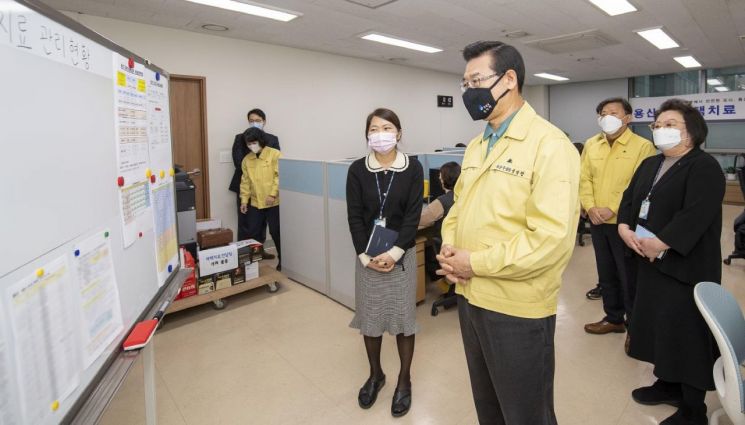
[Asia Economy Reporter Park Jong-il] Yongsan-gu (District Mayor Seong Chang-hyun) will expand the operation of the Home Treatment Task Force, which has been operating since last October, to 3 teams with 38 members.
This is to promote more professional and systematic home treatment in response to the recent surge in confirmed cases.
On the first day of the expanded Home Treatment Task Force operation, on the morning of the 10th, Yongsan-gu Mayor Seong Chang-hyun visited the office to check the management status such as the condition of emergency transport patients and the operation status of cooperating hospitals, and encouraged the staff.
The expanded Home Treatment Task Force is led by the Deputy District Mayor and consists of ▲Home Treatment Support Team ▲Home Treatment Management Team ▲Unassigned Patient Management Team.
The Home Treatment Support Team oversees administrative support related to home treatment, including delivering health management kits such as thermometers to check health status during isolation and providing medicines.
The Home Treatment Management Team informs confirmed patients by phone about home treatment guidelines and how to check their health status. If the patient's condition worsens, they request hospital bed allocation and transport the confirmed patient to the hospital.
Doctors (1) and nurses (8) from Seoul Soonchunhyang University Hospital, a cooperating hospital of the district, check the health status of confirmed patients 2 to 3 times a day in three shifts.
The Unassigned Patient Management Team responds to emergency situations and transport 24/7 for unassigned patients and ensures that patients waiting for beds can be assigned beds promptly in case of severe patients.
Since the Central Disaster and Safety Countermeasures Headquarters changed the criteria and classification procedures for COVID-19 home treatment targets on the 26th of last month, all confirmed patients are basically treated at home. The district's Disaster and Safety Countermeasures Headquarters' Unassigned Patient Management Team classifies confirmed patients and notifies the city hospital bed allocation team of those requiring hospital treatment.
A district official said, "Over the past two months, the dedicated staff managing home treatment patients have accumulated fatigue due to a 7-day emergency system without holidays," adding, "It is fortunate that a systematic and sustainable home treatment system has been established."
As of midnight on December 10, there are 237 home treatment targets and 42 patients waiting for beds in the region. On the 9th, one woman born in 1991 and one man born in 1981 were urgently transported due to reasons such as respiratory distress.
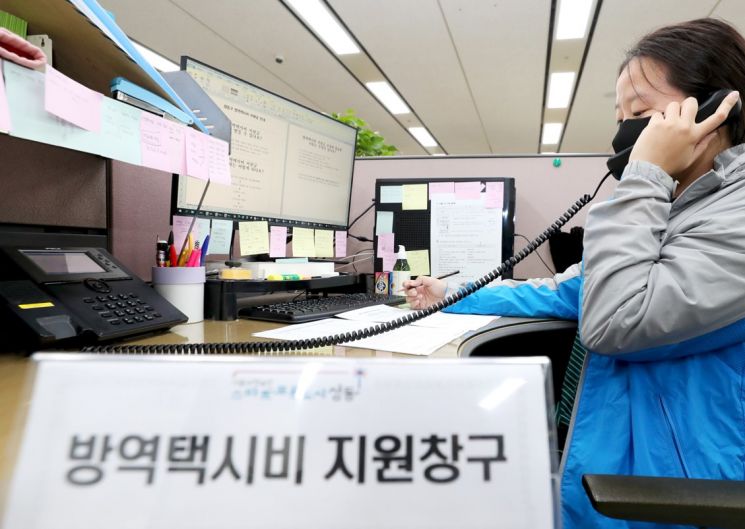
Seongdong-gu (District Mayor Jung Won-oh) will support taxi fares for residents who use quarantine taxis to move home after discharge from residential treatment centers outside Seongdong-gu starting this month.
The support targets are users of quarantine taxis who are discharged early after 7 days from residential treatment centers (including medical institutions) in other districts or cities, which originally had a 10-day admission period, and then self-isolate at home for 3 days.
In response to the increase in COVID-19 confirmed cases and the shortage of hospital beds, the government allowed the admission period at residential treatment centers to be shortened from 10 days to 7 days at the end of September. Accordingly, some patients are discharged after 7 days depending on their symptoms. For the remaining 3 days, they must isolate at home and use private cars or quarantine taxis for transportation.
Quarantine taxis incur additional costs compared to regular taxis, with fares ranging from about 70,000 to 100,000 KRW when traveling from other cities to Seongdong-gu. The district decided to fully support the quarantine taxi fare.
Details on eligibility and application methods for quarantine taxi fare support can be obtained from the Safety Management Division of Seongdong-gu Office. Applicants must prepare documents such as the application form and payment receipt.
Meanwhile, the district also supports accommodation costs for families of self-isolators. If family members who are not under isolation orders use lodging facilities in Seongdong-gu to avoid contact with the isolator, the district supports up to 300,000 KRW per household, at 30,000 KRW per night for up to 10 nights. Additionally, from the 27th of this month, the district plans to add 21 rooms to increase the existing 54 rooms to 75 rooms and newly establish residential treatment centers, actively supporting residents' convenience from quarantine to recovery.
Seongdong-gu Mayor Jung Won-oh said, "We hope this quarantine taxi fare and accommodation support policy will alleviate the economic burden on residents caused by the prolonged COVID-19 pandemic and contribute to preventing the spread of the virus," adding, "We will do our best with all staff to ensure residents face no inconvenience on the long journey toward daily recovery."
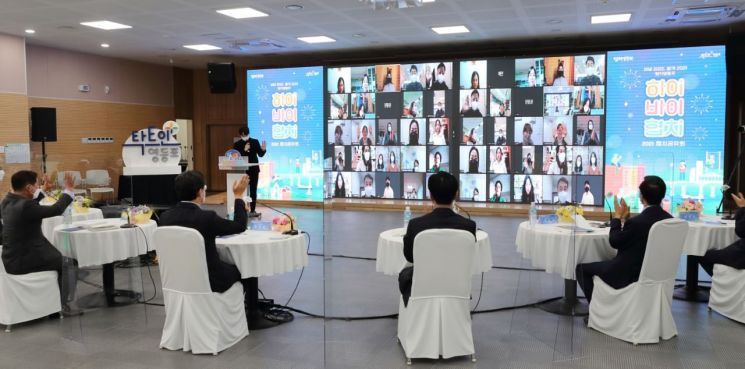
Yeongdeungpo-gu (District Mayor Chae Hyun-il) announced that it successfully held the resident communication event "Hi Bye Cooperation, 2021 Cooperation Sharing Meeting" on the 9th, reflecting on the achievements of this year's cooperation projects and sharing plans for next year.
Cooperation projects refer to public-private collaborative projects where residents and administration jointly discover community problems and residents actively and proactively participate in all processes from project planning to execution and evaluation to solve these problems.
The district prepared this sharing meeting to encourage the changes led by 'Cooperation Yeongdeungpo,' now in its 6th year, and to exchange diverse opinions on future directions to spread the value of cooperation.
Considering the COVID-19 situation, the event minimized on-site attendance, with about 50 cooperation committee members and project participants attending, and was held using the Zoom video conferencing program for real-time online communication.
The event started with a presentation on the progress and vision of 'Cooperation Yeongdeungpo' by the Cooperation Coordinator, followed by viewing videos of 2021 cooperation project activities and introductions to 2022 cooperation projects, and concluded with a communication meeting between on-site and online participants.
Notably, the 2021 cooperation project activity videos were produced in a news format, including reporter coverage and investigative reports for each project, sharing the year's achievements in a lively and engaging manner.
On-site, Ok Myung-ha, co-chair of the Yeongdeungpo-gu Cooperation Council, made a surprise appearance as a news anchor, conducting project reports and on-site interviews, receiving great responses from both online and offline participants.
The 2022 cooperation project video introduced 10 projects closely related to residents' lives and considerate of socially vulnerable groups, including ▲Daerim Children's Park environmental improvement ▲Here and There Neighborhood Bookstores ▲Moving Public Playground projects.
Finally, participants shared their impressions of the activity videos and exchanged thoughts on public-private cooperation in an open communication forum. In a relaxed atmosphere, participants reflected on their efforts, encouraged each other, and reaffirmed their commitment to next year's cooperation projects, fostering communication and harmony.
Yeongdeungpo-gu Mayor Chae Hyun-il said, "Thanks to the innovative proposals and valuable opinions of residents, cooperative administration has taken deeper root," adding, "We will continue to lead the 'miracle of cooperation' with residents through communication and harmony, creating a livable and outstanding city, Open Yeongdeungpo."
Meanwhile, the event content is available anytime on the online site "Hi Bye Cooperation," which was simultaneously opened on the day of the event.
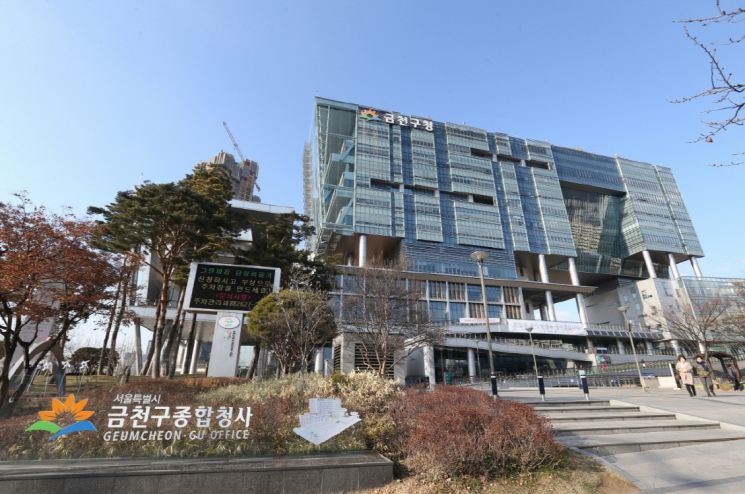
Geumcheon-gu (District Mayor Yoo Sung-hoon) announced that it was selected as an excellent institution in the 'Public Service Ethics System Operation Evaluation' conducted by the Ministry of Personnel Management and Seoul City.
The Public Service Ethics System Operation Evaluation is conducted annually across nine areas, including 'asset registration,' 'asset disclosure,' and 'employment restrictions for retired public officials,' to ensure the effectiveness of the public service ethics system based on the Public Service Ethics Act.
Geumcheon-gu received favorable evaluations for conducting internal education annually for those obligated to register assets to encourage sincere reporting and for thoroughly educating retired public officials on employment and conduct restrictions.
Additionally, the district has actively worked to operate a fair and transparent public service ethics system, including proper review of asset registration and operation of the blind trust system for stocks.
Geumcheon-gu Mayor Yoo Sung-hoon said, "I am very honored to be selected as an excellent institution in an area where public officials' ethical awareness must be secured," adding, "We will continue to do our best to provide public service ethics administration that meets residents' expectations."
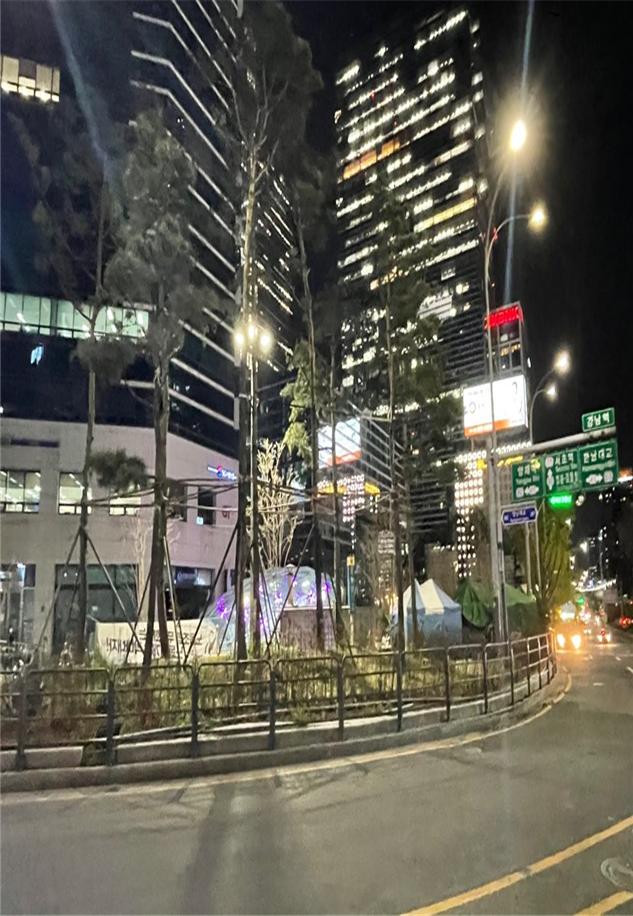
Seocho-gu was selected as an excellent autonomous district in the '2021 Seoul Outdoor Advertising Improvement Evaluation,' achieving the remarkable feat of being recognized as an excellent district for nine consecutive years, the longest period among Seoul's autonomous districts.
As a result, the district will receive an institutional commendation from Seoul City and a subsidy for the 2022 signboard improvement project.
This evaluation was conducted based on 10 assessment items, including outdoor advertising maintenance and enforcement, and signboard quality improvement, covering the period from early September last year to the end of August this year. The district received high praise for contributing to the improvement of outdoor advertising quality through various projects for maintenance, enforcement, and signboard improvement.
Especially this year, to prevent the spread of COVID-19, the district announced a ban on gatherings in major sections and carried out five rounds of comprehensive removal of 135 banners related to rallies and demonstrations around Gangnam Station Samsung Building, ensuring residents' safety and creating a pleasant urban environment.
Also, to alleviate the financial burden on small business owners due to the prolonged COVID-19 pandemic, the district refrained from administrative sanctions on illegal advertisements and instead conducted 24/7 patrols and enforcement, including weekends and holidays, removing about 20,000 illegal advertisements.
Furthermore, to eradicate harmful leaflets indiscriminately distributed along major roads such as Gangnam-daero, the district operated a night patrol enforcement team, catching 15 distributors on-site over a year, confiscating about 30,000 harmful leaflets, and suspending 315 harmful phone numbers.
Additionally, the district conducted a comprehensive survey and special inspection of 492 poor-quality signboards left unattended due to business closures over the past year, supporting the removal and self-maintenance of 25 poor-quality signboards, striving to create a safe signboard culture.
Seocho-gu Acting Mayor Cheon Jeong-wook said, "We ask for active participation and cooperation from residents and advertisers to create a safe and pleasant urban environment," adding, "We will continue to make relentless efforts to establish a zero illegal advertisement Seocho and a beautiful and dignified Seocho."
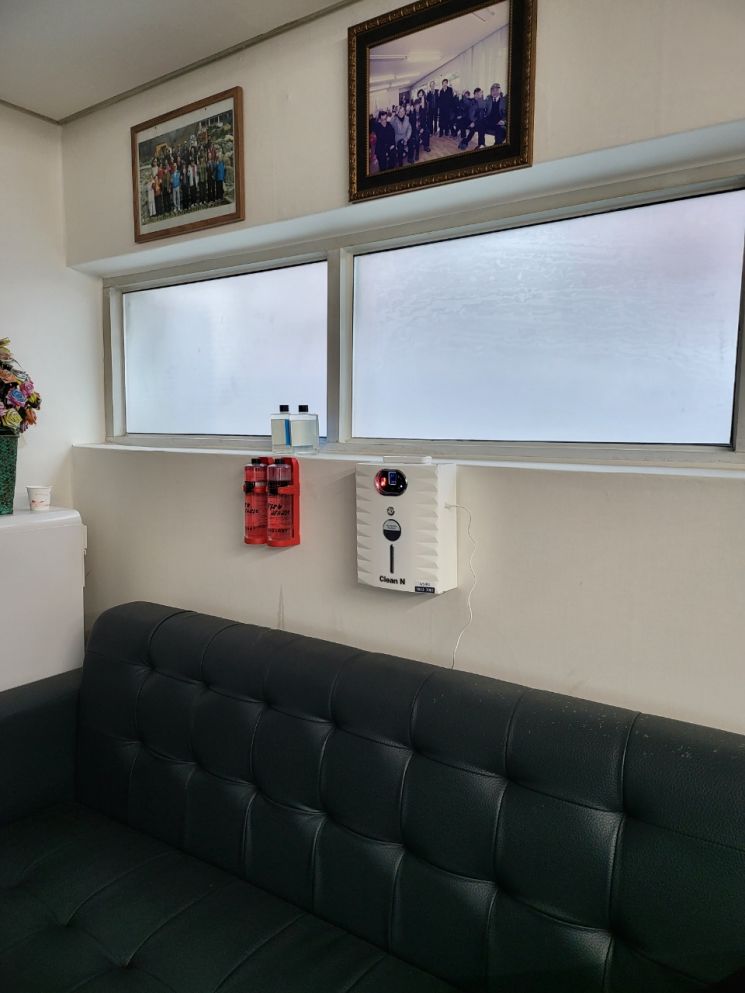
Gwangjin-gu (District Mayor Kim Seon-gap) installed air sterilizers in local senior centers and the district office to respond to the recent spread of COVID-19.
This installation of air sterilizers was prepared to strengthen the quarantine system following the surge in confirmed COVID-19 cases after the phased daily recovery implementation.
The district completed the installation of a total of 153 air sterilizers (product name NF-2021 CleanN). Installation locations include ▲94 senior centers ▲5 civil service offices in the district office ▲4 locations such as the Disaster and Safety Countermeasures Headquarters, totaling 103 places frequently visited or worked by residents.
The installed sterilizers automatically spray a patented antiviral Hwangchil (Dendropanax morbifera) disinfectant to remove bacteria and odors in the air. They feature a delicate liquid decomposition function that sprays over a wide area of approximately 132 square meters.
Additionally, their compact size allows them to be fixed on walls or placed on tables, making management and relocation easy.
Gwangjin-gu Mayor Kim Seon-gap said, "Due to seasonal factors at the year-end and New Year, recent trends in confirmed cases, and the spread of variant viruses, the sense of crisis is higher than ever," adding, "We will maintain a tighter quarantine system without letting our guard down."
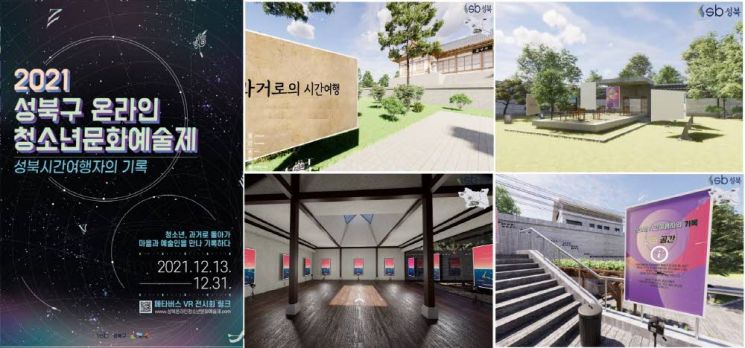
Seongbuk-gu (District Mayor Lee Seung-ro) will hold the 'Seongbuk-gu Online Youth Culture and Arts Festival' for three weeks from the 13th to the 31st.
The 'Seongbuk-gu Online Youth Culture and Arts Festival' is part of the Seongbuk-gu cooperative community innovation plan project 'Seongbuk History and Culture Career Experience Youth Roadmaker.' It was planned as an online exhibition to share the activities of students who participated in the in-depth education classes on Seongbuk youth history and culture career experience conducted for nine middle schools in the region.
Participating middle school students took eight sessions of education from August to December, exploring local historical and cultural spaces and past and present figures, and spent time understanding themselves and considering their careers through various artistic activities.
The festival is held as an online exhibition under the theme 'Records of Seongbuk Time Travelers My Logbook.' The metaverse VR exhibition space reproduces Seongbuk-gu's historical and cultural spaces such as the Seongbuk Youth Future Support Center, Bangwoo Villa, Jangsu Village, Gilsangsa Temple, and Bukjeong Village in 3D modeling. It features various contents including rap music tracks, poetry recitations, music videos, flipbooks created by participating students, and introduction videos of Seongbuk-gu's historical and cultural resources.
A Seongbuk-gu official said, "You can explore the 3D-modeled Seongbuk-gu space online as if you were actually in the historical and cultural spaces of Seongbuk-gu," adding, "Through this festival, you can encounter stories of youths containing understanding of the region and self-reflection expressed in rap, poetry, and drawings."
The festival is open to anyone, anytime, anywhere by accessing the metaverse VR exhibition space. For further inquiries, contact the Seongbuk Youth Future Support Center.
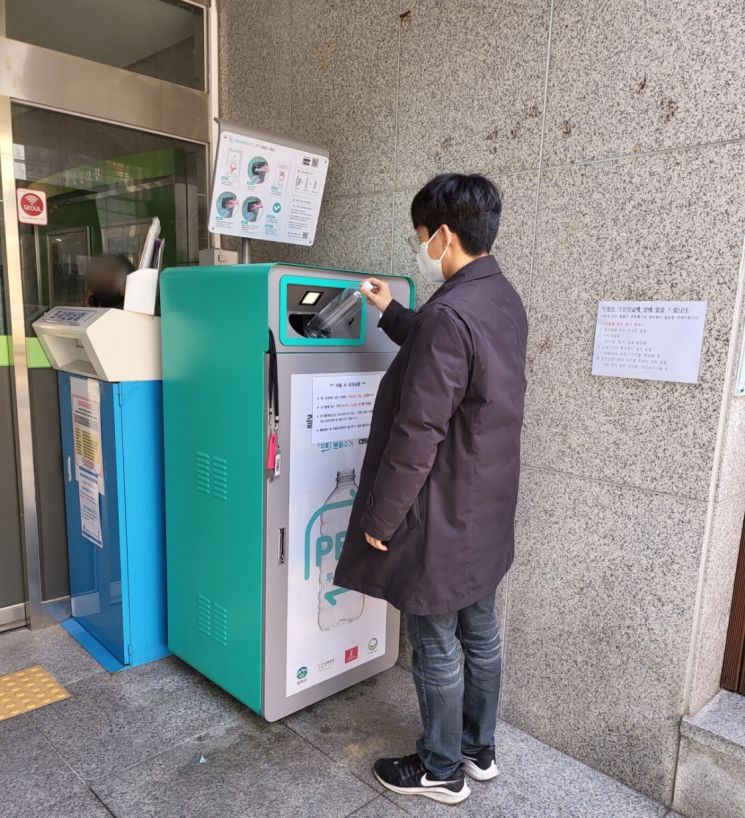
Gwanak-gu (District Mayor Park Jun-hee) is promoting various projects to reduce household waste and increase recycling rates amid the explosive increase in waste caused by changes in contactless consumption patterns due to the prolonged COVID-19 pandemic, which has become a social issue.
First, the district is implementing the 'Free Distribution of Item-Specific Recycling Bags' project to improve the separate collection method in detached housing areas, the first of its kind in Seoul. Since August, the district has produced three types of item-specific bags for transparent PET bottles, waste vinyl, and other recyclables and distributed them free of charge to detached and multi-family houses (built before 2010) in Euncheon-dong and Sinsa-dong as a pilot.
Based on improvements in alley cleanliness and recycling rates in residential areas, the district plans to add two more neighborhoods in 2022, expanding the project to a total of four neighborhoods.
The district has established a 'Comprehensive Plan for Recycling Activation' and is actively promoting ▲Recycling Smart Collection Boxes ▲Ice Pack Recycling ▲Visiting Separate Collection Education for elementary, middle, high schools, and kindergartens.
The 'Recycling Smart Collection Box' combines Internet of Things (IoT) technology, rewarding residents with points when they dispose of transparent PET bottles and other recyclables in the boxes, receiving high public response. Since its introduction in 2019, the district has expanded to 14 boxes and plans to add 7 more in 2022, installing one in each neighborhood.
In response to the surge in ice pack waste due to the spread of delivery culture and changing consumption patterns, the district newly launched the 'Ice Pack Recycling Project' this year. Collected ice packs are cleaned and disinfected and provided free of charge to local food manufacturers and restaurants in need. After installing two ice pack collection boxes in April, the number has expanded to eight.
A district official said, "Ice pack collection boxes and recycling smart collection boxes are expected to provide opportunities for anyone to easily participate in resource recycling activities," adding, "We will continue to promote various recycling projects that residents can enjoy participating in."
In particular, to increase the collection rate of high-quality recyclables, the district has supported the 'Resident Participation Transparent PET Bottle Reward System' voluntarily started by residents of Nangok-dong since June, exchanging 20 transparent PET bottles for one roll of toilet paper every Wednesday at designated collection points.
The district official added, "From next year, the transparent PET bottle reward system will be expanded to all 21 neighborhoods," urging, "We ask for active participation as a practical measure to protect the environment and respond to climate change."
The district is promoting the construction of the 'Dongjak-Gwanak Joint Resource Circulation Center' for the recycling sorting center and transfer facility, which have faced continuous relocation demands due to odor and noise. With feasibility studies and basic planning scheduled for January next year, the project is expected to accelerate, and by 2026, a modernized joint resource circulation center with recycling sorting and household waste transfer facilities will be established.
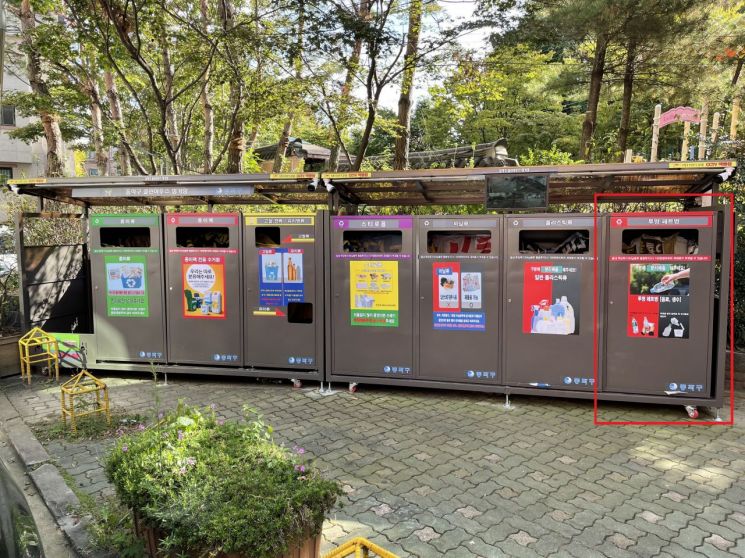
Dongjak-gu (District Mayor Lee Chang-woo) announced on the 13th that it will fully implement the separate collection day system for transparent PET bottles and vinyl, which must be separated from other recyclables, starting from the 25th of this month.
The mandatory separate collection of transparent PET bottles has been applied only to apartment complexes since last year, but from the 25th, the target will expand to include detached houses, row houses, villas, and commercial buildings subject to public collection. On Thursdays, only ▲colorless transparent PET bottles ▲waste vinyl ▲small home appliances ▲waste batteries can be disposed of under the 'separate collection day system,' while other items can be disposed of on other days.
Vinyl must be cleaned before disposal, and transparent PET bottles should be emptied, washed, labels removed, flattened, capped, and placed in transparent or translucent bags that show the contents.
The separate collection day system is implemented following the Ministry of Environment's revised guidelines on separate collection of recyclable resources. It is expected that the system will improve recycling rates and resource circulation rates once established.
Additionally, the district will expand the installation of transparent PET bottle collection boxes at 20 recycling stations to stabilize the separate collection day system and increase the collection rate of recyclables through proper separation.
Since 2016, the district has installed and operated 20 recycling stations in areas densely populated with detached and multi-family houses where mixed waste disposal and illegal dumping are frequent, allowing residents to separate recyclables such as paper, plastic, and cans/bottles by item.
The new transparent PET bottle collection boxes will be installed at 12 locations, including ▲next to Sindebang 1-dong Community Service Center (603-4 Sindebang-dong) ▲in front of Guksabong Middle School (behind 104 Yangnyeong-ro 20-gil) ▲in front of Sadang Villa (47 Dongjak-daero 35ga-gil).
Choi Seung-baek, head of the Cleaning Administration Division, said, "We ask for residents' active cooperation, including using recycling stations, to ensure the separate collection day system, which is expanding from apartment complexes to detached houses, is firmly established."
Moreover, the district is promoting various recycling projects to build a resource circulation recycling system, including ▲installation of AI recycling automatic collection machines 'Nephron' ▲expansion of recycling stations in residential areas ▲ice pack recycling ▲coffee grounds recycling.
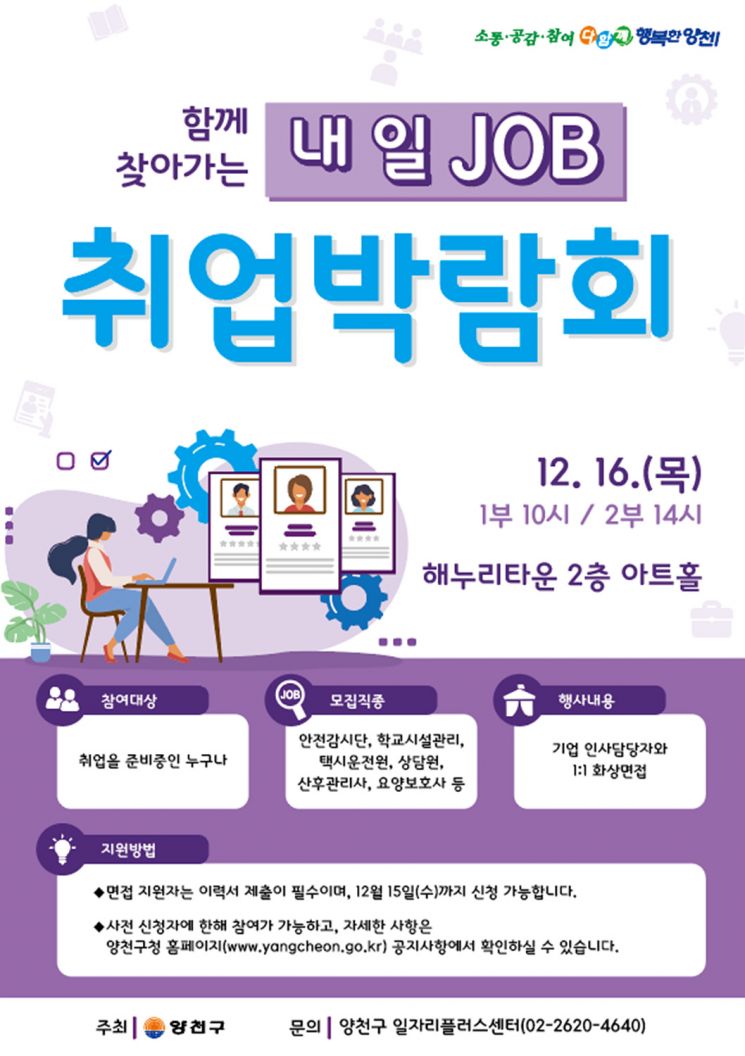
Yangcheon-gu (District Mayor Kim Soo-young) will hold the fourth job fair of the year on the 16th at 10 a.m. and 2 p.m. at Haenuri Town Art Hall (2nd floor).
Six companies will participate in the first session at 10 a.m., and six companies in the second session at 2 p.m. A total of 12 HR managers will conduct one-on-one interviews with about 80 job seekers who applied in advance.
To provide employment support services responding to the with-COVID-19 era, both face-to-face and non-face-to-face interviews will be conducted. Employment opportunities will be offered in fields such as ▲safety monitoring ▲customer consultation ▲taxi driving ▲school facility management ▲postpartum care workers, targeting vulnerable employment groups.
To apply, refer to the Yangcheon-gu website notice by the 15th and visit the Yangcheon-gu Job Plus Center (4th floor, Haenuri Town) or submit required documents such as resumes via email to the person in charge (Qdolphin@yangcheon.go.kr).
Yangcheon-gu Mayor Kim Soo-young said, "I hope this job fair will be a good meeting place for job seekers and companies facing difficulties due to COVID-19 and economic recession."
Yangcheon-gu plans to provide continuous monitoring services such as job placement and employment retention after registering job seekers and companies participating in the job fair at the Job Plus Center. For more details, refer to the district website notice or contact the Yangcheon-gu Job Plus Center.
© The Asia Business Daily(www.asiae.co.kr). All rights reserved.
![Clutching a Stolen Dior Bag, Saying "I Hate Being Poor but Real"... The Grotesque Con of a "Human Knockoff" [Slate]](https://cwcontent.asiae.co.kr/asiaresize/183/2026021902243444107_1771435474.jpg)

















