[Asia Economy Reporter Inho Yoo, Military Specialist Reporter Nakgyu Yang] As the U.S. government officially announced its diplomatic boycott policy for the Beijing Winter Olympics, our government faces a difficult choice between the U.S. and China.
Although there have been no official requests from either country yet, given the 70-year alliance urging the 'protection of democratic values' and the strategic partner demanding to 'keep promises' likely to exert implicit pressure, whatever choice our government makes is expected to have considerable impact on the situation on the Korean Peninsula.
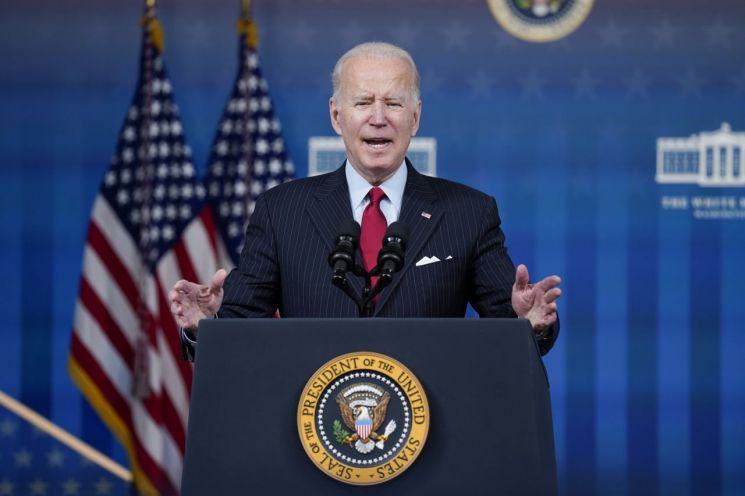
An official from the Ministry of Foreign Affairs said on the 7th, "We have not received any consultation requests from the U.S. regarding the diplomatic boycott," and added, "Our government maintains the basic position that the Beijing Winter Olympics should contribute to peace and prosperity in Northeast Asia and the world, and serve as a turning point for improving inter-Korean relations."
The Blue House also plans to continue operating dialogue channels with both the U.S. and Chinese governments without having decided any position on this matter.
Earlier, U.S. Secretary of State Antony Blinken stated in a media interview last month that discussions with allies regarding participation in the Olympics were ongoing.
However, our government is approaching a situation where it must decide whether to join the U.S.-led diplomatic boycott or stand on the opposing side. The 'Summit for Democracy' led by U.S. President Joe Biden will be held on the 9th and 10th.
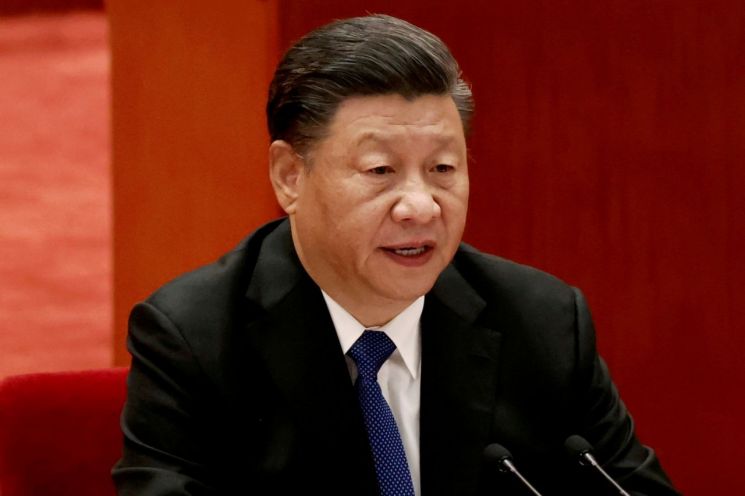
This meeting aims to check China, which President Biden has defined as an authoritarian regime, and the 110 participating countries are highly likely to discuss the Beijing Winter Olympics boycott issue.
Depending on our government's choice here, the diplomatic policy stance that has focused on balancing between the two countries could be affected.
In diplomatic circles, there are concerns that the government's plan to use the Beijing Winter Olympics as an opportunity for a declaration of the end of the war may also be adversely affected.
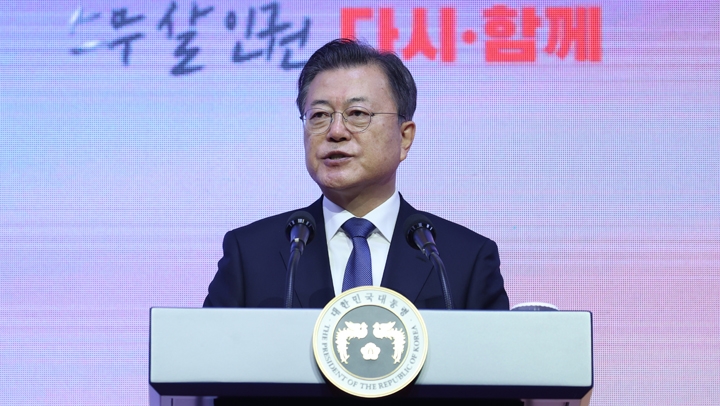
President Moon Jae-in first proposed a declaration of the end of the Korean War at the United Nations General Assembly last September, and since then, the Beijing Winter Olympics has been mentioned as a likely venue for 'peace events,' including the declaration of the end of the war.
Yoon Deok-min, Chair Professor at Hankuk University of Foreign Studies, said, "It seems the first step of our government's plan to lead denuclearization through a declaration of the end of the war was mistaken," adding, "North Korea has considered the U.S. as the subject of the declaration, but since the U.S. is diplomatically boycotting the Beijing Winter Olympics, it will be difficult to make any progress."
© The Asia Business Daily(www.asiae.co.kr). All rights reserved.
![Clutching a Stolen Dior Bag, Saying "I Hate Being Poor but Real"... The Grotesque Con of a "Human Knockoff" [Slate]](https://cwcontent.asiae.co.kr/asiaresize/183/2026021902243444107_1771435474.jpg)

















