Korea Atomic Energy Research Institute Develops Electron Beam Oxidation-Reduction Radical Combination Technology
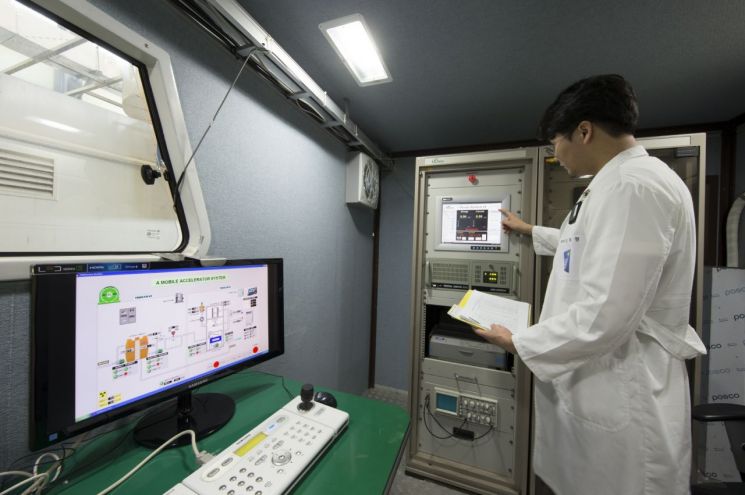
[Asia Economy Reporter Kim Bong-su] A technology that removes harmful chemical substances by irradiating an electron beam has been developed by domestic researchers.
The Advanced Radiation Research Institute of the Korea Atomic Energy Research Institute announced on the 6th that it has completed a domestic patent application for the ‘electron beam oxidation-reduction radical combination technology,’ which efficiently reduces and decomposes perfluoroalkyl substances (PFAS), widely known for their harmfulness due to issues related to paper cups and frying pan surface coatings, by irradiating them with an electron beam.
Perfluoroalkyl substances are compounds in which carbon and fluorine are strongly bonded. They are resistant to contamination by water and oil and heat, commonly used in various consumer products such as packaging materials and coatings, and are detected in wastewater. Because they are not easily decomposed, they accumulate in the body for a long time and have been reported to have various human health hazards such as carcinogenic potential, fetal malformations, and immunotoxicity. Discussions are underway worldwide to reduce their use.
Using the technology developed by the research team, wastewater containing PFAS at a concentration of 10 mg/ℓ can be treated by thousands of tons per day. The actual concentration of PFAS in domestic sewage is millions of times lower than this, so the technology has the capacity to treat all of it.
When an electron beam is irradiated onto water molecules, various oxidation-reduction radicals (atoms or compounds with unpaired electrons) are generated. In the case of PFAS, reduction radicals are more effective for decomposition than oxidation radicals, so the research team has been studying various methods to maximize the generation of reduction radicals and minimize oxidation radicals.
As a result, after optimizing chemical conditions such as adjusting the pH of water to alkaline and lowering the dissolved oxygen concentration, experiments confirmed that irradiating an electron beam together with an inducer that can activate reduction radicals is very effective in decomposing PFAS. In this case, the generation of oxidation radicals decreases and more reduction radicals are produced compared to irradiating only the electron beam.
Until now, PFAS have been treated by chemical decomposition methods using oxidants, ultraviolet light, ozone, etc. However, the decomposition efficiency is very low, it takes a long time, and the cost is very high. Therefore, various countries including the United States are conducting research to find practical treatment methods.
Dr. Yoo Seung-ho, who led the research, said, “The technology developed this time minimizes pollution compared to existing chemical treatment technologies for PFAS and is characterized by the ability to process large volumes in a short time.” He added, “In addition to PFAS treatment, follow-up research will be conducted to apply this technology to treat various refractory pollutants such as nitrate nitrogen and bromate in groundwater.”
© The Asia Business Daily(www.asiae.co.kr). All rights reserved.
![Clutching a Stolen Dior Bag, Saying "I Hate Being Poor but Real"... The Grotesque Con of a "Human Knockoff" [Slate]](https://cwcontent.asiae.co.kr/asiaresize/183/2026021902243444107_1771435474.jpg)















