Price Increase at Noryangjin Cupbap Street from New Year
Unable to Endure Inflation, Prices Raised by 500 Won Each
Same Situation for Toast Street Vendors
Significant Price Hikes in Red Bean Paste and Cooking Oil Affecting Bungeoppang
More Vendors Closing or Switching Jobs
Apps for Finding Bungeoppang Also Emerging
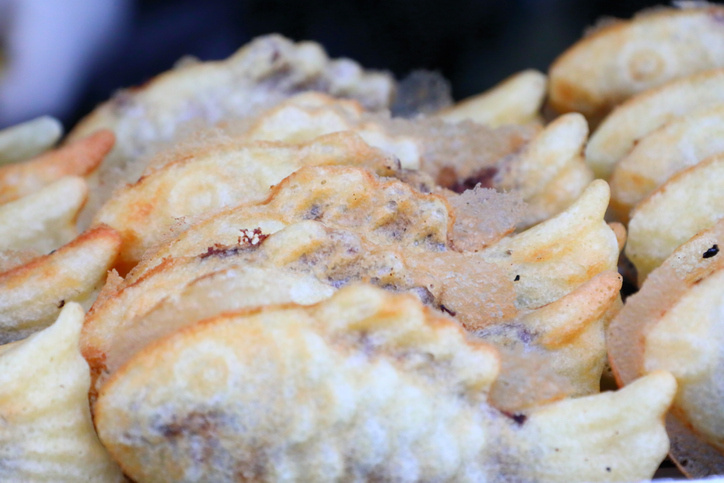
[Asia Economy Reporter Seungjin Lee] As ingredient prices continue to soar, street foods are gradually disappearing one by one. The days of 3,000 won cupbap, 2,000 won toast, and 1,000 won bungeoppang are now a thing of the past. A bowl of cupbap with several ingredients now easily exceeds 5,000 won, and adding a slice of ham to a vegetable toast costs over 3,000 won. The winter staple snack, bungeoppang, is vanishing as vendors can no longer bear the cost.
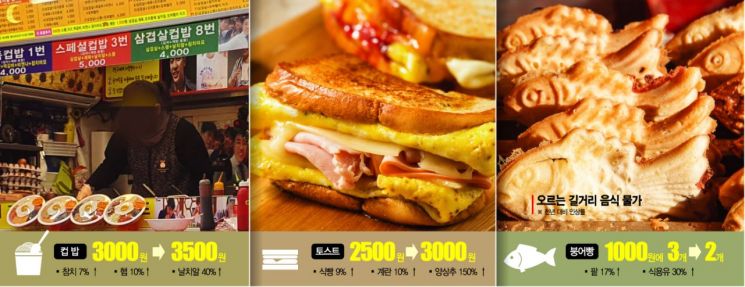
Cupbap 3,500 won, Toast 3,000 won
On the afternoon of the 5th, I visited ‘Noryangjin Cupbap Street’ in Dongjak-gu, Seoul. Despite a sunny afternoon with the cold wave and fine dust temporarily subsiding, there were no crowds on Cupbap Street. Although the number of visitors has drastically decreased due to COVID-19, the merchants had maintained the price of 3,000 won per bowl. However, it became difficult to withstand the rising prices. All menu prices on Cupbap Street will increase by 500 won starting from the new year. The merchants said they had frozen prices for exam-taking customers with tight budgets despite several crises, but after the COVID-19 pandemic and the surge in ingredient prices last year, they could no longer endure it.
Kang Mi-yeon (61, pseudonym), who sells cupbap on Noryangjin Cupbap Street, said, "There is no ingredient in cupbap whose price hasn’t risen," adding, "The flying fish roe that used to cost just over 10,000 won per pack now costs 20,000 won." Kang explained, "Due to COVID-19, the number of people on the street has halved, but ingredient prices have risen alarmingly, so all merchants agreed they could no longer endure it and decided to raise prices by 500 won starting next month."
The prices of major cupbap ingredients such as rice, ham, and eggs have been sharply rising since the end of last year. The retail price of rice for 20 kg exceeded 60,000 won for the first time ever last year. In July, CJ CheilJedang raised the prices of ham products like Spam by an average of 9.5%, and egg prices have remained unstable for over a year due to the impact of highly pathogenic avian influenza (AI).
It’s not just cupbap. Most street foods are either raising prices or disappearing. Toast, which used to serve as a light breakfast on the way to work or school, has recently increased by 500 to 1,000 won. Toasts that were previously sold for 2,500 won are now hard to find. International grain prices such as wheat and palm oil have surged by half to double over the past year, causing bread and cooking oil prices to rise consecutively. The prices of cabbage, lettuce, and onions, which were added along with eggs to vegetable toast, have also surged, increasing cost burdens.
Park Soon-bok (72, pseudonym), who runs a toast stall in Euljiro 3-ga, said, "I could endure fewer customers due to COVID-19 by working harder, but I can’t control rising prices, and selling at a loss forced me to raise prices."
Street Snacks Disappear Due to Cost Burden
Street vendors who find it difficult to raise prices have disappeared altogether. Due to the nature of eating food on the street without masks, foot traffic has significantly decreased, and combined with cost burdens, many have closed their businesses. A representative example is bungeoppang, a winter staple snack. The wholesale price of imported red beans (40 kg) used for bungeoppang filling rose by 17% compared to last year, reaching around 250,000 won, and the price of commercial cooking oil (18 liters) doubled from about 20,000 won at the beginning of the year to around 40,000 won now.
Although bungeoppang vendors recently reduced the number sold from up to five pieces for 1,000 won to two pieces, the combination of fewer customers and soaring prices has made it unprofitable, leading many vendors to quit or switch professions. Due to this, an application called ‘Gaseumsok 3,000 won’ has even emerged recently to help people find places selling bungeoppang.
On Google Maps, users share locations selling nostalgic snacks like ‘Daedong Pulppang Map,’ but many of these places are no longer in business when visited. It has become increasingly difficult to find shops selling bungeoppang, takoyaki, gyeranppang (egg bread), and hotteok, which were once easily found just outside the door. These snacks, whose ingredient prices have surged, are expected to become even harder to find.
According to Seoul City, the number of registered street vendors has decreased by 20% over the past five years. The number of street vendors was 7,718 in 2016 but decreased annually to 6,079 in 2020, a 21.2% drop. This year, due to the continued social distancing measures, the number of street vendors is expected to decline even more sharply.
© The Asia Business Daily(www.asiae.co.kr). All rights reserved.


















