[Asia Economy New York=Correspondent Baek Jong-min] The New York stock market, led by the Nasdaq, fell sharply as the expected strong employment data turned into disappointment. Treasury yields widened their decline. In a situation where monetary policy normalization is anticipated, the directions of the stock and bond markets are clearly diverging.
On the 3rd (local time), the Dow Jones Industrial Average fell 0.17% to 34,580.08, the S&P 500 index dropped 0.84% to 4,538.43, and the Nasdaq index declined 1.92% to 15,085.47.
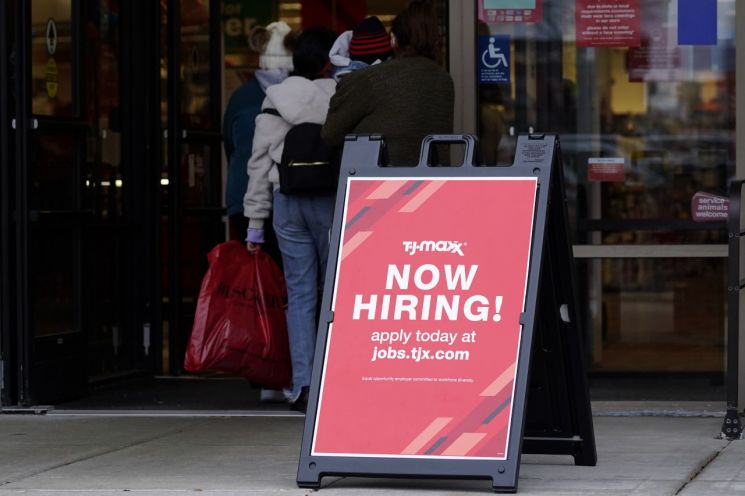
The November nonfarm payrolls, released before the market opened, showed an increase of only 210,000, less than half of expectations, which sharply cooled investor sentiment.
On the other hand, the unemployment rate fell from 4.6% to 4.2%, and the labor force participation rate improved to 61.8%, expanding expectations that the Federal Reserve (Fed) will accelerate the pace of asset purchase tapering.
Aneta Markowska, Chief Economist at Jefferies, explained, "The labor market remains very healthy and is moving very quickly toward maximum employment."
Contrary to expectations of a rate hike, the 10-year Treasury yield dropped 0.09 percentage points from the previous day to 1.355%. During the session, it fell as low as 1.335%.
There are various interpretations of the phenomenon where long-term Treasury yields are plunging despite anticipated rate hikes.
The Wall Street Journal explained that stock investors flocked to the bond market, pushing the 10-year Treasury yield into the 1.3% range. The decline in Treasury yields reflects concerns that the Fed's withdrawal of stimulus signals the start of the next recession.
Jason Pride, Chief Investment Officer of Glenmede Private Wealth, commented, "Some bond investors are betting that the Fed will make policy mistakes or that the pace of rate hikes will be slower than expected."
He added, "The bond market is moving in the opposite direction of monetary policy expectations. This implies that the market fears mistakes by the Fed."
The plunge in tech stocks is particularly notable. Charlie Munger, Vice Chairman of Berkshire Hathaway, claimed that the current market is overvalued and crazy even compared to the dot-com bubble of the early 2000s, hampering tech stock investment sentiment.
Concerns over the spread of Omicron are also tightening the market. In the U.S., Omicron cases have appeared in at least six states with more than ten confirmed cases, showing signs of spreading, which caused travel and airline-related stocks to decline.
Las Vegas Sands shares fell more than 3%, and Delta Air Lines shares dropped over 1%. Norwegian Cruise Line shares declined more than 4%, and Carnival shares fell over 3%.
Core tech stocks such as Apple, Amazon, and Microsoft all showed declines of about 1%, while Tesla and Zoom Video shares fell more than 6% and 4%, respectively. Nvidia shares also dropped over 4%.
Electronic signature company DocuSign plummeted more than 40% due to fourth-quarter earnings forecasts falling short of market expectations.
Chinese ride-hailing company Didi Chuxing fell more than 20% following news of its plan to list on the Hong Kong Stock Exchange after delisting from the U.S. market. Large Chinese listed companies such as Alibaba and Baidu also saw their shares drop about 8%.
© The Asia Business Daily(www.asiae.co.kr). All rights reserved.
![Clutching a Stolen Dior Bag, Saying "I Hate Being Poor but Real"... The Grotesque Con of a "Human Knockoff" [Slate]](https://cwcontent.asiae.co.kr/asiaresize/183/2026021902243444107_1771435474.jpg)















