6.1% Increase Compared to This Year’s Original Budget
2.828 Trillion KRW Allocated for Hydrogen and Electric Vehicle Distribution and Charging Infrastructure Construction... 1.2638 Trillion KRW Increase from This Year
6.415 Billion KRW Allocated for Newly Established Climate Response Fund
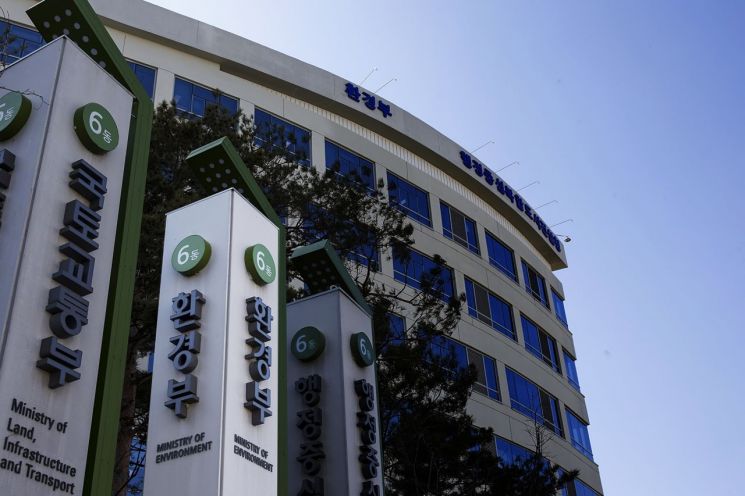
[Sejong=Asia Economy Reporter Joo Sang-don] The Ministry of Environment’s budget for next year has been finalized at 11.853 trillion KRW as of the 3rd. The Ministry plans to focus its financial resources on establishing the foundation for achieving carbon neutrality by 2050.
The Ministry of Environment announced that the 2022 budget and fund operation plan were finalized through the National Assembly plenary session resolution. The 2022 budget and fund scale for the Ministry of Environment increased by 6.1% compared to this year’s original budget of 11.1715 trillion KRW.
An official from the Ministry of Environment explained, “Next year, we will concentrate financial resources on establishing the foundation for achieving carbon neutrality by 2050 for a leading economy transition, as well as improving living environments that guarantee citizens’ lives and safety and enhance quality of life.”
The finalized budget and fund for the Ministry of Environment increased by about 63 billion KRW compared to the original government proposal during the National Assembly review process. Approximately 167.9 billion KRW was added for establishing a safe water supply system in the Nakdong River basin, upgrading treatment of trace pollutants in industrial complex wastewater in the Nakdong River basin, and constructing wildlife protection facilities. On the other hand, considering the carbon neutrality policy direction, the new purchase support project for liquefied petroleum gas (LPG) cargo vehicles, which are internal combustion engine vehicles, was reduced in quantity and unit price compared to the government proposal. Projects such as smart sewage management system construction and support for clean air transition facilities were adjusted in investment scale considering feasibility, resulting in a reduction of about 104.9 billion KRW.
As the main ministry for carbon neutrality, the Ministry of Environment plans to actively implement projects necessary to establish the foundation for achieving carbon neutrality by 2050 next year. First, in the transportation sector, to achieve the goal of distributing 4.5 million zero-emission vehicles by 2030, next year it will distribute 28,000 hydrogen vehicles and 207,000 electric vehicles, and make every effort to expand charging infrastructure. The budget for hydrogen vehicle distribution and hydrogen charging station installation projects will increase from 441.6 billion KRW in 2021 to 892.8 billion KRW in 2022, and the budget for electric vehicle distribution and charging infrastructure construction will increase from 1.1226 trillion KRW to 1.9352 trillion KRW.
To revitalize the circular economy, efforts will be strengthened to reduce waste generation throughout the entire process of production, distribution, consumption, and reuse, and to maximize the use of discarded waste resources for implementing a circular economy.
Additionally, the Ministry of Environment secured additional budget during the National Assembly review process to ensure safe drinking water for 13 million residents in the Nakdong River basin and to implement agreements between regions, continuing financial investments to supply cleaner and safer water to the public and to prevent and manage disasters caused by climate change. Following the resolution of the Nakdong River Basin Water Management Committee in June, a feasibility study for diversifying water intake sources will be initiated, and water quality improvement facilities capable of treating trace pollutants will be installed concurrently at wastewater treatment plants in the Gumi and Daegu industrial complexes to further secure drinking water safety.
Along with this, starting next year, the Ministry will systematically renovate aging water supply networks, including the first phase of old waterworks maintenance projects, and will newly promote the construction of dam and river linkage management systems using digital twin technology, along with expanding rainfall radar and hydrological survey points, to strengthen flood response capabilities.
To reduce fine dust emission sources, the distribution scale of low-NOx boilers for households will increase from 230,000 units (30 billion KRW) this year to 610,000 units (39.6 billion KRW) next year. Additionally, 2.65 billion KRW has been newly allocated to support fuel conversion for small-scale air pollutant emission businesses.
For the conservation and restoration of core ecosystems, management of ecologically valuable conservation and protection areas such as the Demilitarized Zone (DMZ) and national parks will be strengthened, and high-quality, eco-friendly ecological experience and exploration infrastructure will be established utilizing lowland areas of national parks to preserve natural ecosystems and cultural landscapes and promote sustainable use. 1.3 billion KRW will be invested in DMZ ecosystem conservation and management, and 55 billion KRW in core protection area conservation projects in national parks.
Although not included in the Ministry of Environment’s total expenditure, 641.5 billion KRW has been allocated to the newly established Climate Response Fund next year. To reduce greenhouse gas emissions in the industrial and public sectors, support will be provided for ▲ low-carbon clean fuel conversion for designated companies with 10 billion KRW (new) ▲ greenhouse gas reduction facility support for designated companies and institutions increasing from 80 sites and 22.2 billion KRW in 2021 to 98 sites and 87.9 billion KRW in 2022 ▲ installation support for renewable energy at 27 public sector target institutions with 20.3 billion KRW (new).
Furthermore, to achieve carbon neutrality by 2050 and the national greenhouse gas reduction target by 2030, the Ministry plans to expand carbon sinks through restoration of natural ecosystems such as national parks and wetlands. For this, 3.5 billion KRW has been newly allocated to expand carbon sinks in national parks, and the wetland conservation management fund will increase from 28.5 billion KRW this year to 29.6 billion KRW next year.
Kim Young-hoon, Director General of Planning and Coordination at the Ministry of Environment, said, “The 2022 Ministry of Environment budget focuses on establishing the foundation for achieving carbon neutrality by 2050 for a leading economy transition, promoting the Green New Deal, and improving living environments to guarantee citizens’ lives and safety from disasters such as floods and to enhance quality of life. We will do our best in preparation and execution so that the public can feel the effects of financial projects.”
© The Asia Business Daily(www.asiae.co.kr). All rights reserved.
![Clutching a Stolen Dior Bag, Saying "I Hate Being Poor but Real"... The Grotesque Con of a "Human Knockoff" [Slate]](https://cwcontent.asiae.co.kr/asiaresize/183/2026021902243444107_1771435474.jpg)















