[Seoul District News] On the 2nd, Dongjak Merchants Association and Lotte Chilsung signed a business agreement to revitalize commercial areas connecting Sadang Station and Isu Station
Promoting ▲online-offline win-win projects ▲eco-friendly campaigns ▲sharing projects for the underprivileged... Jung-gu supports consulting for revitalizing Pildong alley restaurants and creates competitive commercial areas through branding and new menu development for Pildong Seoaegil Dosirak Road... Dobong-gu selected for the 4th Preliminary Cultural City contest hosted by the Ministry of Culture, Sports and Tourism... Yongsan-gu launches a 200 million KRW public-private cooperation job project... ‘Gwanak Starlight Festival’ held until the 14th
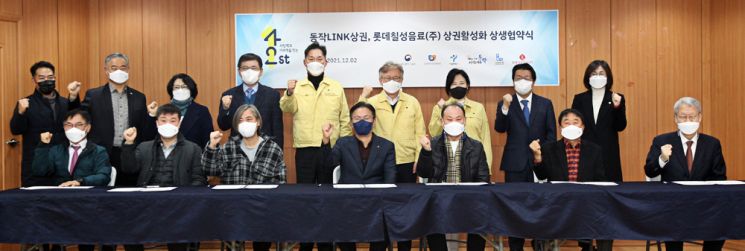
[Asia Economy Reporter Park Jong-il] Dongjak-gu (Mayor Lee Chang-woo) announced on the 3rd that on the 2nd, to successfully promote the Sangkwon Renaissance Project, a business agreement for the ‘Local Commercial District Win-Win Project’ was signed between representatives of merchants and residents of Dongjak LINK commercial district and Lotte Chilsung Beverage.
The signing ceremony was attended by Lee Chang-woo, Mayor of Dongjak-gu, Kwon Chil-seung, Minister of SMEs and Startups, six representatives of Dongjak LINK commercial district, Nahan-chae, Executive Director of Lotte Chilsung Beverage, and about 10 others.
‘Dongjak LINK commercial district’ is a commercial area linking Sadang Station and Isu Station (LINK). It was selected as a target site for the ‘Sangkwon Renaissance Project’ hosted by the Ministry of SMEs and Startups last year and will receive 10 billion KRW in support over five years from this year to 2025.
The district designated Namseong Sagye Market and Sadang 1-dong Food Alley Shopping District as commercial revitalization zones to promote local commercial district coexistence.
The main contents of this business agreement include ▲online and offline win-win projects ▲eco-friendly campaigns ▲sharing projects for marginalized groups.
First, according to the agreement related to online and offline win-win projects, to revitalize the workshop street, plans include linking with ‘Chilsung Mall,’ Lotte Chilsung Beverage’s online mall, or creating a curated shop where consumers can see and experience products. Additionally, smart stores within the commercial district will be established with smart mirrors, kiosks, table payments, etc., and support will be provided for store management and design consulting.
Furthermore, the eco-friendly campaign will promote projects such as renting shopping bags to reduce disposable plastic packaging. Along with this, sharing projects for marginalized groups, including care lunchboxes, beverages, and kimchi-making, will be conducted.
Mayor Lee Chang-woo said, “Through this agreement ceremony, Dongjak LINK commercial district will establish itself as a representative local win-win model that benefits merchants, residents, and companies alike,” adding, “We will continue to comprehensively support local commercial districts by creating themed zones reflecting local characteristics and developing specialized products.”
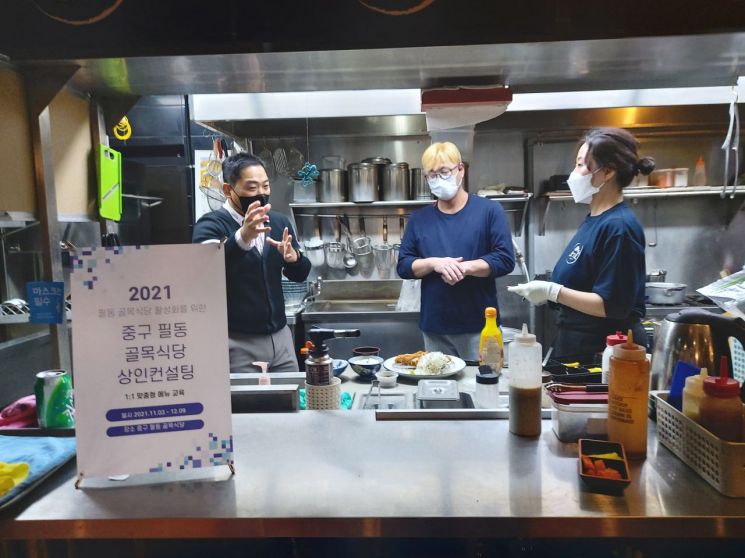
Jung-gu, Seoul (Mayor Seo Yang-ho) announced that from November 3 to December 9, customized consulting will be provided to revitalize the Pildong alley restaurants.
Since October, the district conducted a demand survey targeting the local alley restaurant merchants’ association. Based on this, eight alley restaurants located on Seoaegil in Pildong were selected, and experts in hygiene, service, marketing, and menu development will visit directly to provide tailored education.
Seoaegil is a university culture street formed around the back gate of Dongguk University, featuring various restaurants and unique cafes. It is adjacent to Namsan, Namsangol Hanok Village, and Euljiro, making it a popular spot not only for university students but also tourists. However, due to the impact of COVID-19, visitor numbers have decreased, and nearby merchants are experiencing unprecedented difficulties.
This consulting is conducted in collaboration with the ‘Urban Regeneration Social Cooperative through Cooking’ (Chairman Lee Wook-jung). This cooperative is a social corporation established to enhance regional competitiveness and improve the quality of life for local residents. It operates lunchbox projects for seniors and pizza and cookie delivery projects for children, mainly in Jung-gu, Yongsan-gu, and Jongno-gu.
The district plans to brand the lunchbox-specialized menu as ‘Seoaegil Lunchbox Road’ through this consulting. Support will also be provided for lunchbox container design, commercial district guide postcards, and leaflet production. A district official stated, “Through this project, we expect a synergy effect that introduces hidden restaurants in Seoaegil and raises awareness not only for the consulting-participating restaurants but also for nearby eateries.”
A representative of the ‘Urban Regeneration Social Cooperative through Cooking’ said, “Along with one-on-one menu education, we will support online marketing using Naver Smart Place and Instagram to help merchants increase sales.”
After the lunchbox road consulting concludes, the district plans to support lunchbox provision for vulnerable groups through corporate CSR (Corporate Social Responsibility) connections. The Korea Childcare Promotion Institute and companies located in Pildong have already expressed willingness to purchase lunchboxes to support small business owners who participated in the Pildong alley restaurant revitalization consulting.
Mayor Seo Yang-ho said, “We hope this consulting will bring vitality back to the alley commercial district, which has been stagnant due to COVID-19,” adding, “We will continue to provide support so that Seoaegil Lunchbox Road can grow into a competitive brand.”
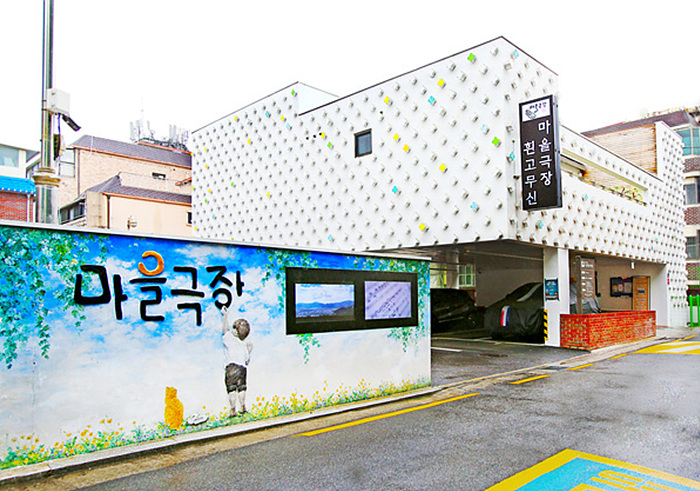
Dobong-gu (Mayor Lee Dong-jin) was finally selected on December 2 for the ‘4th Preliminary Cultural City Contest’ hosted by the Ministry of Culture, Sports and Tourism.
The ‘Legal Cultural City Project,’ initiated by the Ministry of Culture, Sports and Tourism since 2018, aims to revitalize regions and spread residents’ cultural lives by utilizing distinctive local cultural resources under the Regional Culture Promotion Act.
In the 4th Preliminary Cultural City Contest, 49 local governments nationwide applied. After a process involving document review, on-site inspection, and final presentation by a ‘Working Review Team’ composed of private experts in culture, arts, and tourism, 11 local governments including Dobong-gu were finally selected.
To qualify for the 4th Preliminary Cultural City designation, Dobong-gu established a Cultural City Secretariat within the Dobong Cultural Foundation to professionally operate cultural city creation affairs. It supported activities of the resident governance Cultural City Promotion Group and formulated a cultural city creation plan through online and offline surveys of all residents, in-depth interviews, forums, and consultations with institutional and administrative councils.
Going forward, Dobong-gu plans to implement nine preliminary projects over one year, including Resident Planning Group 100, Respect Culture Expo, and Everyone’s Best Friend, to undergo the Ministry of Culture, Sports and Tourism’s final evaluation and review for legal cultural city designation by the end of 2022.
Local governments selected as preliminary cultural cities will be finally designated as legal cultural cities in December 2022 after one year of preliminary project implementation and evaluation of performance by the review committee. If designated as a legal cultural city, they will receive up to 20 billion KRW in national and local government funding over five years.
A Dobong-gu official explained regarding this preliminary selection, “Dobong-gu aims to build a sustainable city where nature and people coexist and co-prosper through a ‘Respect Culture City Dobong’ vision filled with stories of seeds, discovering countless potentials in each individual, and connecting all residents through culture without exclusion, creating a ‘cultural ecosystem.’”
Mayor Lee Dong-jin said, “The cultural city creation project is a city defined by the Regional Culture Promotion Act. It is a project to create and implement strategies to renew the city through culture and is recognized by law. This preliminary city selection is a meaningful achievement indicating that the roadmap for Cultural City Dobong was well established through extensive discussions and that public-private cooperation was well built. We will prepare thoroughly during the remaining period to be reborn as Respect Culture City Dobong through final designation.”
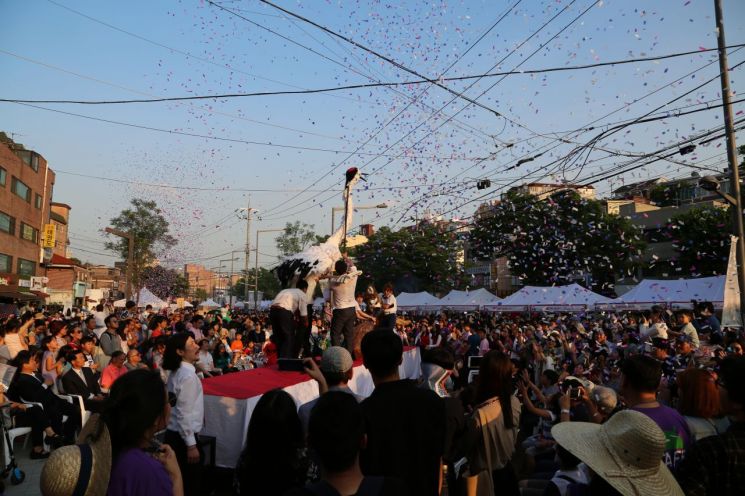
Seongbuk-gu (Mayor Lee Seung-ro) was finally selected as a target site for the 4th Preliminary Cultural City Project. In the 2021 4th Preliminary Cultural City Contest, 49 metropolitan and basic local governments applied, and after review by the Ministry of Culture, Sports and Tourism’s Cultural City Review Committee, 11 places including Seongbuk-gu were selected.
The legal cultural city project is promoted based on the Regional Culture Promotion Act. It supports local governments in utilizing resources to establish cultural plans and implement cultural programs, and has been underway since 2018.
Seongbuk-gu established the Creative Culture City Committee in 2015, launched the Cultural City Promotion Committee in May this year, and enacted the Cultural City Creation and Support Ordinance in October. It formed a Cultural City Promotion TF team at the Seongbuk Cultural Foundation to take charge of cultural city creation and built governance networks with various related organizations and groups inside and outside the region, including the Shared Seongbuk Roundtable, citizens, and artists, achieving good results.
Seongbuk-gu presented a plan under the vision of ‘City of Life and Culture Circulation, Seongbuk,’ with three core values of coexistence, sharing, and circulation, covering living spaces, workplaces, playgrounds, and learning spaces. The plan includes ▲institutionalization of the Seongbuk regional cultural ecosystem model ▲connection and sharing of urban resources based on citizen power ▲establishment of cooperation systems for new urban policy transitions, and a total of 15 cultural city projects including pandemic response from a cultural perspective. It proposed ways to further develop Seongbuk’s rich historical and cultural resources and active public-private governance networks, receiving favorable evaluations.
Going forward, Seongbuk-gu and the Seongbuk Cultural Foundation plan to expand existing governance during the preliminary cultural city period with a new urban operation principle encompassing local, cultural, welfare, and education fields, establish cultural city organizational systems and budgets, and promote various projects so that the values of coexistence, sharing, and circulation can settle into the daily lives of Seongbuk residents.
Mayor Lee Seung-ro said, “Seongbuk is a region with abundant resources and governance power to realize a cultural city more than any other city,” adding, “We will focus our capabilities on creating a joyful and safe urban community beyond the normalized disaster society and sustainably establishing a virtuous cycle of life and culture.”
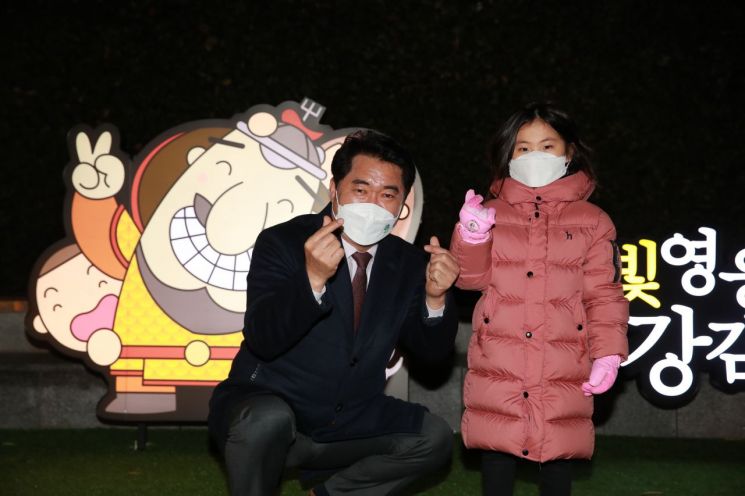
Gwanak-gu (Mayor Park Jun-hee) and the Seoul Credit Guarantee Foundation are hosting the ‘Gwanak Starlight Festival’ until the 14th.
The district prepared various online and offline events in line with the phased recovery of daily life to invigorate the Starlight Sinsari commercial district renaissance project underway around Sillim Station.
This festival provides residents with a new space by creating a unique landscape that blends the newly branded natural scenery of Starlight Naerimcheon and the birth legend of General Gang Gam-chan.
On the 1st, Mayor Park Jun-hee personally visited six themed zones along the 220m section between Sillimgyo and Bongrimgyo bridges within the Starlight Sinsari commercial district: Blessing Starlight, Happiness Starlight, Invitation to Starlight Naerimcheon, Recovery Starlight, Love Starlight, and Starlight Road, enjoying the festival together.
Mayor Park Jun-hee said, “Considering social distancing, we boldly omitted the opening ceremony and prepared an event that can be enjoyed comfortably like a walk. I hope this will be a time for residents and local small business owners, exhausted by the prolonged COVID-19, to smile brightly after a long time.”
The festival, continuing until the 14th, features relay street performances including music, instrumental performances, and shows, participatory events, and events offering coupons for the Danggeun Market.
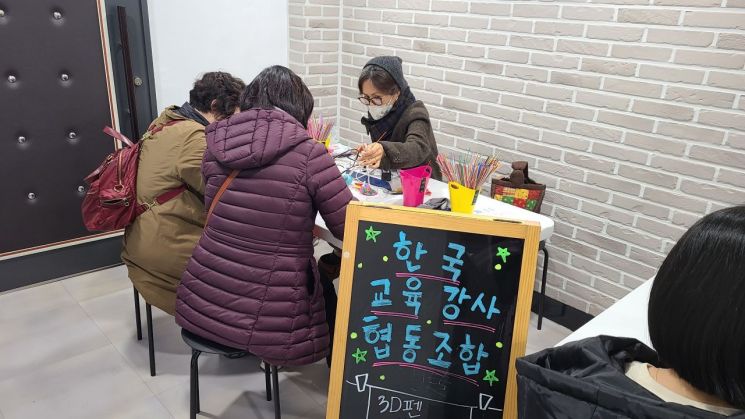
Gangbuk-gu (Mayor Park Kyum-soo) held the 2021 Gangbuk-gu Social Economy Festival on the 2nd at the Gangbuk-gu Social Economy Support Center.
This event was planned to provide an opportunity for social economy participants, who are in crisis due to COVID-19, to communicate and collaborate with each other and to share the value of social economy with residents.
About 50 residents and officials from 26 organizations including social enterprises, village enterprises, and cooperatives participated. Experience programs, talk concerts for social economy revitalization, and cultural and artistic performances were held.
The organizations promoted the value of social economy to residents while offering unique attractions and cultural experiences. Residents who participated experienced making shampoo bars, 3D accessory crafts, handkerchiefs, and cloth sanitary pads, enhancing their understanding of social economy.
A social enterprise official who participated said, “Due to the prolonged COVID-19, events involving residents were almost nonexistent, so it was meaningful to promote our organization and strengthen networks among groups through this festival.”
The district conducted the event on a small scale, adhering to quarantine guidelines to prevent COVID-19 spread. Quarantine personnel were assigned to check temperatures and limit participants to operate safely during the event.
Mayor Park Kyum-soo said, “Through this event, I hope residents’ awareness of the value of social economy and social economy enterprise products will spread,” adding, “We will continue to do our best to revitalize social economy through ongoing interest and support.”
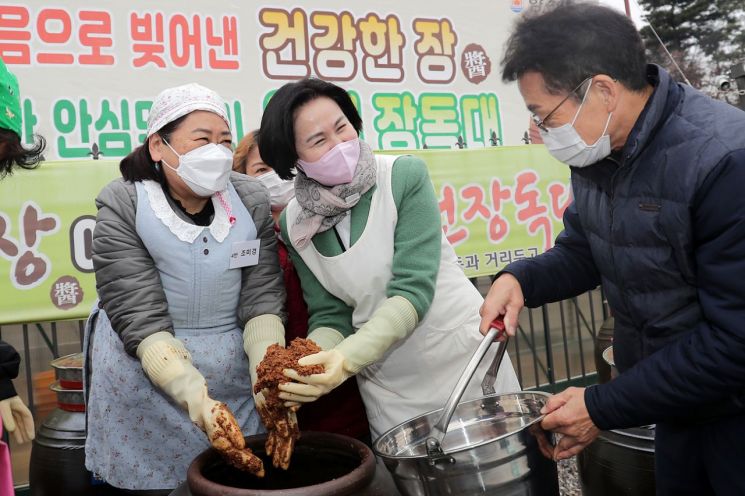
The name ‘Yangcheon (陽川),’ meaning ‘bright sun and flowing stream,’ originates from the geographical characteristics of Yangcheon-gu, where there are no high mountains nearby, allowing sunlight to shine well and the stream water to be clear. Yangcheon, where the optimal natural environment and clear water produced delicious jang (fermented sauces) maturing in jangdokdae (fermentation pots) at every household, has long been considered a model ‘healthy village.’
Yangcheon-gu (Mayor Kim Soo-young) announced that the ambitious ‘Traditional Jang Sharing’ event at Yangcheon Jangdokdae was successfully completed on the 2nd.
Yangcheon Jangdokdae is a representative health project operated by the district for three years to improve local community awareness of the excellence of traditional Korean food and safe eating. It has received great response from local residents as it strives to restore community values by making traditional jang together with neighbors.
Yangcheon Jangdokdae, established in February this year at Yangcheon Urban Agriculture Park, began full-scale activities in March by making traditional jang with multicultural and North Korean defector families and residents from 18 neighborhoods. In May, in accordance with the season, they divided the jang into doenjang (soybean paste) and ganjang (soy sauce). Yangcheon Jangdokdae activists and jang manufacturing and management experts have managed the fermentation twice a month for six months.
The jang, naturally fermented and properly matured under warm sunlight and cool breeze, passed safety and component tests by the Health and Environment Research Institute in mid-October and was produced as nutritious doenjang and ganjang. Then, on November 29 and December 2, the ‘Traditional Jang Sharing’ event was held, where local residents carefully packed the well-ripened jang.
Especially on December 2, a ‘Yangcheon Jangdokdae Traditional Jang Sharing Delivery Ceremony’ was held, where residents donated jang they made to vulnerable groups in the community. The ceremony was attended by representatives from Yangcheon-gu, Yangcheon Love Welfare Foundation, local welfare centers, and activists from 18 Yangcheon Jangdokdae neighborhoods. Through donations, it is expected to create a virtuous cycle health food ecosystem where people care for each other, contributing to the establishment of sharing and community culture in the region.
Mayor Kim Soo-young said, “Through this traditional jang sharing and delivery ceremony, we will spare no effort to make ‘Yangcheon Jangdokdae,’ which combines ‘health and taste’ and ‘tradition and cooperation,’ a new brand representing Yangcheon-gu and a beautiful sharing culture.”
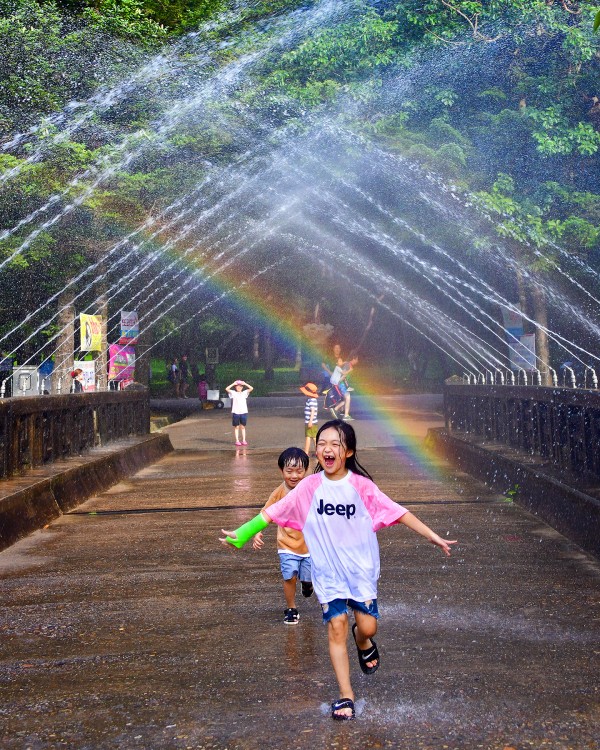
Gwangjin-gu (Mayor Kim Sun-gap) is calling for submissions of works to be exhibited at the ‘22nd Beautiful Smile Photo Exhibition.’
The ‘Beautiful Smile Photo Exhibition’ was first held in 1999 and produced excellent works filled with joy and hope amid the aftermath of the foreign exchange crisis.
This year, amid the prolonged COVID-19 difficulties, the exhibition is held with the purpose of finding smiles hidden behind masks and sharing hope.
The call for submissions runs until December 10, and anyone interested in photography can apply.
The themes for submissions are divided into ▲Smile Photos and ▲Gwangjin Photos. They include ▲unpublished works capturing bright and beautiful scenes of people of all ages in daily life domestically and internationally, and ▲photos of Gwangjin-gu landmarks and developments such as the Seoul Fairy Tale Festival, Gwangnaru Eoul Madang, and Coming of Age Day.
Up to four photos per person can be submitted, with sizes of black-and-white or color photos at 11x14 inches.
Submission method: Download the submission form from the Korea Photographers Association Gwangjin Branch website, fill it out, attach it to the back of the photo, and submit it directly or by mail to the Korea Photographers Association Gwangjin Branch.
For detailed inquiries, refer to the Korea Photographers Association Gwangjin Branch website.
Submitted photos will be judged by five qualified judges selected by the Korea Photographers Association Gwangjin Branch, who will select winning works after strict evaluation.
The results will be announced on the Korea Photographers Association Gwangjin Branch website, and the selected works will be exhibited at the Naru Art Center exhibition hall from December 27.
In the Smile Photo category, awards include one Gold Prize of 7 million KRW, two Silver Prizes of 3 million KRW each, three Bronze Prizes of 1 million KRW each, and five Honorable Mentions of 500,000 KRW each, along with certificates. Up to 20% of submissions will be selected for certificates.
In the Gwangjin Photo category, 30 Honorable Mentions will be selected, each receiving a certificate and 100,000 KRW.
Mayor Kim Sun-gap said, “In these days when it is hard to see smiling faces, I hope the Smile Photo Contest will give hope and courage to many people to overcome difficult times.”
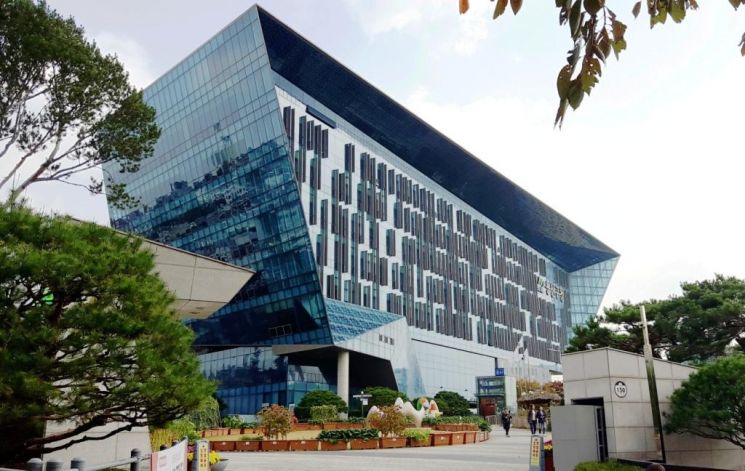
Yongsan-gu (Mayor Sung Chang-hyun) is launching the first public-private cooperation job project contest for 2022 to promote sustainable job projects.
The project period is from February to December 2022, and applicants must be corporations or non-profit organizations with understanding and expertise in job projects. The project budget is about 200 million KRW, utilizing the district’s job fund.
There are two application categories: Information Technology (IT) and General. The project content should be ‘vocational skill development training’ supporting the improvement of vocational skills for vulnerable employment groups such as youth, people in their 40s, middle-aged, and seniors.
The project budget is allocated as 20% for labor costs, 65% for direct project costs, and 15% for indirect project costs. Detailed criteria can be found in the district website’s notices/announcements section.
A district official said, “The budget for each project will be determined within the total project budget according to the scale of the selected project.”
Corporations and non-profit organizations wishing to participate must submit project application forms, proposals, budget operation plans, and corporate registration certificates to the Job Economy Division on the 5th floor of Yongsan-gu Office between the 22nd and 24th. Only in-person applications are accepted.
Organizations without representatives or managers, social clubs, and job projects already supported by other institutions cannot participate.
The district will review the eligibility of applicants, verify submitted documents, and conduct on-site evaluations to select support targets. Evaluation criteria are 50% on-site evaluation and 50% qualitative evaluation. Results will be announced on the district website at the end of January next year.
The public-private cooperation job project is part of the ‘Tomorrow (my job) Dream’ project pledged by the 7th mayor. The district enacted the ‘Job Fund Establishment and Operation Ordinance’ in 2018 and accumulated 12 billion KRW in the fund.
This year, the project operated five courses including AI Code technology coding instructor training, AI robot embedded developer training, air conditioner installation and maintenance technician training, personal protection officer qualification acquisition, and graphic technology-based AI learning data processing. It also provides loans to youth enterprises using the job fund.
Mayor Sung Chang-hyun said, “We are looking for capable institutions to work with us,” adding, “We will actively respond to residents’ job demands in the post-COVID-19 era.”
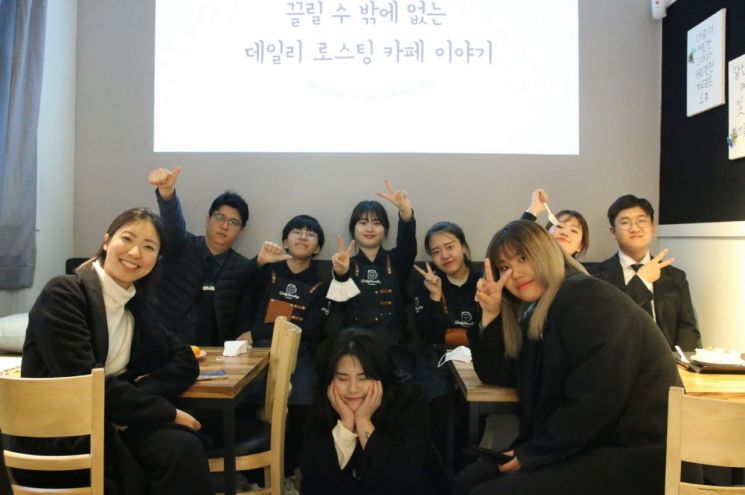
[Asia Economy Reporter Park Jong-il] Geumcheon-gu (Mayor Yoo Sung-hoon) announced that the caf? ‘Daily Roasting,’ operated by out-of-school youth, won the Excellence Award at the ‘2021 Seoul-type Innovative Education District Activity Case Contest.’
This contest was held by the Seoul Metropolitan Office of Education to discover cases where residents, parents, teachers, public officials, and youth leaders worked hard to develop innovative education districts despite difficulties caused by COVID-19.
Geumcheon Youth Center’s youth leader No Ji-hyung, who won the Excellence Award, served as a guide teacher for ‘Alternative Education Institution Coffee Beans,’ providing solid support for out-of-school youth to start and operate the ‘Daily Roasting’ caf?.
No Ji-hyung said, “I consider this award as one received together with the out-of-school youth of Geumcheon-gu who worked hard, and I always support the cooperative coffee bean youth who are making daily progress.”
Geumcheon-gu has provided barista training and education services through the ‘Geumcheon Hanbaki’ project since 2019 to support the independence and employment of out-of-school youth. In 2020, through the ‘Coffee Bean 2nd Branch’ project, it supported out-of-school youth in establishing the ‘Cooperative Coffee Bean’ and opening a caf?.
Daily Roasting Caf? (Doksan 312) offers high-quality and affordable coffee made by professional baristas to residents. Since this year, it has also provided barista education and catering services including bakery to youth and the general public.
Members of the Cooperative Coffee Bean operate the caf? as a stepping stone for social advancement, overcoming fear of society and preparing for their own warm winter.
Mayor Yoo Sung-hoon said, “I am pleased to see the efforts to overcome the high barriers to social advancement for out-of-school youth,” adding, “The district will continue to strive to promote youth participation activities.”
For more information, inquiries can be made to Daily Roasting Caf? or the Child and Youth Division of Geumcheon-gu Office.
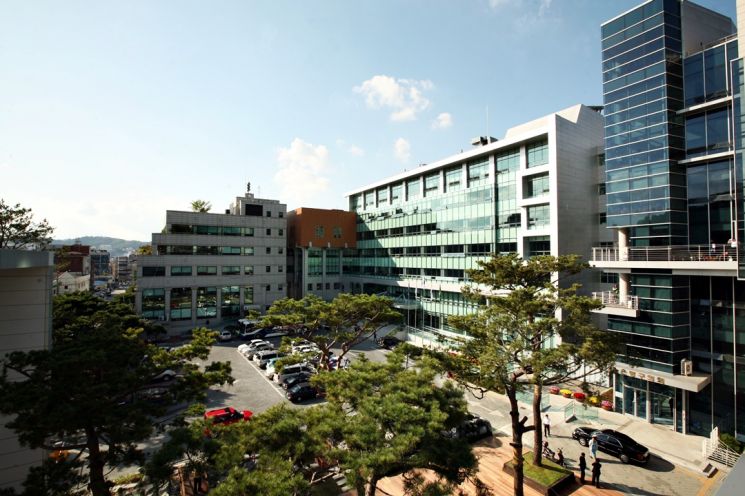
Eunpyeong-gu (Mayor Kim Mi-kyung) announced that it will operate university student part-time jobs during the upcoming winter vacation period to provide administrative work experience.
The university student part-time job program operated by the district allows local university students to participate in district administration on-site during vacation periods and directly experience various administrative tasks.
This year, 50 university students will be recruited, and applications can be submitted through the district office website from the 7th to the 10th.
Eligibility includes university students registered as residents of Eunpyeong-gu or students attending universities located in Eunpyeong-gu. The work period is four weeks from January 3 to January 28 next year.
Participants can broaden their understanding of district administration by working at the district office, community service centers, libraries, museums, and various centers, and experience a new perspective in public institutions, according to a district official.
Mayor Kim Mi-kyung said, “It is a difficult time to find part-time jobs due to the prolonged COVID-19. Although the period is short, I hope this recruitment will be a joyful memory where students can experience administrative work and earn tuition,” adding, “I expect university students to not only help with work but also be the foundation for phased daily recovery.”
For more details about the university student part-time jobs, refer to the Eunpyeong-gu Office website or contact the Eunpyeong-gu Autonomous Safety Division.
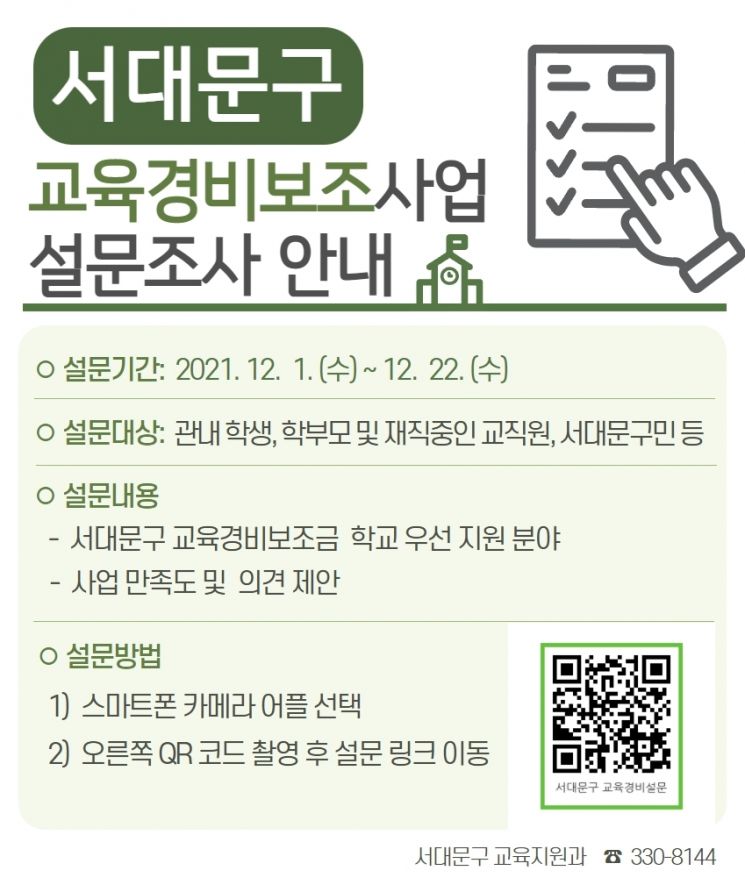
Seodaemun-gu (Mayor Moon Seok-jin) is conducting an online survey on the ‘Education Expense Subsidy Support Project’ until the 22nd to gather opinions from the school field.
The district is promoting this to strengthen demand-oriented customized school support by collecting opinions from various stakeholders in the education field.
Before social distancing, explanation sessions for the education expense subsidy support project were held for school officials, but through the online survey, the target is expanded to students, parents, teachers, and residents to hear diverse voices.
The survey includes 17 items such as ▲satisfaction with the existing education expense subsidy support project by elementary, middle, and high schools ▲desired areas for educational environment facility improvement and program support ▲suggestions and improvements. The survey can be accessed on the Seodaemun-gu website notice section (search ‘education’).
The district will use the survey results on project satisfaction and demand as basic data for establishing the ‘Education Expense Subsidy Support Plan.’
Seodaemun-gu invested 3 billion KRW last year to create an educational environment capable of online learning and remote classes, establishing wireless infrastructure in all schools in the region for the first time in Seoul and supporting electronic blackboards and smart devices.
This year, it allocated 5 billion KRW to create maker spaces and online studios and focused on convergence talent education. It also enhanced educational publicness through support for special classes.
Going forward, the district plans to devote itself to realizing educational autonomy through education expense subsidy support based on organic cooperation with various educational stakeholders.
Mayor Moon Seok-jin said, “Seodaemun-gu was able to respond quickly to rapid changes and crises in the school field caused by COVID-19 because it did not limit the role of the autonomous district and actively reflected school field needs in district projects,” adding, “We will continue to expand such support.”
© The Asia Business Daily(www.asiae.co.kr). All rights reserved.
![Clutching a Stolen Dior Bag, Saying "I Hate Being Poor but Real"... The Grotesque Con of a "Human Knockoff" [Slate]](https://cwcontent.asiae.co.kr/asiaresize/183/2026021902243444107_1771435474.jpg)

















