Over 2,000 Cases for Two Consecutive Days... 508 More Than Previous Week
Positivity Rate Rises to 2.0%, Severe Treatment Bed Occupancy at 90.1%
COVID-19 Beds Expanded to 4,099
Regional Outpatient Clinics for Home Treatment Patients Also Expanded
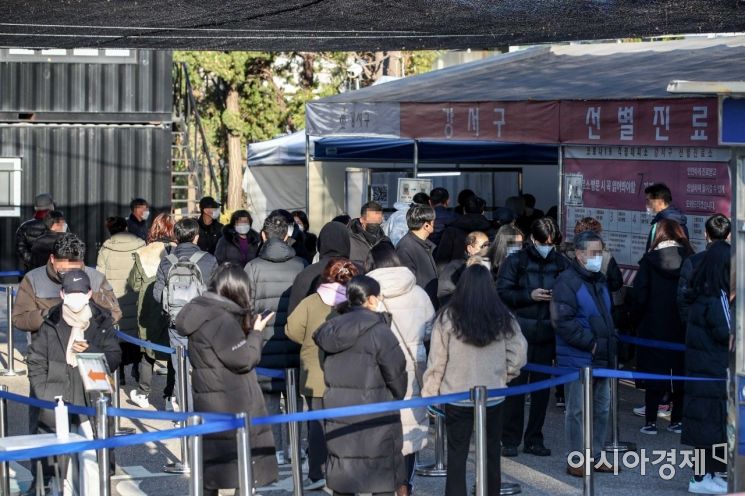 On the 2nd, as the number of confirmed COVID-19 cases reached 5,266, setting a new daily record, citizens visiting the screening clinic set up at Gangseo-gu Public Health Center in Seoul are waiting to get tested. Photo by Jinhyung Kang aymsdream@
[Asia Economy Reporter Han Jinju] The number of COVID-19 confirmed cases in Seoul has recorded over 2,000 cases for two consecutive days. The Seoul Metropolitan Government plans to secure up to six additional hospitals to increase beds for severe patients and utilize them for infectious disease response, while also expanding outpatient clinics for home treatment patients.
According to Seoul on the 2nd, the number of new COVID-19 confirmed cases as of the previous day was 2,268, an increase of 46 cases from November 30 (2,222 cases). This marks the highest record for two consecutive days. The number of confirmed cases is 508 more than the previous week.
Among the new confirmed cases, 2,262 were domestic infections and 6 were imported cases. On the 1st, the number of tests conducted was 116,794, about 2,400 more than the previous day. The ratio of confirmed cases to the number of tests on the day also rose significantly to 2.0% from 1.7% the day before. It is expected that the number of confirmed cases will continue to increase for the time being.
The operating rate of Seoul's dedicated severe patient treatment beds is 90.1% (311 out of 345 beds in use), slightly down from 90.7% the previous day. The number of remaining dedicated severe patient beds increased from 32 to 34. The operating rate of infectious disease dedicated hospital beds is 73.1%, and the operating rate of residential treatment centers is 62.9%.
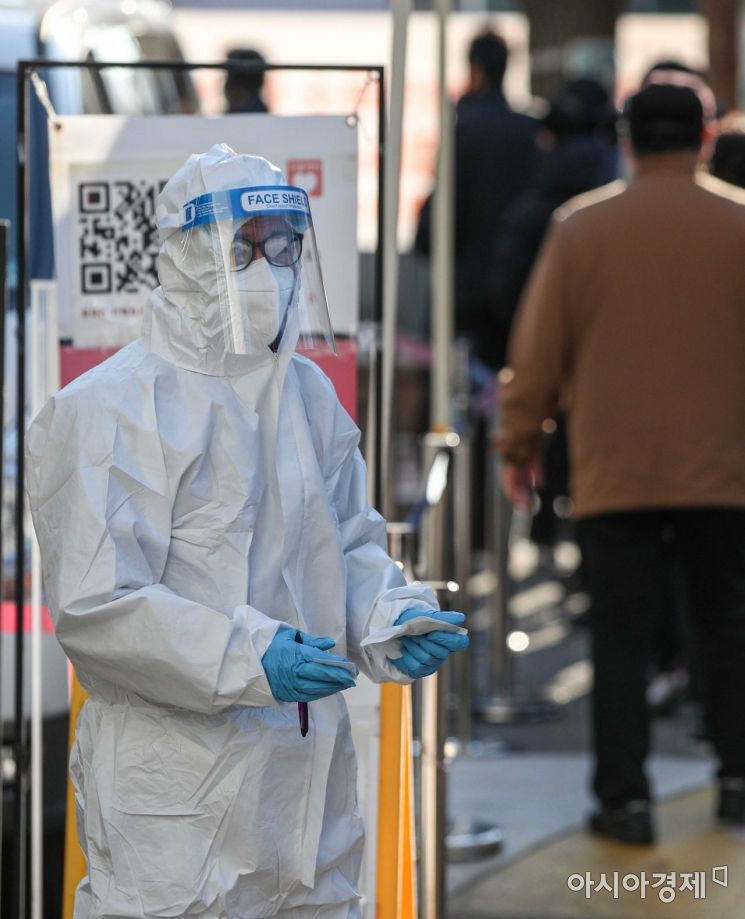 On the 2nd, when the morning temperature in Seoul dropped to minus 4.6 degrees Celsius, a medical staff member at the screening clinic set up at Gangseo-gu Public Health Center in Seoul is enduring the cold with a hot pack. Photo by Jinhyung Kang aymsdream@
To secure beds, Seoul plans to gradually utilize a total of six hospitals for infectious disease response, including four municipal hospitals (Seonam, Dongbu, Bukbu, and Seobuk Hospitals), Seoul Medical Center, and Seoul Boramae Hospital. The currently operating 2,688 beds will be expanded to 4,099 beds.
In cooperation with private hospitals, an additional 1,218 beds will be secured. In addition to the 513 beds previously secured through administrative orders, 705 beds are being prepared for operation at infectious disease dedicated nursing hospitals and others through voluntary participation of medical institutions.
Seoul Mayor Oh Se-hoon stated, "Until we overcome this crisis, municipal hospitals will be operated primarily as hospitals focused on COVID-19 treatment," and announced, "We will secure an additional 193 beds by the end of this month, increasing the total from the current 1,036 beds according to severity."
‘COVID Outpatient Clinics’ will also be operated for home treatment patients who need face-to-face medical care. These clinics are available for elderly patients, those with underlying conditions, or others among home treatment subjects who find it difficult to assess symptoms through non-face-to-face consultations or require face-to-face care due to persistent symptoms. Using respiratory clinics equipped with negative pressure facilities, three locations?Seobuk Hospital, Gangnam Bedro Hospital, and Seoul Medical Center?will be piloted first, with plans to expand to eight locations in the short term.
Park Yumi, Seoul’s Disaster and Safety Countermeasures Headquarters’ quarantine controller, explained, "Seoul will be divided into four zones, with two COVID outpatient clinics established in each zone. This was created because face-to-face management is necessary to stably manage the increasing number of home treatment patients in the community. Seobuk Hospital and Gangnam Bedro Hospital are currently operating, and Seoul Medical Center is planned to start operating from early this month."
As of the 2nd, the number of patients under home treatment in Seoul was 6,436, an increase of 555 from the previous day (5,881). Home treatment began in September, and the cumulative number of home treatment patients is 21,461. The cumulative number of confirmed cases in Seoul is 158,774, and the number of patients in isolation treatment is 24,441.
As confirmed cases surge and the government is considering social distancing measures, Seoul is not currently considering implementing separate social distancing or other quarantine guidelines beyond the government’s policies.
Quarantine controller Park said, "The city is discussing social distancing, but rather than introducing it first, we will proceed after consultation and discussion with the government. Over the two years of the COVID-19 period, the most affected have been self-employed and small business owners, and reintroducing social distancing could force sacrifices again, so we must be very cautious."
© The Asia Business Daily(www.asiae.co.kr). All rights reserved.
![Clutching a Stolen Dior Bag, Saying "I Hate Being Poor but Real"... The Grotesque Con of a "Human Knockoff" [Slate]](https://cwcontent.asiae.co.kr/asiaresize/183/2026021902243444107_1771435474.jpg)
















