Democratic Party Mentions Possible Temporary Reduction of Capital Gains Tax for Multi-Homeowners
Six Months After Capital Gains Tax Increase
Market: "Only Those Who Endure Are the Final Winners"
Experts: "Those Who Endure for One Year Face Limits Without Drastic Cuts"
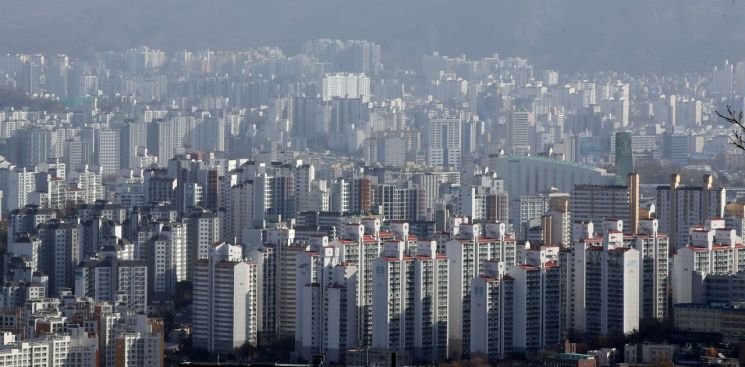
[Asia Economy Reporter Kim Hyemin] "Joryeongmogae (issuing an order in the morning and changing it again in the evening), that's exactly the situation." "Creating confusion again. Are the multi-homeowners who held out until the end the ultimate winners?"
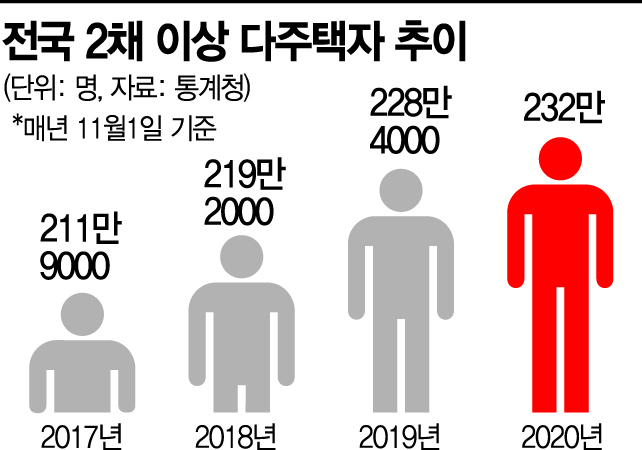
This is the reaction from the market after the Democratic Party of Korea hinted at the possibility of a temporary reduction in capital gains tax for multi-homeowners. Even real estate communities welcoming deregulation responded cynically, questioning if this is just an election ploy. There is skepticism about the government's attitude of flipping policies like turning over a hand depending on political needs. Experts pointed out that while there might be some effect of multi-homeowners putting properties on the market, there will be limitations without a drastic tax cut.
◆ Ruling party in a hurry for elections? Capital gains tax relief for multi-homeowners? = The ruling Democratic Party of Korea's move to bring up the "capital gains tax relief for multi-homeowners" card seems to be a response to criticism that raising the non-taxable threshold for single-homeowners does not expand the supply of properties. Park Wanju, chairman of the Democratic Party's Policy Committee, explained at a press briefing on the 30th of last month, "The 'lock-up' phenomenon has lasted a long time," and "There is public opinion that even though people want to sell their homes due to increased property tax, they cannot put them on the market because of capital gains tax."
Currently, owners of three homes in regulated areas are subject to a maximum capital gains tax rate of 75%. This is due to the July 10th measures last year, which increased the additional tax rate for multi-homeowners by 30% on top of the basic rate (6-45%) starting this June. Two-homeowners face a 20% additional tax rate. Compared to the August 2nd measures in 2018 when the additional capital gains tax for multi-homeowners was applied, these rates have each increased by 10 percentage points.
The market is skeptical of the Democratic Party's sudden change in stance, which previously labeled multi-homeowners as speculators. There is suspicion about the intention behind reversing the policy direction just six months after effectively implementing the 'double additional tax' measure in June. Kim Hakryeol, head of SmartTube Real Estate Research Institute, who has long advocated for lowering capital gains tax for multi-homeowners, also said, "It seems they brought this up to break through approval ratings ahead of the March election next year," adding, "While a reduction is appropriate, the terms 'temporary' and 'under review' make it hard to take it sincerely."
◆ Even with a one-year grace period, the effect on supply is minimal... "Limitations without drastic cuts" = There are also opinions that to see the supply effect the Democratic Party expects, the policy should revert to before the August 2nd, 2018 measures. It is said that removing the additional capital gains tax for multi-homeowners and applying the 'basic tax rate' would bring properties to the market.
In fact, the government gave a one-year grace period when it expanded the additional capital gains tax rate for multi-homeowners from 20% to 30% in the July 10th measures last year. This was a signal to clear out all properties within one year. However, there was no effect on expanding supply. According to Apartment Real Transaction Data, a real estate big data company, during this period, the number of apartment sale listings in Seoul decreased from about 70,000 to 40,000.
Yoon Jihae, senior researcher at Real Estate 114, said, "The current multi-homeowners are those who did not clear out even after being given about a year, so it is doubtful they will move if the policy reverts to the level of a year ago," adding, "There may be some supply due to the burden of comprehensive real estate tax, but it is doubtful that those who held out for a year will actively supply properties to the market." She explained that due to loan regulations, many who sell their homes believe they cannot become multi-homeowners again, so they are likely to remain multi-homeowners in the current market.
Experts believe that a drastic reduction eliminating the additional capital gains tax for multi-homeowners is necessary to bring properties to the market. The government temporarily abolished the additional capital gains tax for multi-homeowners transferring homes held for more than 10 years in regulated areas for six months through the December 16th, 2019 measures. During that six-month period, apartment listings in Seoul expanded from about 66,000 to 80,000. Kim said, "It is a matter of applying the same tax per house," adding, "Even so, because acquisition tax and property tax are high now, not many people are buying."
© The Asia Business Daily(www.asiae.co.kr). All rights reserved.
![Clutching a Stolen Dior Bag, Saying "I Hate Being Poor but Real"... The Grotesque Con of a "Human Knockoff" [Slate]](https://cwcontent.asiae.co.kr/asiaresize/183/2026021902243444107_1771435474.jpg)
















