Discovered Before South Africa Variant Report... Infected Person Has No Travel History
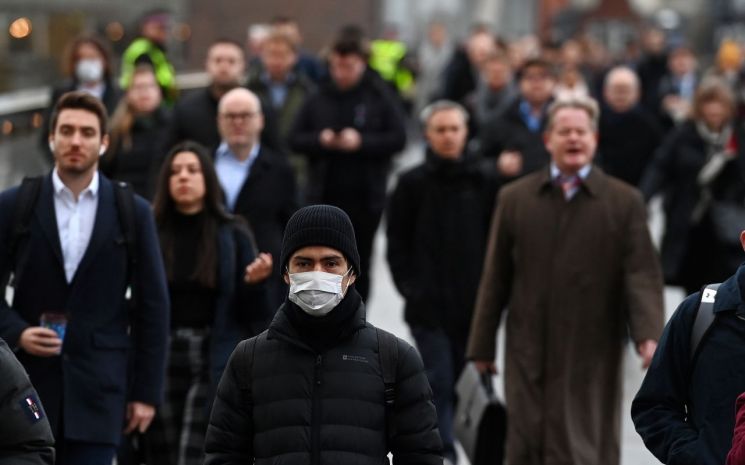
[Asia Economy Reporter Cho Hyun-ui] It has been confirmed that the new COVID-19 variant Omicron was already spreading through community transmission in Europe before it was first reported in Africa. While countries around the world are rapidly closing their borders to South African nations following the emergence of Omicron, it is possible that the variant had already spread in the heart of Europe.
Dutch authorities announced on the 30th (local time) that the Omicron variant is presumed to have been present in the Netherlands before South Africa reported it to the World Health Organization (WHO), according to AP News and others. The Netherlands National Institute for Public Health and the Environment (RIVM) found Omicron in two samples collected on the 19th and 23rd of last month, which is earlier than the 24th when South African researchers first reported Omicron to the WHO.
RIVM researcher Chantal Rutsken appeared on local media and explained, "One of the newly confirmed infected individuals has no travel history," adding, "This means Omicron was already spreading domestically." The other confirmed case recently visited South Africa.
Concerns are rising that Omicron may have already spread widely in Europe, and some countries have raised the possibility of community transmission. In the UK, 8 and 9 additional Omicron cases were confirmed in England and Scotland respectively on the same day, bringing the total to 22. In Scotland, a confirmed case had no history of visiting South Africa.
In Germany, a man in his 30s with no overseas travel history and no contact with foreigners was infected with Omicron. In Belgium, an Omicron case was reported on the 22nd; the patient showed symptoms 11 days after traveling through Turkey and Egypt.
Andreas Ammon, head of the European Centre for Disease Prevention and Control (ECDC), stated, "Among the 27 EU member states, 42 cases of Omicron infection have been confirmed in 10 countries, and an additional 6 suspected cases are under investigation."
Including the 10 EU countries, Omicron has been confirmed in at least 20 countries so far. In Brazil, two Omicron cases were confirmed on the same day, officially confirming that the new variant has spread to the Latin American continent. Countries are rapidly imposing border closures. As of the 28th, 56 countries have implemented travel bans to prevent the spread of Omicron.
While most confirmed cases have travel histories linked to the South African region, the United States, where no Omicron cases have yet been confirmed, is also considering strengthening travel-related recommendations. The US is reviewing plans to shorten the testing period for incoming travelers and, in some cases, add quarantine requirements. Additionally, the US is expanding surveillance programs for COVID-19 testing of certain international arrivals at four major airports.
However, the WHO warned that travel restrictions will not stop the spread of Omicron and may worsen the situation. They stated that such measures could hinder information sharing between countries. In a travel advisory issued that day, the WHO emphasized, "Travel restrictions may discourage countries from reporting variant occurrences domestically and may cause hesitation in sharing epidemiological investigation results or virus analysis data," adding, "As a result, this could negatively impact global health."
© The Asia Business Daily(www.asiae.co.kr). All rights reserved.
![Clutching a Stolen Dior Bag, Saying "I Hate Being Poor but Real"... The Grotesque Con of a "Human Knockoff" [Slate]](https://cwcontent.asiae.co.kr/asiaresize/183/2026021902243444107_1771435474.jpg)















