The First Public Craft Museum in Anguk-dong
Exhibiting 23,257 Items Including Designated Cultural Properties
Renovated While Preserving the Exterior of the Former Pungmoon Girls' High School Building
Traditional and Modern Harmony Highlighted with Added Hanok Annex
A Comprehensive View of Craft History from Ancient to Modern Times
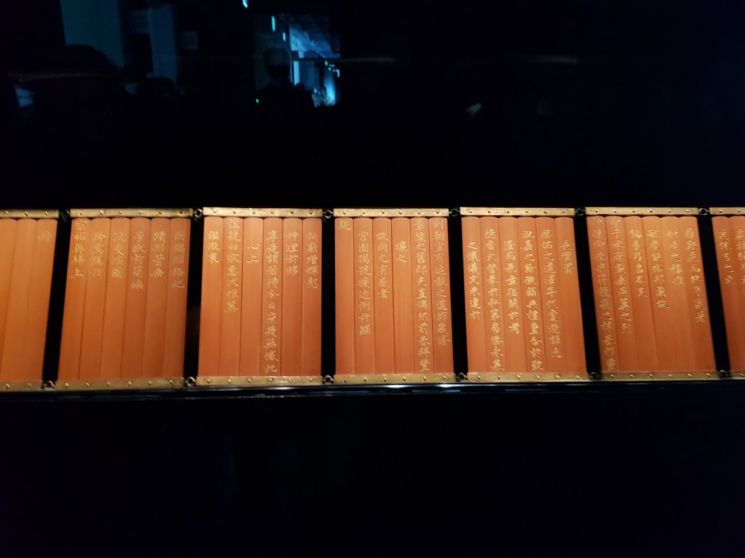 A bamboo book (jukchaek) created in 1755 (the 31st year of King Yeongjo's reign) when posthumous honors were bestowed upon Inbin Kimssi (1555?1613), a concubine of the 14th Joseon king Seonjo and the grandmother of King Injo.
[Asia Economy Reporter Donghyun Choi] These days, the hottest spot in Insadong is undoubtedly the Seoul Museum of Craft Art. Visitors can appreciate traditional and contemporary crafts and participate in various hands-on activities, making it bustling with couples on dates and families with children. During the approximately four-month pre-opening period before the official opening, over 76,000 people visited. Before the phased return to normal life (With Corona), tickets were sold out daily. Despite the inconvenience of having no parking lot, the average reservation rate remains as high as 96%, showing its continued popularity.
The Nation’s First Public Craft Museum Opens
The Seoul Museum of Craft Art officially opened on the 30th of last month. Located on the former site of Pungmoon Girls’ High School in Anguk-dong, Jongno-gu, Seoul, it is the country’s first public museum specializing in crafts. It has collected and holds 23,257 craft works, including nationally designated cultural assets.
The museum’s exterior can be seen at a glance from Anguk-dong intersection. The area around the museum is designed as an open space without fences or gates. This site was where King Sejong of the Joseon Dynasty built a house for his son, Prince Yeongung, and where King Sejong passed away. During King Gojong’s reign, the Andong Byeolgung, prepared for Crown Prince Sunjong’s wedding ceremonies, was located here. From 1940, Pungmoon Girls’ High School occupied the site for 70 years. In 2014, the Seoul Metropolitan Government purchased the site for 70 billion won and pushed forward with the museum’s construction. A space that had been enjoyed by only a few for about 560 years was reborn as a place for all citizens to enjoy.
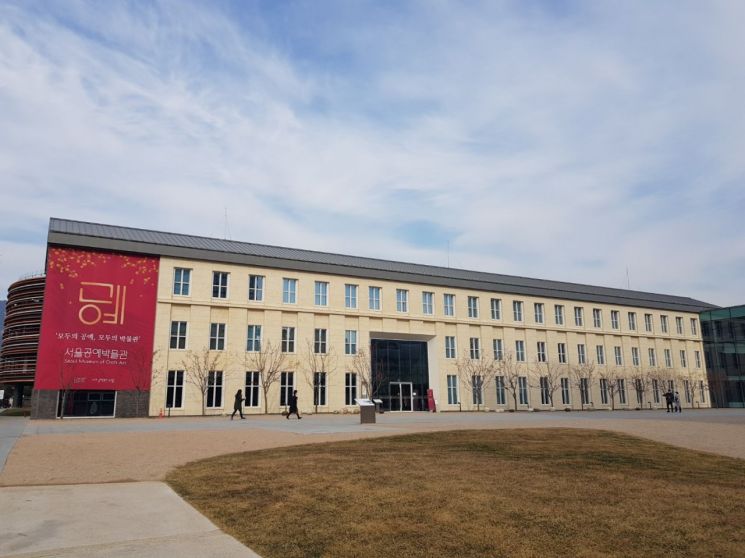
The museum remodeled five existing buildings of Pungmoon Girls’ High School, maintaining the neat exterior of the school buildings. Additionally, two new buildings?a modern information center and a hanok-style craft pavilion?were added, blending traditional and modern aesthetics. Across from the museum, the ‘Lee Kun-hee Donation Hall’ is scheduled to open in 2027, and this area is expected to become a mecca for exhibition viewing alongside the National Museum of Modern and Contemporary Art. Kim Sujeong, director of the Seoul Museum of Craft Art, said, “This museum is to promote and preserve the beauty and value of crafts, which have permeated daily life so much that people didn’t even realize they were art,” and added, “It will become a cultural platform that shares the diverse values of practical yet artistic crafts with many people around the world.”
Exploring the Development of Korean Crafts from Ancient to Modern Times
The museum hosts various special and permanent exhibitions. The permanent exhibition “Artisans Benefiting the World,” located on the second floor of Exhibition Building 2, showcases the history of crafts from ancient to modern times at a glance.
At the entrance of the exhibition hall, a bamboo book (jukchaek) made in 1755 (the 31st year of King Yeongjo’s reign) to confer a posthumous title to Inbin Kimssi (1555?1613), a concubine of the 14th Joseon king Seonjo and grandmother of King Injo, is displayed. During the Joseon Dynasty, royal records called eochek (御冊) were produced when appointing queens, crown princes, and crown prince heirs or conferring honorific titles or posthumous titles to kings, queens, crown princes, and concubines. For kings and queens, jade books (okchaek) made of jade were used, while bamboo books were used for crown princes and concubines. The Inbin Kimssi bamboo book is characterized by six lacquered bamboo pieces fixed with gilded iron to form one volume, and these volumes are bound together in groups of ten.
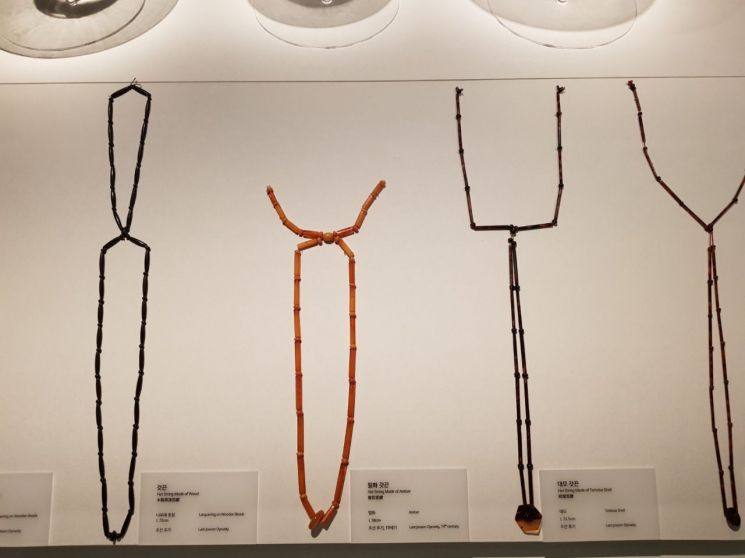
The space offering a glimpse into the fashion of Joseon’s aristocrats in the late period is also fascinating. Until now, gat strings (gatkeun) seen in museums or historical dramas were mostly made of cloth. However, here you can see various gat strings made from materials such as tortoise shell (daemo) and amber (milhwa). It feels like visiting an accessory shop exclusively for yangban (noble class). Gomi Kyung, a curator at the Seoul Museum of Craft Art, explained, “Representative luxury items for Joseon men were gat strings and earrings,” adding, “They were also means to express social status and authority.”
Throughout the exhibition hall, several exhibits are designed to accommodate people with disabilities. A representative example is the ‘Tactile Viewing Zone.’ Models with the same shape and texture as the actual craft works are made using 3D printers so that anyone can touch them. Audio guide services are also provided. When wearing the device and standing at a specific location, explanations about the exhibition theme and works are automatically played.
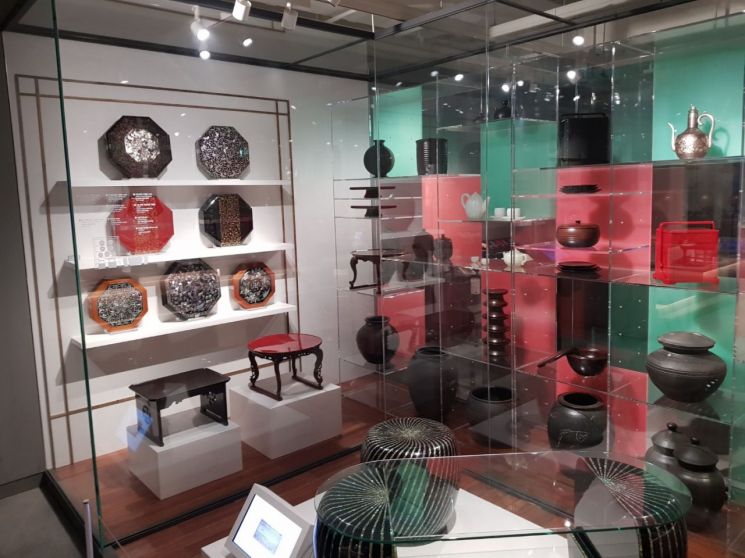
The Spirit of Master Craftsmen Lives On
Craft works are not only found inside glass cases in the exhibition hall. From the information desk to bench chairs, the artistic spirit of craftsmen is embedded throughout the museum.
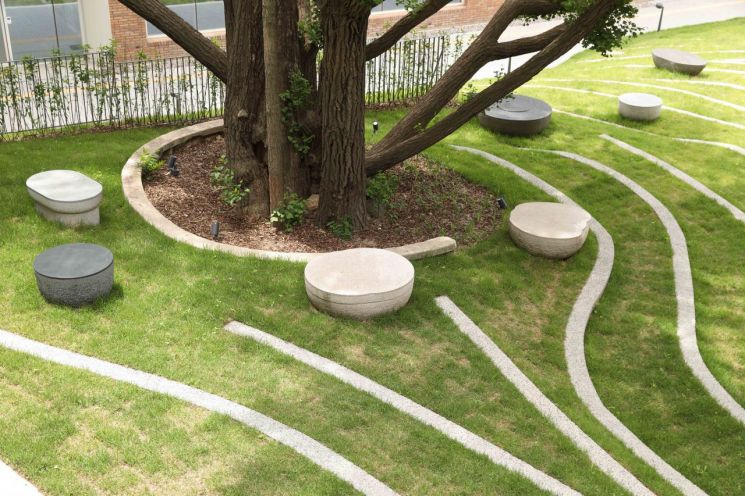
Next to the education building stands a ginkgo tree over 20 meters tall and 400 years old. Around this tree, grass with wave patterns is laid, and stone chairs are placed here and there. These chairs are the work ‘Harmony’ by artist Lee Jaesoon, created for anyone to rest. The giant donut-shaped bamboo chair in the lobby of Exhibition Building 1 is ‘Remains & Hive’ by artist Han Changgyun. The bright red information desk on the first floor of the education building is ‘Faint Series’ by artist Park Wonmin, made of resin.
The exhibition space focusing on craft masters by region is located on the first floor of Exhibition Building 2. Currently, under the theme ‘Crafts of Seoul,’ it introduces 22 craft masters designated as Seoul intangible cultural assets. The exhibition displays craft works that show Seoul’s cultural elegance, ranging from everyday items such as furniture, stationery, and tableware to gayageum (traditional zither) and bows.
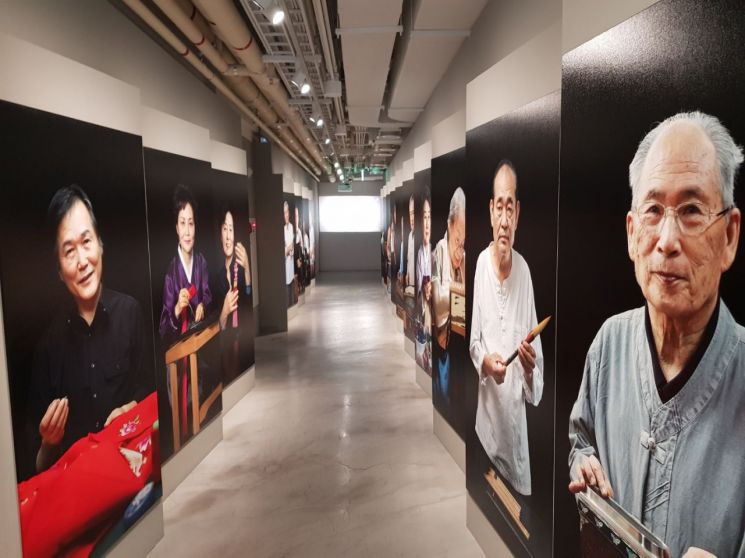 The Local Crafts Room located on the 1st floor of Exhibition Building 2 at the Seoul Craft Museum. Currently, this space is showcasing artisans of 22 craft categories designated as Seoul Intangible Cultural Heritage under the theme "Crafts of Seoul."
© The Asia Business Daily(www.asiae.co.kr). All rights reserved.
![Clutching a Stolen Dior Bag, Saying "I Hate Being Poor but Real"... The Grotesque Con of a "Human Knockoff" [Slate]](https://cwcontent.asiae.co.kr/asiaresize/183/2026021902243444107_1771435474.jpg)

















