Check Condition by Phone Including Body Temperature
Hospitalize if Oxygen Saturation Below 94%
No Way to Manage Cohabitants
Lack of Doctors for Monitoring
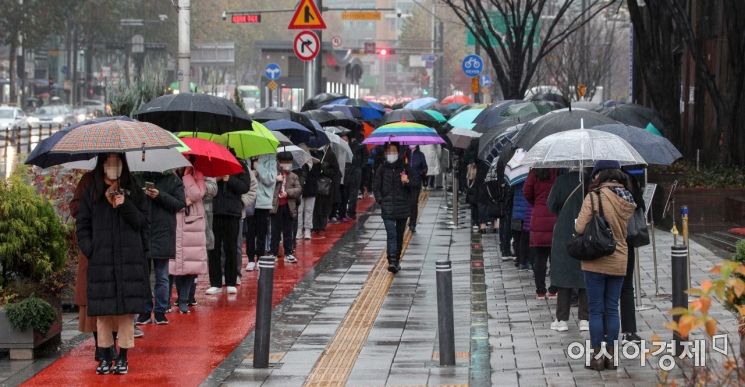 On the 30th, with 3,032 new COVID-19 cases reported, marking three consecutive days of over 3,000 cases, citizens waiting to be tested are lined up at a screening clinic set up at Songpa-gu Public Health Center in Seoul. Photo by Jinhyung Kang aymsdream@
[Asia Economy Reporter Seo So-jeong] "If your oxygen saturation falls below 94%, you need to be hospitalized, so please measure it carefully."
Mr. Kim, in his 40s, living in Yeongdeungpo-gu, Seoul, recently tested positive for COVID-19 and began home treatment. He said, "Fortunately, I have no fever and my oxygen saturation is normal, so I am managing without much difficulty. However, if my elderly parents test positive and have to undergo home treatment, I worry about whether we can respond properly." Mr. Kim pointed out, "During home treatment, if the patient has an emergency or needs to leave the house for personal reasons, there is no way to verify this. If the management of cohabitants is not meticulous, the infection could potentially spread."
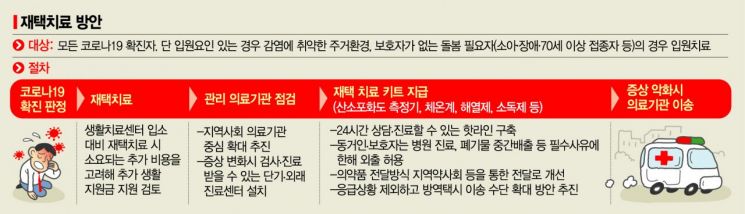
◆Hospitalization if oxygen saturation is 94% or below= When diagnosed with COVID-19, patients receive a home treatment kit from the local government’s dedicated home treatment team. The kit includes an oxygen saturation monitor, thermometer, antipyretics, disinfectants, and other items. Patients are also guided on lifestyle rules, emergency contact networks, and how to install the self-quarantine mobile application (app). A key concern for patients is measuring oxygen saturation and body temperature. The oxygen saturation monitor included in the kit is worn on the finger, and if oxygen saturation falls to 94% or below, hospitalization is considered necessary.
Lee Seung-chan, team leader of the Infectious Disease Control Division at Seoul City, explained, "Oxygen saturation usually reads around 99%, and you should be cautious starting from 95% because the condition can suddenly worsen." Measuring oxygen saturation is not very difficult, but patients who have trouble measuring it sometimes learn how to use the device through video instructions.
Medical staff monitor patients’ health twice daily, in the morning and afternoon. They check body temperature, oxygen saturation, and other symptoms by phone, and 24-hour remote medical consultations are available upon patient request. If additional medication is needed, prescriptions are issued. The government plans to establish a 24-hour hotline for consultation and treatment to ensure rapid response in emergencies and to pre-designate transport medical institutions, securing at least one emergency transfer bed per institution at all times.
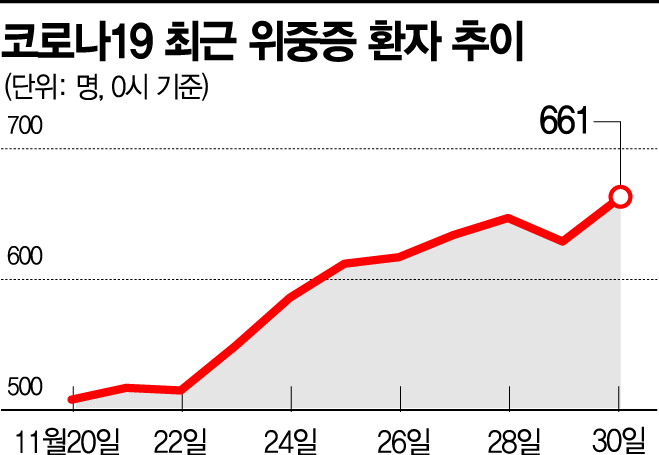
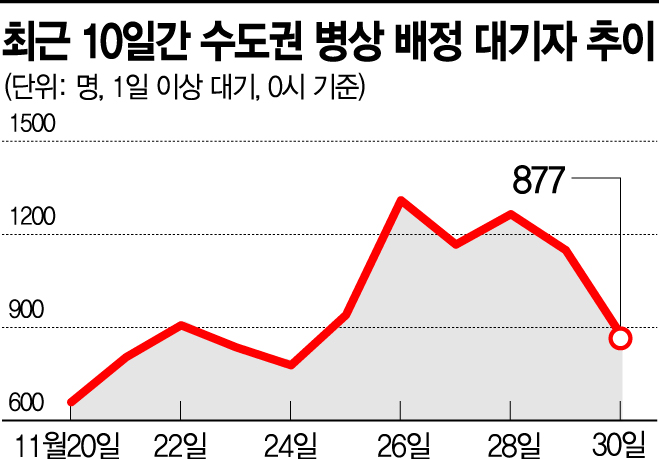
◆Severe cases at 661, another record high= As the government shifts the medical system to allow hospitalization only when necessary for all COVID-19 patients, concerns in the medical community are growing. On the 30th, the number of severe cases reached a record high of 661, and with a severe shortage of medical staff to monitor patients’ conditions, a full transition to home treatment could lead to a larger outbreak in the future.
Professor Lee Jae-gap, head of the Home Treatment Management Team at Hallym University Kangnam Sacred Heart Hospital’s Infectious Diseases Department, said, "Our home treatment management team consists of nine medical staff: four infectious disease specialists, one pediatric specialist, and four nurses. We monitor about 100 patients daily, but with the recent surge in cases, we are short-handed."
Experts are increasingly calling for stricter standards regarding home treatment for elderly patients aged 70 and above, even if they have caregivers. Professor Eom Jung-sik of Gachon University Gil Medical Center’s Infectious Diseases Department stated, "Among those aged 70 and older, some progress to severe illness within 5 to 7 days after symptom onset or diagnosis. Early hospitalization and administration of antibody treatments can enable early discharge, but if the condition worsens and hospitalization is delayed, the hospital stay tends to be longer, causing bed shortages."
Managing cohabitants and other close contacts is also a challenge. Cohabitants must report in advance to dedicated public officials and are monitored for any breaches of quarantine through the self-quarantine app. Professor Cheon Eun-mi of Ewha Womans University Mokdong Hospital said, "Relying solely on individuals’ conscience to manage cohabitants of home-treated patients has its limits. Given the prevalence of apartment and other communal living arrangements, there is a risk of renewed infection spread."
© The Asia Business Daily(www.asiae.co.kr). All rights reserved.



















