Dispute Over Content Amount and Labeling Issues
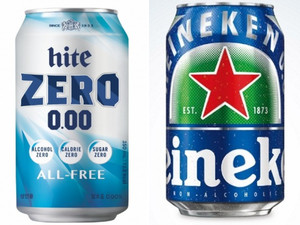
[Asia Economy Reporter Lim Hye-seon] Domestic and foreign liquor companies are fiercely competing over the ‘non-alcoholic beer’ market. While domestic beer companies are attacking imported non-alcoholic beers by claiming ‘they contain alcohol, so they are not truly non-alcoholic,’ foreign beer companies have counterattacked, saying domestic non-alcoholic beers are ‘not beer, so why advertise them like beer?’
Rapidly Growing Non-Alcoholic Beer Market
According to the liquor industry on the 25th, the non-alcoholic beer market is expected to exceed 20 billion KRW this year. Although it accounts for about 1% of the total beer market, it is steadily growing. In Japan, it has grown to 4% of the total beer market, and in Germany, up to 8%, with the market continuously expanding. Domestic and imported beers are targeting the market with different types of products. Under the current liquor tax law, beverages with an alcohol content below 1% are classified as non-alcoholic beverages rather than liquor. Additionally, products with less than 1% alcohol content can be labeled as 0.0%, and those with no alcohol at all can be labeled as 0.00%.
Non-alcoholic beers sold by domestic liquor companies are beverages made by adding carbonation and other ingredients to malt extract, containing no alcohol at all. Products currently on the market such as ‘Cloud Clear Zero 0.00’ and ‘Hite Zero 0.00’ have zero alcohol content. On the other hand, imported beers undergo fermentation to make beer and then remove the alcohol. It is impossible to remove it completely, so less than 1% alcohol remains. Representative products include ‘Carlsberg 0.0,’ ‘Heineken Non-Alcoholic,’ ‘Cass 0.0,’ and ‘Erdinger Frei.’
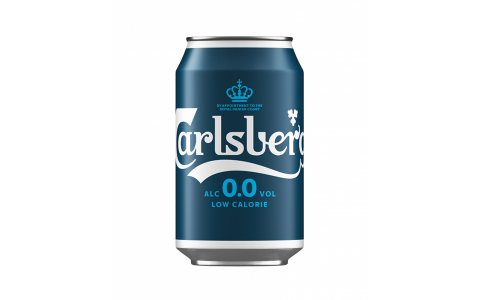
Don’t Call It Non-Alcoholic vs Don’t Call It Beer
A domestic beer company official said, "Even if it is a trace amount, if alcohol is present and expressions like ‘0.0%,’ ‘0.00%,’ or ‘zero’ are used, it can confuse consumers," adding, "It can influence teenagers to develop drinking habits, and pregnant women might consume even tiny amounts of alcohol, so the labeling of non-alcoholic beer should be changed."
In response, a foreign liquor company official said, "According to liquor-related laws, beverages with less than 1% alcohol are classified as non-alcoholic drinks, so the claims by domestic beer companies are excessive," adding, "There are trace amounts of alcohol in orange juice and ripe bananas as well, so this is an unnecessary dispute over meaningless figures." Foreign liquor companies further argue that domestic non-alcoholic beers are not ‘beer,’ so marketing that evokes beer should not be allowed. A foreign liquor company official said, "If it is not beer, it should not be advertised like beer or use the term ‘beer’ itself."
The Ministry of Food and Drug Safety has decided to clarify the labeling. On the 5th, the ministry improved regulations to require that non-alcoholic beers containing even trace amounts of alcohol display the phrase ‘Contains less than 1% alcohol’ in a way that distinguishes it from the background color, and is now considering changing or removing the term ‘non-alcoholic.’ The ministry plans to announce the final improvement plan after gathering opinions from companies.
© The Asia Business Daily(www.asiae.co.kr). All rights reserved.
![Clutching a Stolen Dior Bag, Saying "I Hate Being Poor but Real"... The Grotesque Con of a "Human Knockoff" [Slate]](https://cwcontent.asiae.co.kr/asiaresize/183/2026021902243444107_1771435474.jpg)
















