FOMC Hawkish Remarks
Bank of Korea Rate Hike
KOSPI Faces Trading Cliff
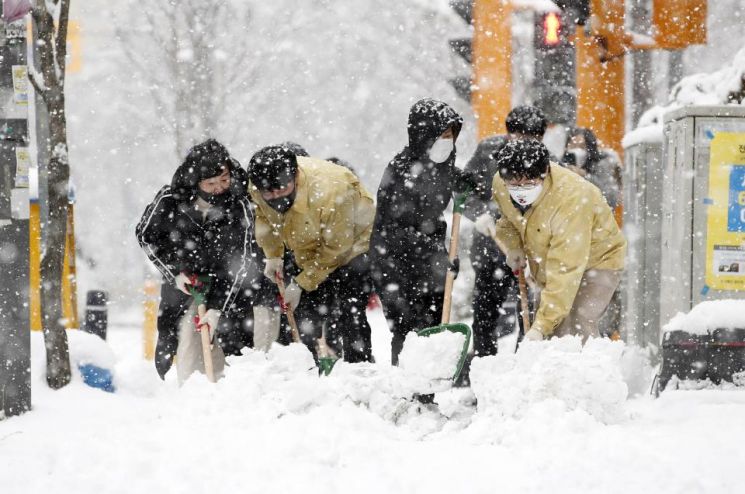
[Asia Economy Reporter Junho Hwang] Investors have locked their vaults amid the interest rate chill. Following hawkish remarks at the Federal Open Market Committee (FOMC) meeting on the 25th, which sets the direction of U.S. monetary policy, and the Bank of Korea's interest rate hike, the KOSPI faced a trading cliff.
According to the Korea Exchange on the 26th, the previous day's KOSPI trading volume recorded 9.401 trillion KRW, the lowest in over a month since the 23rd of last month. This is also significantly below this month's average of 11.2076 trillion KRW.
The biggest factor affecting the decline in trading volume was the direction of interest rates. Investors shrank their shoulders while watching the interest rate trends in the U.S. and Korea.
In the case of the Bank of Korea, the base rate was raised by 0.25%, reopening the era of a 1% base rate. When interest rates rise, preference for safe assets increases, reducing the attractiveness of the stock market. However, since the Monetary Policy Committee strongly hinted at a possible rate hike in November at last month's meeting, the impact on stock market fluctuations was limited. In particular, the fact that the interest rate was raised but the economic growth forecast was maintained at 4.0% for this year and 3.0% for next year had a positive effect, limiting the KOSPI's decline to -0.47% the previous day.
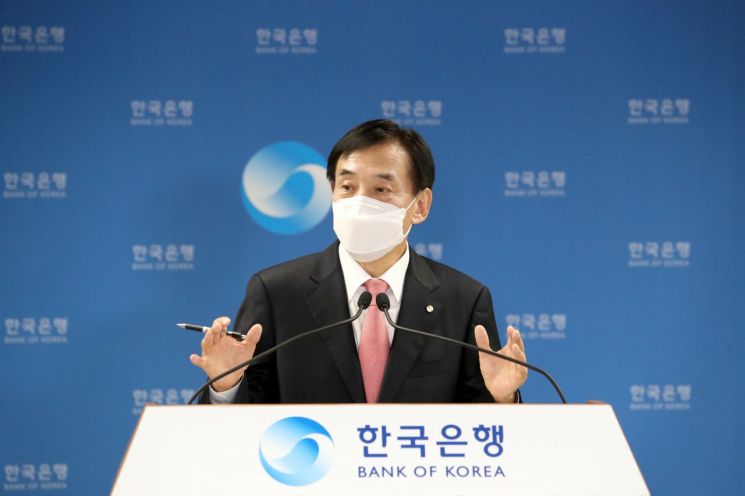
However, with the U.S. FOMC minutes also influencing the market, investors' cautious maneuvering intensified. At the previous day's FOMC, opinions were raised that if high inflation persists, a faster pace of asset purchases than expected would be necessary and preparations should be made to raise the base rate. U.S. tightening puts pressure on liquidity in the domestic stock market and also affects the performance deterioration of domestic export companies due to reduced U.S. consumption. Daejun Kim, a researcher at Korea Investment & Securities, said, "While the influence of the Bank of Korea's Monetary Policy Committee was limited, the hawkish FOMC minutes acted as a burden on the stock market."
For this reason, trading sharply decreased, and foreigners also turned to a wait-and-see stance. After four consecutive days of net buying, foreigners net sold 147.659 billion KRW worth of stocks in the entire KOSPI and 34.769 billion KRW in Samsung Electronics, the unwavering market leader. There was also a tendency to bet on a declining market. The previous day's short-selling transaction amount for Samsung Electronics was 22.014 billion KRW, and SK recorded 17.539 billion KRW, ranking first and second in trading volume.
Experts recommended checking economic indicators and monitoring interest rate issues to decide investment directions until the next FOMC meeting on November 14-15, where tapering acceleration may be discussed. In Korea, Bank of Korea Governor Lee Ju-yeol stated, "The possibility of a base rate hike in the first quarter of next year cannot be ruled out," suggesting that additional rate hikes are expected around the first quarter of next year.
Jaeseon Lee, a researcher at Hana Financial Investment, said, "Until the FOMC, it is necessary to closely watch the remarks of U.S. Federal Reserve officials," adding, "The spread between the 10-year and 2-year U.S. Treasury yields is gradually narrowing, reflecting a somewhat accelerated tightening clock in the market."
Meanwhile, the stock market opened mixed on the day as the U.S. market was closed for Thanksgiving, and although the European Central Bank (ECB) expressed the opinion the previous day that conditions for a rate hike next year would not be met, the market started off mixed.
© The Asia Business Daily(www.asiae.co.kr). All rights reserved.
![Clutching a Stolen Dior Bag, Saying "I Hate Being Poor but Real"... The Grotesque Con of a "Human Knockoff" [Slate]](https://cwcontent.asiae.co.kr/asiaresize/183/2026021902243444107_1771435474.jpg)
















